Key Takeaways
- Every auto repair garage typically needs at least general/garage liability, garagekeepers, workers compensation, commercial property, and commercial auto insurance coverage.
- Most U.S. shops in 2025-2026 pay roughly $1,200–$6,000 per year depending on size, services offered, and claims history.
- Garage liability insurance and garage keepers insurance are not the same—both are usually required for repair shops that store and test-drive customer vehicles.
- State law often mandates workers compensation insurance and minimum auto liability, while lenders and landlords commonly require property and liability coverage.
- This article walks shop owners through a practical, step-by-step approach to deciding which coverages they actually need.
Introduction: Why Insurance Is Non-Negotiable for an Auto Repair Garage
Picture this: a 4-bay garage in Ohio in 2025. A customer slips on an oil spill in the waiting area, breaking their wrist. That same week, a technician accidentally backs a customer’s car into another vehicle during a test drive. Meanwhile, a space heater sparks an overnight fire that damages three lifts and two customer vehicles.
Without the right insurance coverage, these scenarios could easily push a business owner toward financial ruin. Auto repair shops combine high-value property—vehicles, lifts, diagnostic tools—with constant bodily injury risk to both employees and customers. This makes business insurance essential rather than optional.
This article focuses specifically on what a typical independent auto repair business needs in 2025-2026 to operate safely and meet legal and contract requirements.
Core Insurance Policies Every Auto Repair Garage Should Have
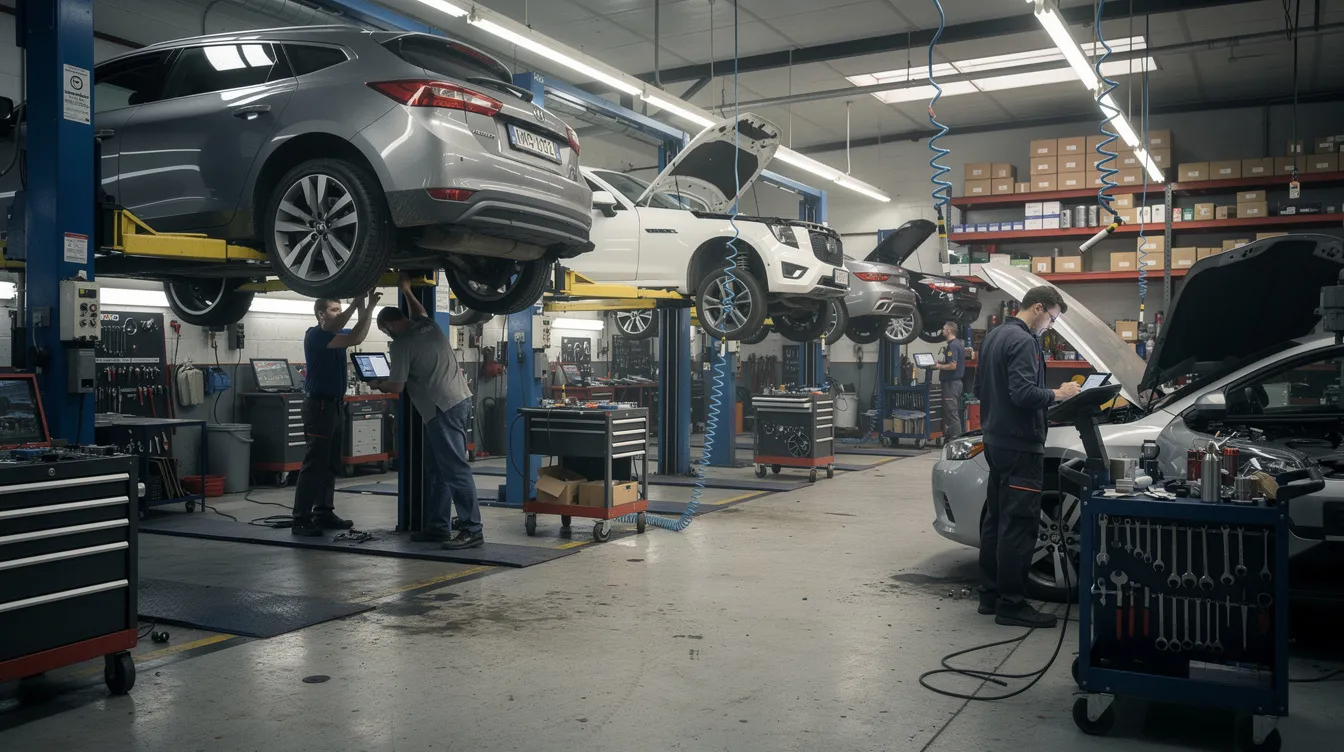
Most brick-and-mortar automotive repair shops in the U.S. need a core “stack” of 5-7 policies to be properly protected:
- General liability or garage liability insurance
- Garagekeepers insurance
- Workers compensation insurance
- Commercial property insurance
- Business interruption coverage
- Commercial auto insurance
- Hired & Non-Owned Auto (HNOA) coverage
Many small auto shops bundle several of these into a Business Owner’s Policy (BOP) plus separate garage-specific coverages. Let’s unpack each type with specific examples.
Liability Protection: General Liability vs. Garage Liability
Liability insurance covers you when someone claims you injured them or caused property damage. Auto businesses typically carry either general liability, garage liability, or both.
Many repair shops in 2026 carry at least $1M per occurrence / $2M aggregate liability limits. Higher limits are wise in densely populated or high-income areas where legal claims tend to be larger.
General Liability Insurance
General liability coverage protects against third-party bodily injury and property damage. Think of scenarios like:
- A customer slips on coolant in your parking lot
- A child trips over an air hose in the reception area
- A rolling toolbox crushes a visitor’s phone
These policies usually include coverage for legal defense costs, even when a claim is groundless. Defense costs alone can exceed the alleged damages. Many landlords in 2025-2026 require tenants to show proof of general liability coverage with them listed as an additional insured before signing a lease.
Garage Liability Insurance
A garage liability policy is a specialized form of liability insurance designed for auto repair, auto body shops, tire shops, and similar operations. It covers scenarios that standard general liability might miss:
- Damage caused during a road test
- A wheel coming off after a brake job and causing an accident
- Injuries during vehicle drop-off or pick-up
Here’s a critical distinction: garage liability focuses on your legal liability to others, not on physical damage to a customer’s car in your care. That’s a separate policy entirely.
Low-risk oil-change-only shops may get by with robust general liability coverage. But full-service garages performing test drives generally need a proper garage liability policy to avoid claim denials.
Garagekeepers Insurance: Protecting Customers’ Vehicles in Your Care
Garage keepers insurance covers damage to customer vehicles while they’re in your custody, care, or control—parked in your lot, on a lift, or being driven by your staff.
Real-world examples include:
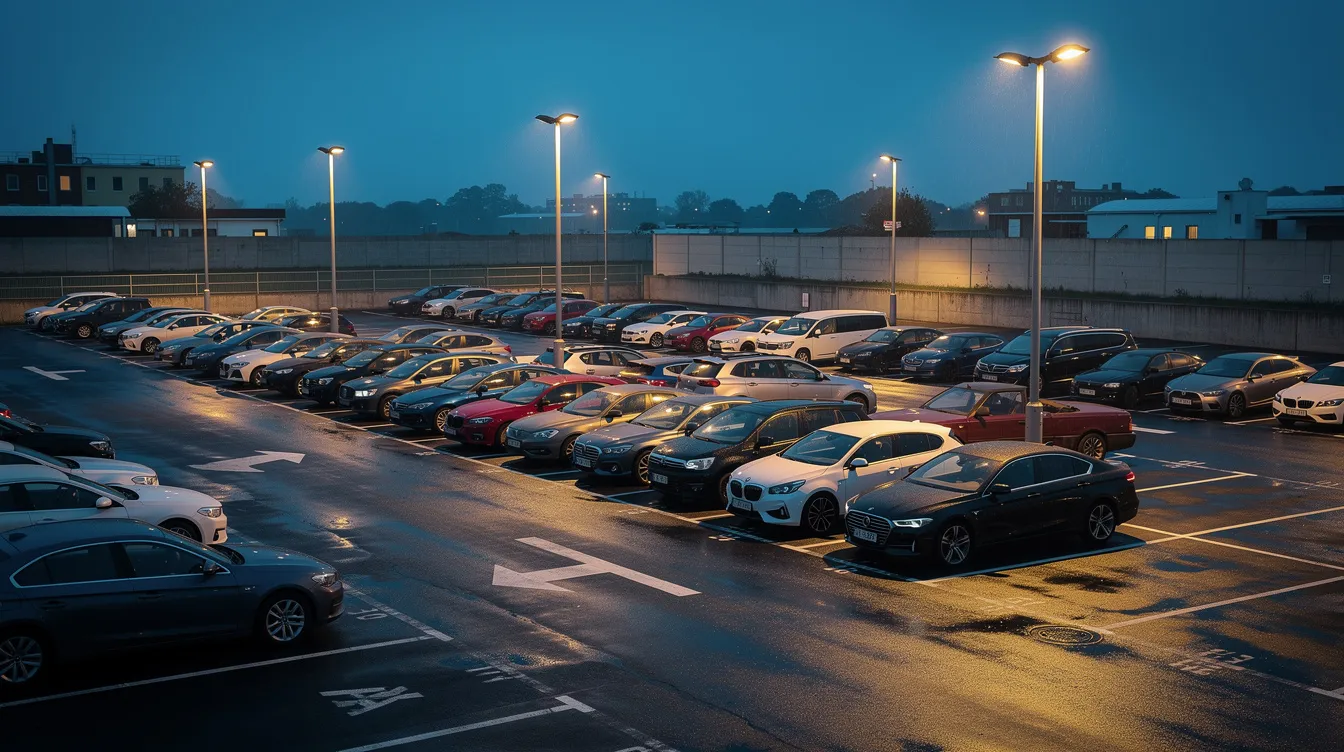
- Hail damaging 15 cars left overnight
- An engine bay fire during diagnostics scorching multiple vehicles
- Theft of a customer’s truck from a poorly lit back lot
Coverage comes in three main forms:
| Type | What It Covers | Best For |
|---|---|---|
| Legal Liability | Only if your negligence is proven | Budget-conscious, low-risk shops |
| Direct Primary | Full coverage regardless of fault | Busy lots with high vehicle values |
| Direct Excess | Overlays existing coverage | Supplementing other policies |
Limits should cover the maximum total value of customer vehicles on your premises on a busy day—typically $250,000–$1,000,000 for a mid-sized shop in 2026.
Common exclusions include faulty workmanship itself (handled by liability coverage) and personal items left in vehicles unless specifically endorsed.
Protecting the Building, Tools, and Equipment: Commercial Property Insurance
Commercial property insurance protects your physical location and contents: building, lifts, diagnostic scanners, compressors, office furniture, and parts inventory.
Covered threats include:
- Fire from welding or space heaters
- Storm damage
- Burglary of expensive scan tools
- Vandalism
- Broken pipes during winter freezes
Understanding replacement cost versus actual cash value is crucial. A 2015 two-post lift might cost $50,000 to replace today, but actual cash value coverage might only pay $25,000 after depreciation.
Your sum insured should reflect 2025-2026 rebuilding costs and replacing major equipment at current prices—not what you originally paid years ago.
Keeping Cash Flow Alive After a Disaster: Business Interruption Insurance
Business interruption insurance replaces lost income and helps pay ongoing expenses—payroll, rent, utilities, loan payments—when a covered event forces you to close temporarily.
Scenario: A July 2025 electrical fire shuts down a 6-bay shop for two months. Business interruption coverage keeps key techs on payroll so they don’t leave for competitors.
Key variables to understand:
- Indemnity period: 12 vs. 18 months of coverage
- Waiting period: 24-72 hours before coverage kicks in
Banks financing lifts or alignment machines often look favorably on shops carrying robust business interruption insurance.
Protecting Employees: Workers’ Compensation Insurance
Workers compensation is legally required in nearly every U.S. state for garages with more employees. Texas is a major exception where it’s optional but still widely adopted.
This insurance covers medical expenses, rehabilitation, and a portion of lost wages if a technician is hurt on the job:
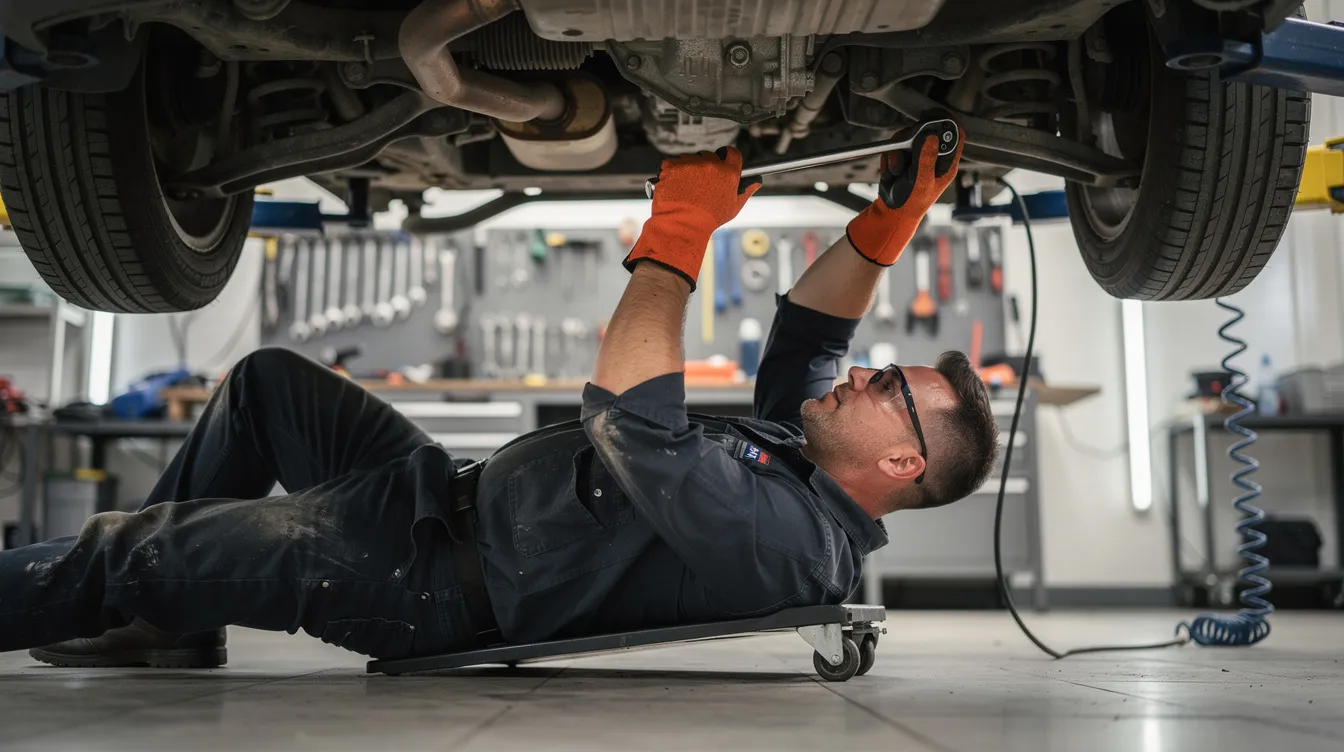
- Back injury from lifting wheels
- Burns from a hot exhaust system
- Cuts requiring medical treatment
Auto repair carries a higher-risk classification than office work, so premiums per $100 of payroll are correspondingly higher. A clean safety record and formal safety programs—PPE, lift inspection logs, lockout/tagout procedures—can help control workers comp costs over time.
Vehicles Used in the Business: Commercial Auto and Hired & Non-Owned Auto
Any vehicle used in business operations—from a small parts-runner car to a mobile service van—should be covered under commercial auto insurance, not a personal auto policy.
Typical business uses include:
- Picking up parts from suppliers
- Shuttling customers
- Mobile diagnostics
- Towing on a flatbed or wrecker
State law sets minimum liability limits, but many shops in 2025-2026 carry higher limits (e.g., $1M combined single limit) for adequate coverage against serious accidents.
Hired & Non-Owned Auto (HNOA) coverage fills gaps when employees use their own cars or rented vehicles for business errands. Example: A service writer using their personal SUV to drop off a customer causes an accident. HNOA helps protect the garage from resulting liability since personal auto insurers often deny such claims.
Additional Coverages Many Modern Garages Should Consider
Beyond core policies, modern auto repair garages face unique risks like cyberattacks, electronic misdiagnosis, and employment disputes. Consider these additions:
Cyber Liability Insurance
Even small three-bay independents use Wi-Fi, tablets, and connected diagnostic tools in 2026—making them viable targets for criminals. Cyber liability covers costs from data breaches, ransomware, and hacking incidents.
Typical covered expenses include forensic IT services, customer notification, credit-monitoring services, and legal defense if customers sue over a data breach.
Professional Liability / Errors & Omissions (E&O)
E&O covers financial losses caused by mistakes in professional services. Example: A mis-calibrated ADAS camera in a 2022 SUV leads to an accident weeks later, and the customer sues over faulty professional work.
Shops doing advanced electronics, performance mods, or fleet maintenance contracts should strongly consider E&O coverage.
Employment Practices Liability Insurance (EPLI)
EPLI covers legal claims related to hiring, firing, harassment, discrimination, and retaliation. As garages grow beyond a handful of employees—adding service advisors, bookkeepers, and managers—EPLI becomes more relevant.
Commercial Umbrella Insurance
An umbrella policy provides an extra layer of liability coverage sitting on top of underlying policies. It’s often sold in $1M increments and is relatively inexpensive.
Scenario: A multi-vehicle highway accident caused by a test drive exceeds the $1M commercial auto limit. A $2M umbrella helps protect the garage’s assets from the remainder.
How Much Does Insurance for an Auto Repair Garage Cost in 2025–2026?
Actual quotes depend on several factors including state, revenues, claims history, and coverage limits. Here are ballpark ranges:
| Shop Size | Annual Cost Range |
|---|---|
| Small 2-bay shop | $1,200–$3,000 |
| Mid-size 4-5 bay with employees | $3,000–$6,000 |
| Larger 6+ bay operation | $4,000–$10,000+ |
Breakdown by coverage type:
- Garage liability: $800–$2,500
- Garagekeepers: $500–$1,500
- Workers comp: 1-3% of payroll
- Property/BI: $600–$2,000
- Commercial auto: $1,000–$3,000
Paying a bit more for a financially strong insurance company and appropriate limits is usually cheaper than self-funding a large claim.
Key Pricing Factors
Insurance rates vary depending on:
- Type of work (engine rebuilds vs. basic maintenance)
- Location (crime rates, weather risk)
- Number of bays and employees
- Annual revenues
- Storage of vehicles overnight
- Claims history over the past 3-5 years
High-risk operations—paint booths, 24-hour storage of high-end vehicles, performance tuning—can inflate premiums 20-50%. Discounts often apply for security alarms, cameras, fenced yards, sprinkler systems, and technician safety training.
Building the Right Insurance Package for Your Specific Garage
Follow these steps to assemble coverage tailored to your operation:
- Inventory assets and operations: List all equipment, company vehicles, and services offered
- Identify financial “nightmares”: What scenarios would hurt most? A totaled customer’s car? Employee injuries?
- Confirm legal requirements: Check state mandates plus lease, bank, and vendor agreements
- Choose limits and deductibles: Balance protection against insurance costs
- Revisit annually: Update for new bays, equipment, or services like ADAS calibration
Work with an independent agent or broker who specializes in garage risks rather than buying a generic small-business policy online. The right insurance mix lets you focus on business operations instead of worrying about different risks destroying everything you’ve built.
FAQ: Common Questions About Auto Repair Garage Insurance
Is garage liability insurance required by law for an auto repair shop?
Most states don’t explicitly mandate “garage liability” by name, but they do require certain coverages like commercial auto liability and workers compensation. Additionally, many landlords, lenders, and franchisors require a garage liability policy in contracts. Check your state regulations plus your lease and bank agreements to see which specific coverage types and limits are contractually required.
Do I need garagekeepers insurance if I only keep cars overnight occasionally?
Yes, in most cases. Even a single high-value car damaged while in your custody could create a major financial hit. A customer sues you because their $80,000 vehicle was damaged overnight—without garagekeepers coverage, you’re paying out of pocket. Shops that truly never hold vehicles may rely more on liability coverage, but confirm this with an insurance professional before making assumptions.
Can I use my personal auto insurance for shop errands and test drives?
Personal auto policies often exclude business use, especially for transporting customers, frequent parts runs, or regular test drives. Any vehicle used for garage operations should be listed on a commercial auto policy. Consider HNOA coverage for employee accidents in personal vehicles used on the clock.
How often should an auto repair garage review its insurance coverage?
Review your insurance policy at least annually and immediately after major changes—adding bays, hiring more employees, buying expensive equipment, or adding services like mobile repair. Annual reviews are ideal for updating revenue estimates, adjusting limits, and verifying new tools are properly insured.
What’s the biggest insurance mistake auto repair garages make?
The most common pitfall is assuming a generic general liability insurance policy covers test drives and customer vehicles in your care. It typically doesn’t. Other mistakes include underinsuring tools and equipment, or keeping the same low limits as the business grows. Always ask your agent specifically about gaps between general liability, garage liability, and garagekeepers coverage to get the right insurance for your specific risks.