
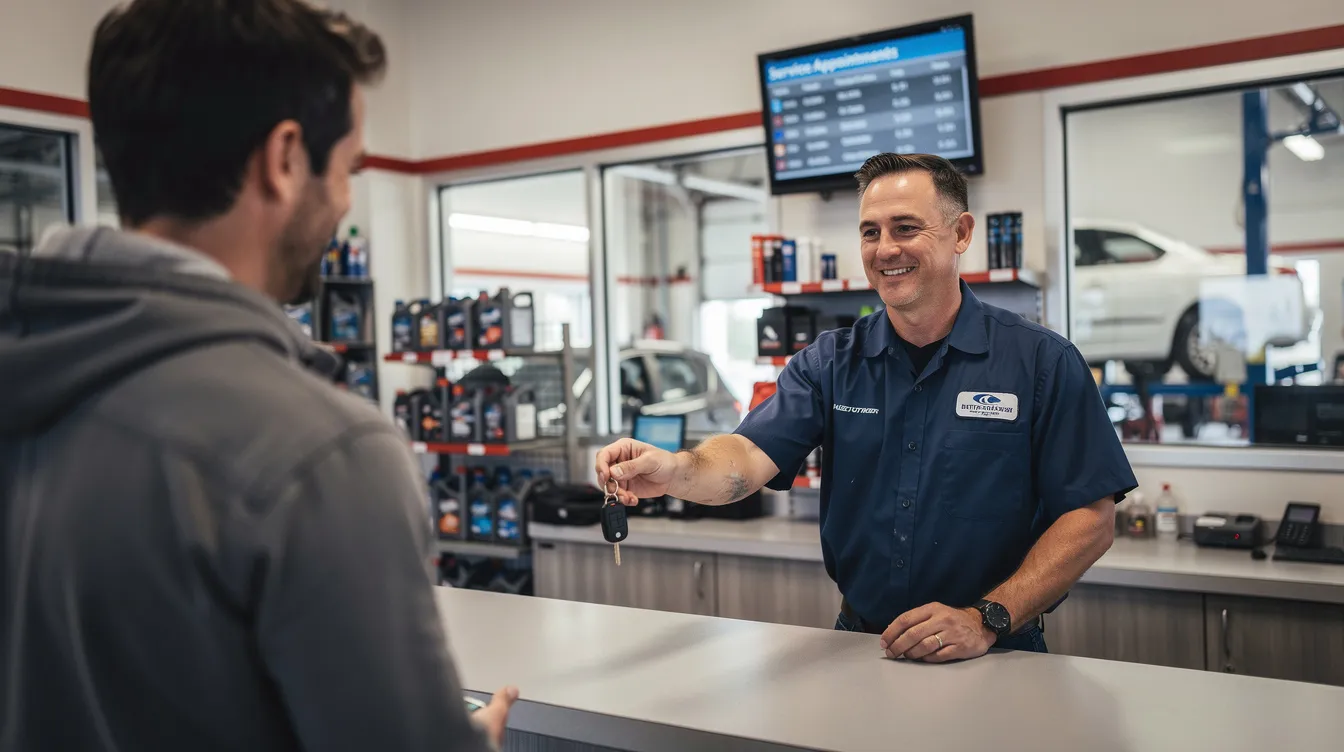
When a customer hands over their keys, your business accepts more than just a vehicle—you accept legal responsibility. Whether you run a body shop, mechanic shop, valet service, or detailing business, understanding what happens if a customer’s car is damaged in your care is essential for protecting your business and maintaining trust.
Key Takeaways
- Your business is generally liable for damage to a customer’s vehicle while it’s in your possession. If damage occurs during a brake job on 15 June 2026, responsibility falls on you, not the customer.
- Document the damage immediately and notify the customer the same day. Avoid moving the vehicle more than necessary until photos and reports are complete.
- Garagekeepers or shop’s liability insurance typically covers this type of damage, including incidents in your parking lot or during test drives.
- Honest, proactive communication is your best protection against disputes and negative reviews.
- In serious cases involving total loss, injury, or fault disputes, involve your insurance company and consult a local attorney to ensure compliance with state law.
What It Means When a Car Is “In Your Care, Custody, and Control”
“Care, custody, and control” is the legal phrase insurers and courts use when a customer leaves a vehicle with your business. This period begins the moment the customer hands over the keys and ends when the car is returned.
Consider these examples:
- A customer drops off a 2022 Toyota Camry for collision repair on 2 May 2026
- A 2019 Ford F-150 sits overnight in your secured lot awaiting parts
- A 2020 BMW X3 is taken for a road test after an alignment
During this time, responsibility for physical damage shifts from the customer’s auto insurance policy to your business’s coverage. This applies to mechanical shops, body shops, tire centers, valeting businesses, storage yards, and even mobile technicians once they take possession of the keys.
Immediate Steps to Take When a Customer’s Car Is Damaged
Your first actions in the 30–60 minutes after discovering damage will determine whether the situation escalates or resolves smoothly. Follow these steps in order:
- Secure the scene and ensure everyone’s safety if there’s been a collision
- Stop any further movement of the vehicle
- Document the damage with time-stamped photos and videos from multiple angles, including close-ups of dents, paint transfer, or broken components
- Record the exact date, time, and location (e.g., “Bay 3 lift” or “east side parking row”)
- Note names of any employees or witnesses involved
- Create an internal incident report the same day, capturing VIN, plate, mileage, and repair order number
- Do not attempt to fix or clean up the damage before the customer or insurer sees it
How to Communicate With the Customer
Prompt, transparent communication—usually within the same business day—is critical for maintaining trust. Here’s how to handle it:
Initial contact: Call the customer as soon as you have the basic facts. Speak directly and avoid defensive language.
Follow-up email: Summarize what happened with specifics: “On 30 March 2026, while reversing your 2021 Honda Civic from the lift, our technician made contact with a support post…”
In-person inspection: Invite the customer to view the damage. Walk them through your photos and any CCTV footage available.
Explain next steps clearly:
- Internal review process
- Insurance notification (if needed)
- Repair options and estimated timeline
Offer practical help: If the vehicle is unsafe to drive, provide a courtesy car or arrange a local rental at no additional cost to the customer.
Example phrase: “I want to be completely upfront with you about what happened and explain exactly how we’re going to make this right.”
Insurance Coverage: Garagekeepers and Liability Policies
Most automotive businesses carry garagekeepers insurance (also called garagekeepers legal liability) alongside general liability coverage. This insurance is designed to cover damage to customer vehicles while in your care.
Typical covered scenarios include:
- A technician accidentally backs a 2024 Subaru Outback into a post
- A fire in the workshop on 10 January 2026
- Hailstorm damage to cars stored outside overnight
- Theft from a locked yard
Key coverage types: | Coverage Type | When It Pays | |————–|————–| | Direct Primary | Pays regardless of fault | | Legal Liability | Pays only when your business is legally responsible | | Excess Coverage | Activates when customer’s insurance is insufficient |
Deductibles typically range from $250 to $1,000 per vehicle. Your business—not the customer—should pay the deductible for damage clearly caused while in your care. Progressive Commercial notes typical limits around $2,500 per occurrence, though higher limits are available for businesses handling expensive vehicles.
Review your policy annually with your broker to confirm limits match the value of vehicles you typically service.
Repairing or Compensating for the Damage
Once fault is accepted, you have three main options:
- Repair in-house: Minor damage (a 3 cm scratch on a 2023 Kia Sportage door) can often be fixed quickly at no cost to the customer
- Sublet to a specialist: Structural issues or airbag deployment may require OEM-approved facilities
- Compensate financially: Pay the customer directly for repairs elsewhere
Provide a written repair plan with an estimated completion date. Update the customer every few days if parts are delayed or additional damage is discovered.
Diminished value: For newer vehicles, you may need to discuss a diminished value payment beyond the repair itself.
Total loss: If a vehicle is totaled (e.g., a 2022 Lexus RX heavily damaged during a test drive on 12 February 2026), compensation typically follows actual cash value, less any applicable deductible under your policy.
Legal Responsibilities and Customer Rights
While laws vary by state, most U.S. jurisdictions treat damage to customer vehicles under negligence, bailment, and consumer protection principles. Your duty is to exercise reasonable care when storing, moving, or repairing customer cars.
Examples of negligence:
- Leaving keys in an unlocked car overnight on a public street
- Failing to secure a vehicle on a lift properly
- Allowing untrained staff to operate customer vehicles
Customer rights generally include:
- A fair and timely investigation
- Clear information about what happened
- Repair or compensation when your business is at fault
Protecting yourself: Intake forms with pre-service inspection checklists—including diagrams of existing dents, mileage readings, and dated signatures—are powerful evidence in disputes about pre-existing damage.
Customers may escalate unresolved disputes to the Better Business Bureau, state consumer protection agencies, or small-claims court. In rare cases involving injury or high-value vehicles, consult a licensed attorney in your state. Legal action is expensive for everyone—handling claims properly upfront is far cheaper than a lawsuit.
Preventing Damage to Customer Vehicles in the First Place
Preventing incidents is far cheaper than resolving claims. Insurance underwriters closely monitor your loss history year to year.
Practical prevention measures:
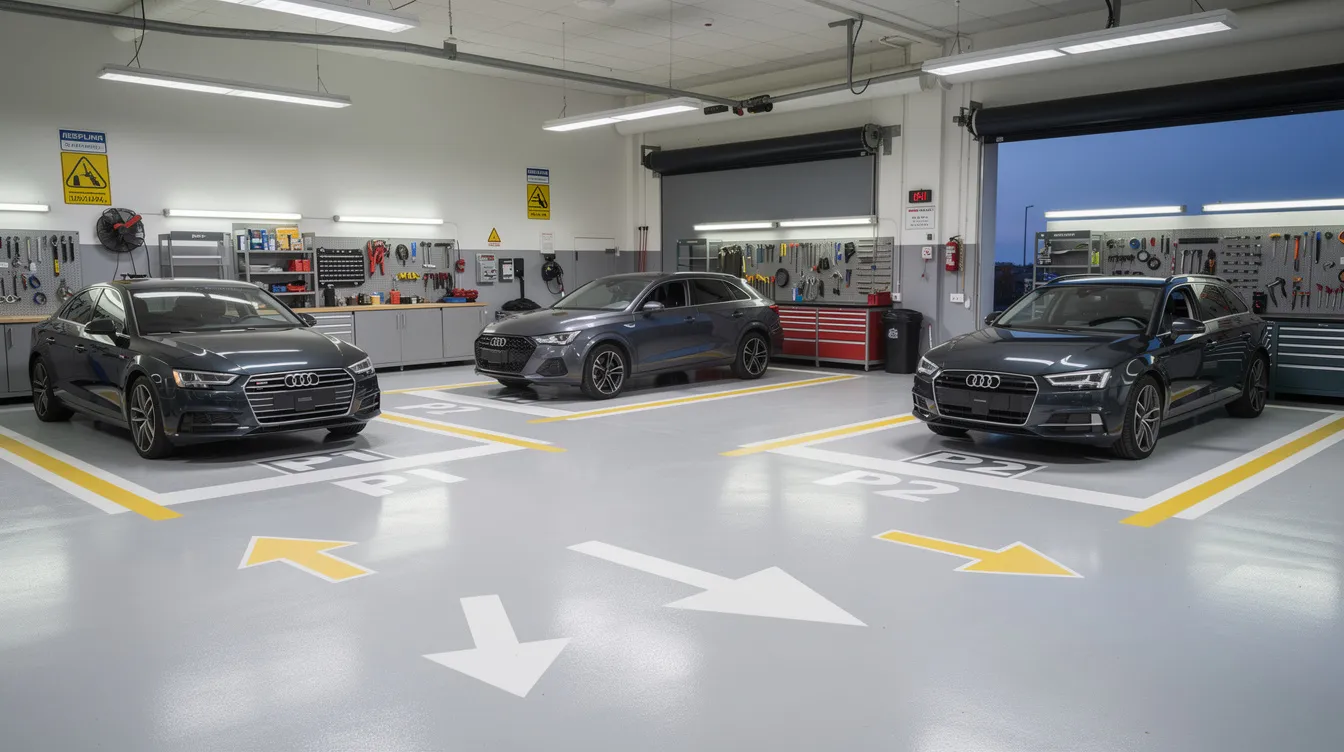
- Standardized test drive routes with strict speed limits (5–10 mph on site)
- Designated one-way traffic flow through workshop and yard
- Detailed check-in/check-out procedures with date-stamped photos
- Quarterly staff training on lifts, jack stands, ADAS components, and EV battery handling
- Clear parking layouts with marked customer, staff, and storage areas
- Good lighting and security cameras covering entrances, exits, and storage rows
- Written policies for key control, after-hours storage, and severe weather procedures
Frequently Asked Questions
Does my customer’s own auto insurance ever pay for damage that happens in my shop?
In many cases, your garagekeepers policy should respond first when damage is clearly your fault. However, some customers may prefer going through their own insurer for faster handling. If their insurer pays, they may later seek reimbursement (subrogation) from your insurer. Don’t tell customers “your insurance has to pay”—explain both options and let them decide while you notify your own carrier.
What if I genuinely believe the damage was pre-existing?
Refer to your intake photos, written check-in form, and mileage and condition notes. Calmly show the customer any documented pre-existing dents or chips recorded with dates and signatures. If documentation is unclear, sharing repair costs may be better commercially than risking a public dispute or negative reviews.
Should I always file an insurance claim, even for small scratches?
Many businesses fix minor cosmetic issues out of pocket to avoid frequent small claims that increase premiums. Notify your insurer when damage exceeds a set threshold (e.g., over $1,000 in parts and labor). Document every incident internally, even without a formal claim, so you have a complete history if patterns emerge.
Can I make customers sign a waiver saying we’re not responsible for damage?
Broad “we are never responsible” waivers may not be enforceable in many states. Reasonable terms and conditions can clarify limits (e.g., no responsibility for items left loose in cabins), but they don’t remove your duty to use reasonable care. Have any waiver reviewed by a local attorney familiar with automotive businesses before using it.
How fast should I resolve a damage complaint from a customer?
Most customers expect a clear plan within 2–3 business days and completed minor repairs within 7–10 days if parts are available. Long, unexplained delays lead to complaints and bad reviews. Set internal targets: initial response same day, insurer notified within 24 hours, written repair plan within 72 hours.