
Choosing the right deductible can feel like a guessing game. Pick too high, and you might struggle to cover a sudden claim. Pick too low, and you’re paying extra every month for protection you may never need.
The good news? Once you understand how deductibles work, the decision becomes much clearer. This guide breaks down everything you need to know about deductible options across home, auto, and health insurance so you can make informed decisions that fit your financial situation.
Quick Answer: How to Pick the Right Deductible Fast
Here’s the core trade-off: a higher deductible means lower monthly premiums, while a lower deductible means higher premiums but less out of pocket expenses when you file a claim. Your job is finding the balance point that works for your budget and risk tolerance.
If you have solid savings and rarely file claims:
- A higher deductible often makes more sense (e.g., $1,000–$2,500 for home or auto insurance)
- For health insurance, a high deductible health plan with a 2025 minimum of $1,650 individual or $3,300 family can save money if you’re generally healthy
- You’ll pocket the premium savings month after month
If you live paycheck to paycheck or expect frequent claims:
- A lower deductible protects you from financial shock
- The extra cost in premiums is essentially insurance against the insurance
- Better for those with chronic health conditions or high-risk situations
The 24-Hour Rule of Thumb: Choose the highest deductible amount you could realistically pay within 24–48 hours without putting it on a high-interest credit card.
Quick Example: Consider two homeowners policy options for the same $350,000 house:
- $500 deductible → $145/month premium ($1,740/year)
- $1,500 deductible → $115/month premium ($1,380/year)
Going with the higher deductible saves you $360 per year. After three claim-free years, you’ve banked $1,080 in savings—enough to cover most of the deductible difference if something does happen.

What Is an Insurance Deductible?
A deductible is the amount you must pay out of pocket before your insurance coverage kicks in for a covered loss. Think of it as your share of the risk.
Here’s a concrete example: Say you have a homeowners insurance policy with a $1,000 deductible. A windstorm damages your roof, and repairs cost $7,500. You pay the first $1,000, and your insurer pays the remaining $6,500.
Where you’ll encounter deductibles:
- Auto insurance (collision and comprehensive coverage)
- Homeowners insurance and home insurance policy coverage
- Renters insurance
- Health insurance plans
- Some business and specialty policies
What typically doesn’t have a deductible:
- Personal liability coverage (if someone gets hurt on your property)
- Medical payments coverage on home policies
- Many state-required auto liability minimums
How deductibles reset:
- Per claim: Home and auto deductibles apply separately to each covered loss. Two car accidents in one year means paying your deductible twice.
- Per year: Health insurance uses an annual deductible that resets each calendar year (usually January 1). Once you meet your deductible through doctor visits, prescriptions, or medical care, your insurer shares costs until December 31, then it starts over.
Common Types of Deductibles You’ll See
Not all deductibles work the same way. You might encounter flat dollar amount deductibles, percentage based deductible structures, or even separate deductibles for different types of losses—sometimes all within the same policy.
Flat (Dollar) Deductibles
These are the most straightforward. You pay a fixed dollar amount per claim regardless of the total loss.
- Common examples: $500 or $1,000 deductible for auto collision coverage
- Standard homeowners AOP deductible (all other perils) in 2025: typically $1,000–$2,500
- Easy to budget for because the amount never changes
- Works the same whether your claim is $2,000 or $20,000
Percentage-Based Deductibles
These tie your deductible to your home’s insured value, which can create surprisingly large out-of-pocket costs.
- A 2% hurricane deductible on a $400,000 Florida home = $8,000 you’d pay before insurance kicks in
- Common in hurricane, wind/hail, and wildfire zones
- A 1% deductible on a $500,000 coastal home = $5,000 per hurricane related claim
Many homeowners don’t realize how much they’d owe until disaster strikes. On that $400,000 Florida home, the difference between a flat $1,000 deductible and a 2% percentage deductible is $7,000 out of your pocket.
Mixed Deductible Policies
Many homeowners in 2025 have policies with different deductibles for different perils:
- A Florida homeowners policy might have a $1,500 AOP deductible for fire, theft, and water damage, plus a separate 2% hurricane deductible on Coverage A
- A Midwestern policy might use a flat dollar deductible for most perils but switch to a 1% wind/hail deductible
- Some policies add additional deductibles for earthquakes or floods
Health Insurance Deductibles
Health deductibles work on an annual basis rather than per claim:
- 2025 HDHP minimums: $1,650 for individuals, $3,300 for families
- Expenses that count toward meeting your deductible: doctor visits, hospital stays, surgeries, lab work, prescriptions, and most health care services
- Preventive care (like annual physicals and screenings) is typically covered before you meet your deductible
- After meeting your deductible, you often shift to coinsurance or copays for in network providers

How Deductible Amount Affects Your Premium
The relationship is simple: when you agree to pay more out of pocket (higher deductible), insurance companies charge you less each month. When you want them to cover more (lower deductible), your insurance premiums go up.
This happens because you’re essentially shifting risk. A high deductible means you’re self-insuring for smaller losses, so the insurer’s exposure drops and they reward you with lower premiums.
Homeowners Example:
For a $350,000 house in 2025:
- $500 deductible → approximately $135/month ($1,620/year)
- $1,500 deductible → approximately $110/month ($1,320/year)
- Annual savings: $300
- 5-year savings (claim-free): $1,500
If you go five years without filing claims, you’ve saved enough to cover your entire higher deductible and still have $500 left over.
Auto Insurance Example:
For collision coverage on a 2022 sedan:
- $250 deductible → approximately $52/month for collision
- $1,000 deductible → approximately $36/month for collision
- Monthly savings: $16
- Annual savings: $192
At $192 per year in savings, you’d “earn back” the $750 difference in deductibles in just under four years. If you’re a safe driver who hasn’t had a car accident in years, this trade off often works in your favor.
Watch for Diminishing Returns
Premium savings don’t scale evenly:
- Moving from $500 → $1,000 might save you $20–25/month on homeowners insurance
- Moving from $1,000 → $2,500 might only save an additional $8–12/month
- At some point, the extra savings aren’t worth the added financial risk
Factors That Affect Your Actual Savings:
- Your claims history (recent claims or tickets reduce savings potential)
- Location (Florida homeowners see different numbers than those in low-risk states)
- Your specific insurer’s pricing algorithms
- The age and value of your home or vehicle
Key Factors to Consider When Choosing Your Deductible
There’s no universal “best” deductible. The right deductible depends on your cash flow, savings, comfort with risk, and what type of insurance you’re buying.
Cash on Hand: Could you comfortably cover a $1,000 deductible today without using credit cards? What about $2,500? Your answer shapes which deductible options are realistic for you.
Income Stability: A salaried employee with steady paychecks can handle more deductible risk than someone with unpredictable gig income or commission-based pay. If your income swings month to month, a lower deductible provides more predictability.
Risk Tolerance: Some people sleep better knowing their monthly premium covers most potential losses. Others prefer to self-insure small stuff and keep more money in their pocket each month. Neither approach is wrong—it’s about what matches your personality.
Property Value and Exposure: A $600,000 coastal home faces different risks than a $200,000 house in a low-risk inland area. Similarly, a car parked on busy city streets has more exposure than one kept in a garage. Higher-risk situations may warrant lower deductibles.
The Emergency Fund Guideline:
- If you have $1,000–$2,500 in a dedicated emergency fund, you can usually handle a mid-range deductible on home and auto policies
- If your savings are under $500, strongly consider a lower deductible to avoid financial shock when you need to pay after an insurance claim
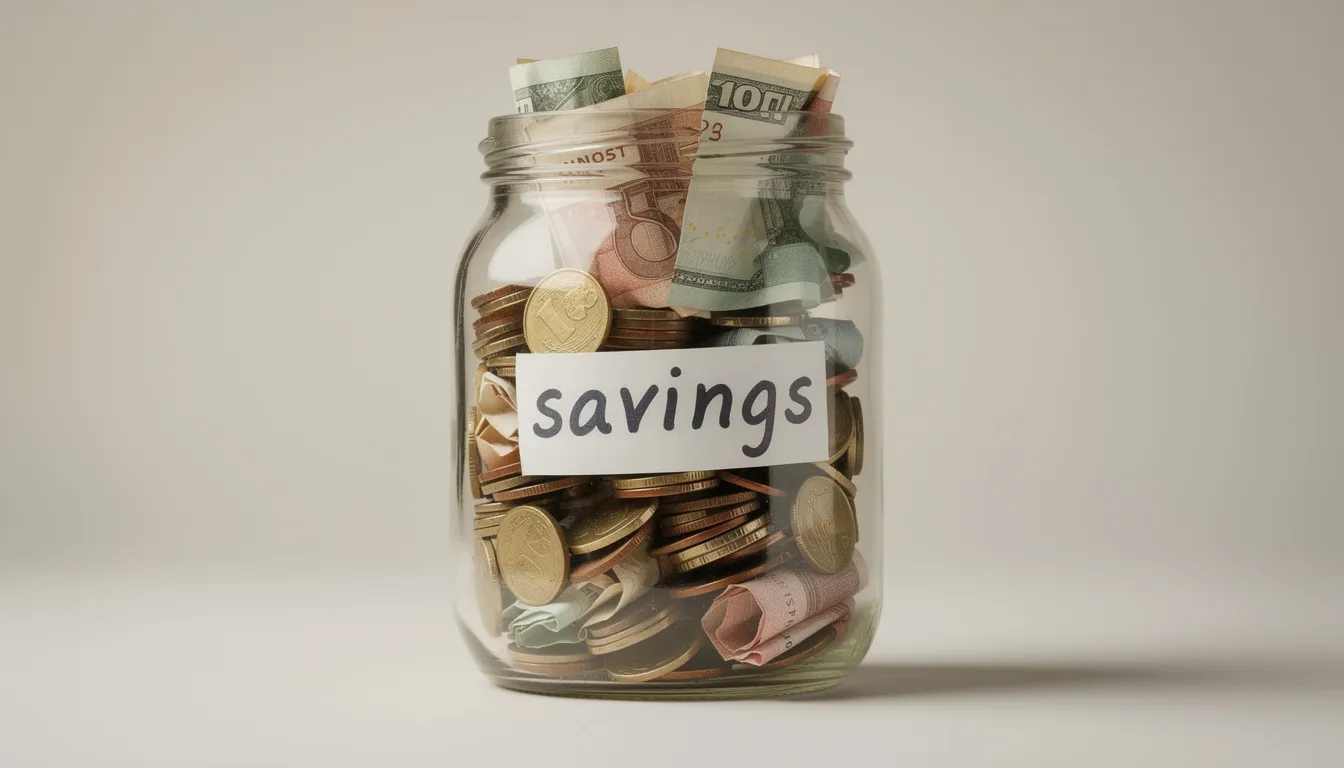
- Building your emergency fund is often a better first step than raising your deductible
Claim Frequency Matters:
- Few or no claims in the past 5–10 years? You’re likely a good candidate for higher deductibles and the premium savings that come with them
- Multiple claims in the past 3–5 years or living in high-claim areas? Lower deductibles can prevent repeated financial strain from frequent claims
Mini-Scenarios to Consider:
A 28-year-old renter with a paid-off car, $4,000 in savings, and no dependents: A $1,000 auto deductible and basic renters policy makes sense. They can absorb a claim without financial crisis and benefit from lower premiums.
A family of four with a mortgage, two car loans, ongoing medical needs, and $2,000 in savings: Lower deductibles across home, auto, and health insurance provide stability. The higher monthly premium is essentially a form of forced savings against unexpected costs.
Comparing High vs. Low Deductible Strategies
Choosing between high and low deductibles is a strategic decision that affects your monthly budget and long-term financial goals. Each approach has clear advantages depending on your situation.
High-Deductible Strategy
Best for: People who are generally healthy, rarely file claims, and can handle surprise bills of $1,500 or more.
Benefits:
- Lower monthly premiums free up cash for other priorities
- For health insurance, HDHPs qualify you for Health Savings Accounts (HSAs) with tax advantages
- You’re less tempted to file small claims that could raise future rates
- Over time, premium savings often exceed what you’d pay in deductibles
Drawbacks:
- A major claim can strain your finances if you’re not prepared
- Requires discipline to maintain adequate savings
- Multiple claims in a bad year can be painful
Low-Deductible Strategy
Best for: Those with chronic health conditions, high accident exposure (long daily commutes, high-crime area parking), or limited savings.
Benefits:
- Smaller, more predictable costs when something goes wrong
- Less chance of needing high-interest debt to cover a deductible
- Peace of mind if you’re risk-averse
- Better protection during years with multiple claims
Drawbacks:
- Higher premiums add up, especially during claim-free years
- May discourage shopping for better rates since you’re “locked in” to a coverage level
- Over a decade, you might pay thousands more than necessary
A Simple Break-Even Comparison:
Say you’re considering raising your homeowners deductible from $500 to $1,500, saving $240 per year in premiums.
- After 5 claim-free years: You’ve saved $1,200
- If you have one large claim during those 5 years: You pay $1,000 more at claim time
- Net result with one claim: Still $200 ahead
- Net result with two claims: $800 behind
Short-Term vs. Long-Term View:
- Short-term: Lower deductibles keep monthly costs predictable and manageable
- Long-term: Higher deductibles typically save money over 5–10 years assuming few claims
The math often favors higher deductibles—but only if you can afford to pay them when needed.
Special Situations: Disaster Zones, Health Plans, and Small Claims
Location, health conditions, and your approach to filing claims can dramatically change what the right deductible looks like for you.
Disaster-Prone Areas
If you live in a hurricane zone (Florida, Gulf Coast), tornado alley, or wildfire-prone regions, percentage-based deductibles deserve serious attention.
Florida homeowners in 2025 often face 2%–5% hurricane deductibles. On a $400,000 home, that’s $8,000–$20,000 you’d owe before insurance pays anything after a major storm. Some policies even include waiting periods—if a hurricane warning has been issued, you may not be able to change your deductible.
What to do:
- Read your policy’s specific hurricane, wind, or hail deductible rules
- Calculate your actual dollar exposure (home’s insured value × percentage)
- Ask yourself honestly: Could you write that check within a week of a disaster?
- Consider whether a higher monthly premium for a lower percentage deductible makes more sense given your savings
Health Insurance Decisions
The choice between high deductible health plans and traditional plans in 2025 comes down to expected medical care.
HDHPs work well when:
- You’re generally healthy and rarely need medical care beyond preventive care
- You want to contribute to an HSA for tax-advantaged savings
- Your employer contributes to your HSA
- You can cover the deductible if something unexpected happens
Lower-deductible plans work better when:
- You’re planning a surgery, pregnancy, or other major procedure
- You have chronic conditions requiring regular specialist visits
- You take expensive prescriptions
- Annual physicals and preventive care aren’t enough for your health needs
The “Don’t File Every Small Claim” Strategy
For home and auto insurance, filing claims that barely exceed your deductible often isn’t worth it.
Example: You have a $1,000 deductible and experience $1,400 in damage. Filing means you receive $400 from your insurer—but that claim goes on your record and could raise your premiums by $100–200/year for 3–5 years. You might pay more in higher premiums than you received.
A higher deductible naturally supports this “self-insure the small stuff, insure the big stuff” approach. You’re keeping more premium dollars and only involving your insurer for significant losses.
Coordinating Deductibles Across Policies
Your deductible strategy should account for your overall risk picture. Someone living in a 2025 wildfire zone might choose a moderate $2,500 home deductible to save on premiums while keeping a lower $500 auto deductible because they drive daily on winding mountain roads. Your insurance agent can help you balance these decisions across all your policies.

Reviewing and Adjusting Your Deductible Over Time
The right deductible today might not be the right deductible three years from now. Your financial situation, property values, and life circumstances change—your deductible choices should keep pace.
When to Review:
- At your homeowners policy renewal each year (usually 30–60 days before expiration)
- During employer open enrollment for health insurance (typically October–December)
- Whenever you buy a new car or complete a major home renovation
- After significant life changes
Triggers to Reconsider Your Deductible:
- Pay raise or new job → You may be able to handle a higher deductible and pocket the premium savings
- Job loss or income reduction → Lowering your deductible might provide needed stability
- Paid off your car loan or mortgage → Freed-up cash flow could support a higher deductible
- Major life events → Marriage, new baby, starting a home business, or a new chronic diagnosis all change your risk equation
- Built up your emergency fund → More savings = more deductible flexibility
Watch for Policy Changes:
Insurance companies regularly adjust their offerings. Your insurer might:
- Revise available deductible options
- Introduce new percentage deductibles for specific perils
- Change discounts based on your ZIP code or state regulations
- Modify how claims affect your rates
Work With a Professional:
An insurance agent or broker can model your actual options—not generic examples—based on your specific address, claim history, and coverage needs. Ask them to show you quotes at multiple deductible levels so you can see exactly how your premium changes with each choice. This takes the guesswork out of choosing the right deductible.
The Bottom Line:
Understanding deductibles, running simple break-even comparisons, and revisiting your choices at least once a year protects both your monthly budget and your long-term financial health. A few minutes of analysis now can save you hundreds or even thousands of dollars over the coming years.
Take 15 minutes before your next policy renewal to review your current deductibles. Calculate whether your savings could comfortably cover them. If the math has changed since you first chose them, it might be time for an adjustment.