
Key Takeaways
- Deductibles are the fixed amount customers pay before insurance coverage kicks in, typically ranging from $250 to $1,000 per claim in most auto insurance policies.
- In 2025–2026 garage claims, deductibles are usually paid directly to the repair shop when the repaired vehicle is picked up after work is complete.
- Higher deductibles lower monthly premiums but increase out of pocket costs when your car needs repairs after an accident or storm.
- When damage estimates fall close to or below the deductible amount, customers often choose to pay out of pocket rather than file a claim and risk future premiums increases.
- Clear communication between the garage, insurer, and customer about the exact deductible amount speeds up approvals, parts ordering, and vehicle delivery.
Introduction: Why Deductibles Matter in Real-World Garage Claims
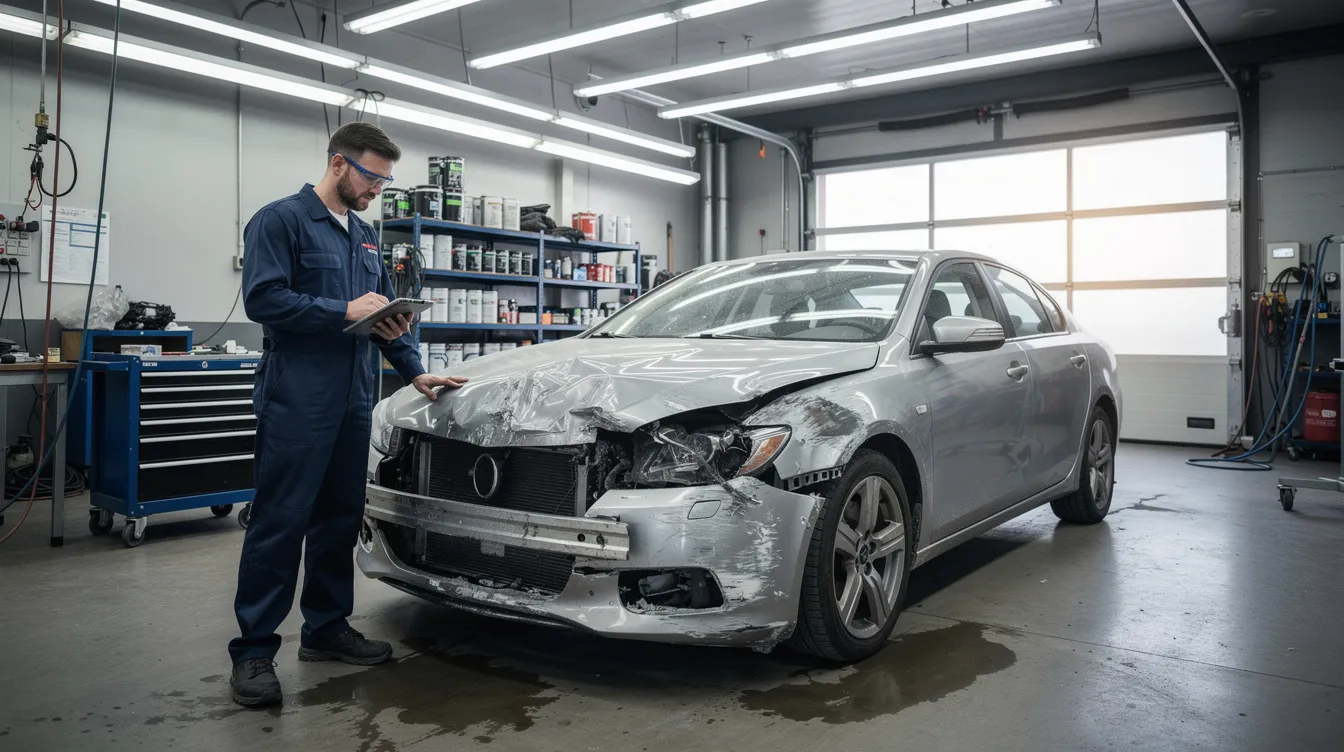
The moment your car enters an auto repair garage after a collision or hailstorm, your car insurance deductible becomes more than just a number on your policy—it becomes real money you need to hand over. Understanding how auto insurance deductibles work from the garage’s perspective helps you make informed decisions about repairs and avoid surprises at pickup.
This article focuses specifically on deductibles as they play out inside body shops and mechanical repair facilities. Rather than covering insurance sales tactics, we’ll walk through how deductibles affect the repair process, payment flows, and the choices you face when your vehicle needs work.
Common U.S. deductible ranges in 2024–2026 sit between $250 and $2,000, and these figures directly shape whether customers use their insurance policy or pay cash. We’ll cover deductible basics, the different types of deductibles that affect garages, how claims flow through the shop, and practical tips for managing costs. Expect concrete examples throughout—like a $1,200 bumper repair or $2,800 hail damage scenario—to make concepts clear.
Deductible Basics in Auto Insurance
A deductible is the fixed out of pocket amount you pay toward a covered loss before your insurance company contributes to repair costs. Think of it as your share of financial responsibility for each incident.
Most auto insurance policies use a per claim deductible structure. This means the deductible applies separately to each incident—two accidents in 2025 means two deductible payments. This differs from health insurance annual deductible structures, where one payment covers the entire year.
Here’s a simple example: Your fender repair costs $1,500, and you have a $500 deductible. You pay $500 to the garage, and the insurer pays the remaining $1,000 directly to the shop.
Typical deductible increments include:
| Region | Common Amounts |
|---|---|
| United States | $250, $500, $1,000, $2,000 |
| United Kingdom | £250, £500, £750 |
According to Insurance Information Institute data, the average deductible in 2024 reached approximately $542, representing a 5% year-over-year increase. Some policies extend to $2,000 or higher, reducing premiums by 20–40% depending on the driver’s profile.
One critical point: your deductible amount is locked in at policy purchase or renewal. You cannot change it retroactively after an accident occurs, which is why garages verify policy details upfront through insurer portals.
Types of Deductibles That Affect Auto Repair Garages
Different types of deductibles trigger based on how the damage occurred. Understanding which coverage applies determines whether the claim lands at a body shop, glass specialist, or gets paid out of pocket entirely.
Collision deductibles apply when your vehicle hits another car, a wall, guardrail, or pole. Over 70% of body shop claims fall under collision coverage, making this the primary deductible type garages encounter daily.
Comprehensive deductibles cover non-collision events: hailstorms, theft damage, vandalism, fallen trees, animal strikes, and natural disasters. These deductibles are often set $250–500 lower than collision amounts to reflect the perceived lower risk.
Liability insurance typically carries no deductible when the at fault party’s insurer pays to repair another person’s vehicle. If you cause damage to someone else’s car, your liability coverage pays their garage directly without requiring them to pay a deductible.
Other deductible-bearing coverages that involve garages include uninsured motorist property damage for hit-and-run incidents and personal injury protection for related medical expenses.
Collision vs. Comprehensive in Practical Garage Scenarios
Consider a 2026 collision claim: A driver with a $1,000 collision deductible brings in a side-swiped SUV. The estimate totals $3,400 for door and quarter panel repairs. The customer pays $1,000 at pickup, and the insurer pays $2,400 to the shop.
Now compare a comprehensive claim: A 2025 hailstorm dents a hood and roof, totaling $2,200 in damage. With a $500 comprehensive deductible, the customer pays $500, and insurance covers the remaining $1,700.
Customers can have different deductible amounts for both collision and comprehensive on the same auto insurance policy. This frequently surprises vehicle owners at the service counter. Service advisors should confirm which coverage applies before explaining deductible expectations.
How Deductibles Shape Claim Decisions in the Garage
Once the estimate is written, the relationship between repair cost and deductible drives whether customers choose to file a claim with their insurance provider.
Break-even situations create the toughest decisions. When repairs run close to the deductible—say $650 damage with a $500 deductible—40–50% of customers opt to pay out of pocket. Why? Filing claims can trigger premium increases of 20–40% according to industry data, making self-payment the better financial sense for minor work.
Sub-deductible repairs mean insurance pays nothing. A $400 bumper scrape against a $750 deductible converts the job to cash-only. The garage deals directly with the customer, losing any direct repair program incentives but avoiding the insurance claim process entirely.
Large repairs almost always justify using insurance. Frame damage or airbag deployment costing $4,000+ makes a $1,000 deductible a reasonable trade-off compared to the total repair cost.
Garages should clearly separate “Customer Portion” and “Insurer Portion” on written estimates. This transparency helps drivers decide whether involving their insurance provider makes sense.
Real-World Examples of Deductible Impact
| Scenario | Repair Cost | Deductible | Claim Filed? | Customer Pays |
|---|---|---|---|---|
| 2024 Compact car front-end | $1,200 | $500 | Yes | $500 |
| 2025 Pickup tailgate | $900 | $1,000 | No | $900 |
| 2025 Sedan frame damage | $6,500 | $1,000 | Yes | $1,000 |
In the first scenario, filing makes sense because the insurer pays $700 toward repairs. In the second, the damage falls below the deductible, so no insurance claim helps—the customer pays the full amount as a cash repair. The third scenario shows how larger claims clearly benefit from insurance coverage despite the higher deductible.
Remember: frequent small claims can affect future premiums, so some customers choose to self-fund minor cosmetic work. Garages provide accurate, itemized estimates that customers use in discussions with their agent, but shops don’t control insurance pricing.
Deductible Payment Flow Inside an Auto Repair Garage
Understanding when and how the deductible gets paid helps both customers and service advisors manage expectations throughout the repair process.
Standard 2025–2026 practice: The customer pays their deductible directly to the repair shop when the vehicle is picked up after car repairs are complete. The insurer pays the balance directly to the shop, usually within 10–30 days.
Alternative setup: Some policies route the full settlement to the customer, who then pays the garage the total amount (including their deductible portion). This approach risks delays if customers mishandle funds.
The total bill equals the estimate plus any supplements—which breaks down to deductible plus insurer payment. Garages cannot “bill the deductible” to the insurance company; that’s the customer’s financial responsibility.
When supplements arise from hidden damage discovered after teardown (like rocker panel rust adding $800), the insurer’s portion increases, but the deductible amount stays the same.
Communication Between Garage, Insurer, and Customer
A typical claim progresses through these steps:
- Vehicle arrives (tow or drive-in)
- Estimate written (1–2 days)
- Insurer approval (2–5 days)
- Parts ordering (3–10 days, depending on availability)
- Repairs completed (3–14 days)
- Final invoice with deductible collection at pickup
Garages should document authorization from both customer and insurer before starting insurance-related work. Confirming the exact deductible amount in writing (email or text) early prevents “surprise bills” at pickup.
Final invoices should include clear line items: “Customer Deductible: $500” and “Insurance Payment: $1,200” for full transparency.
Choosing and Managing Deductibles from a Customer Perspective
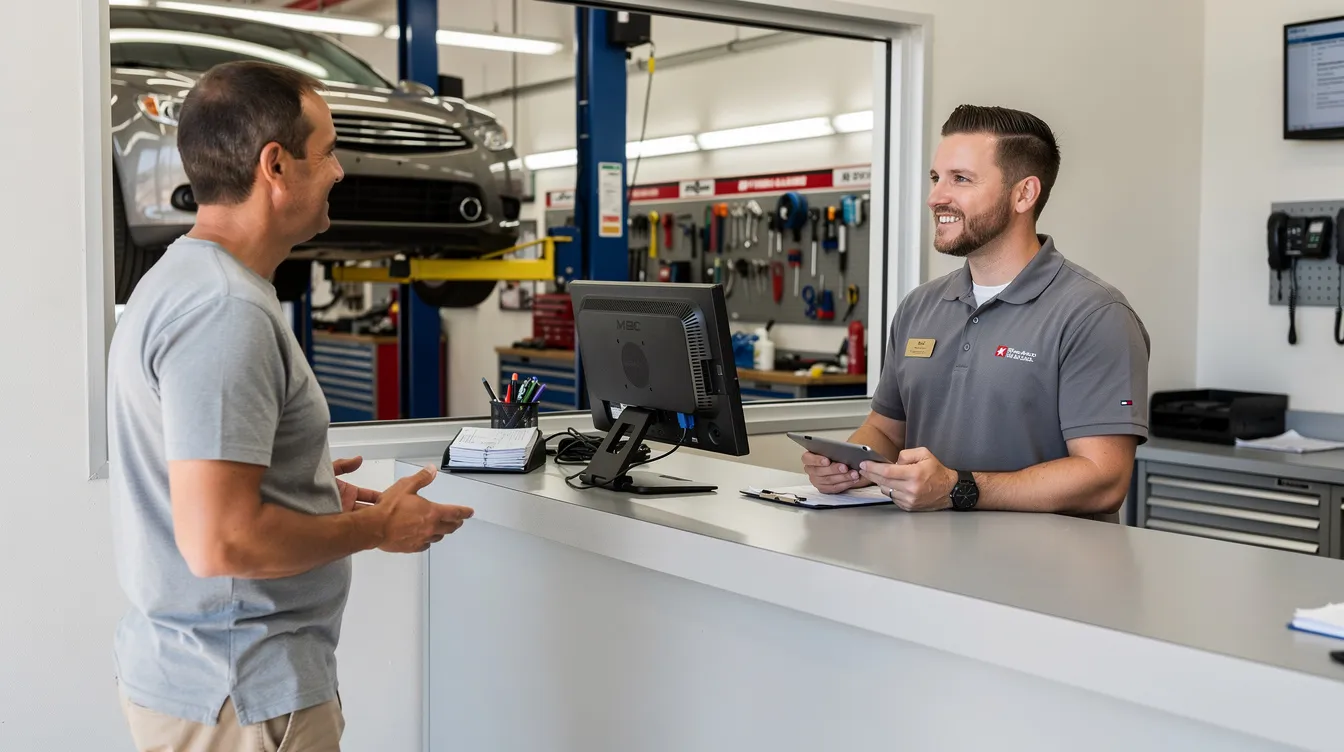
While garages don’t pick customers’ deductibles, service advisors often help drivers understand whether their existing deductible options align with realistic repair costs.
Higher deductibles ($1,000–$2,000) deliver lower monthly costs on premiums—sometimes reducing the annual premium by 15–30%. However, these amounts can cause customers to delay or decline necessary repairs because the up-front cost creates financial strain.
A low deductible ($250–$500) makes authorizing repairs easier after an unfortunate event but increases monthly insurance payments by 10–20%.
The best approach: choose a deductible amount you can comfortably afford to pay within a few days if your car ends up in a garage after a collision or comprehensive loss. Many insurers offer different deductibles for collision and comprehensive, allowing drivers to tailor coverage based on risk tolerance—higher comprehensive deductibles in areas without hail, for example.
Garage Tips to Help Customers Plan for Deductibles
- Encourage customers to maintain an emergency fund equal to at least one full deductible amount
- Gently remind repeat customers who struggle with deductible payments to discuss more manageable options with their agent at renewal
- Provide a simple checklist near the service counter explaining what to ask an insurer about deductibles before multiple accidents or claims occur
- Avoid giving specific insurance advice; focus on explaining how deductibles affect the repair transaction
Special Situations: Glass, Total Loss, and Third-Party Claims
Beyond standard collision and comprehensive scenarios, several less common deductible situations frequently confuse garage customers.
Glass claims: Some comprehensive insurance policies in certain U.S. states offer $0 glass coverage for windshield chip repair or replacement. Data from 2025 shows 15–20% of comprehensive claims bypass body shops entirely due to these glass waivers, directing work to specialist shops instead.
Total loss situations: When the repair cost exceeds 70–80% of the vehicle’s actual cash value (e.g., $12,000 estimate on a car worth $15,000), the insurance company declares a total loss. The deductible subtracts from the settlement payout to the owner rather than being paid to a garage.
Third-party claims: When the other driver is clearly at fault and their liability insurance pays for your repairs, you typically don’t pay your own deductible for body or mechanical work.
In subrogation cases, customers may pay a deductible up front to their own insurer and receive reimbursement later—sometimes 6–12 months later—if the insurer recovers costs from the at fault party.
When Garages See $0 or Waived Deductibles
Legitimate $0-deductible situations include policies with “zero deductible” listed for comprehensive glass or certain roadside-related claims. Insurance companies offer programs like vanishing or deductible forgiveness that gradually reduce amounts after 3–5 claim-free years.
Important warning: Garages must never inflate invoices or shift costs to cover a customer’s deductible. This constitutes insurance fraud in many jurisdictions, with fines reaching $50,000.
Instead, shops should offer payment plans or credit card options for deductible portions. Some garages offer payment plans for customers facing financial stress, providing legitimate assistance without fraudulent billing practices.
FAQ
These FAQs address common garage-side deductible questions that arise during the repair process, focusing on practical scenarios service advisors and customers encounter in 2025–2026.
Can I change my deductible after my car is already in the repair garage?
Once an accident has occurred and an insurance claim is open, you cannot retroactively change your deductible for that loss. Any deductible change you request in 2026 applies only to future claims, not the current one. Garages must work with the deductible listed on your active policy documents and cannot modify it on your behalf. If your current deductible feels too high, discuss options with your insurer at your next renewal date—not during an active claim.
Do I have to pay my deductible before the garage starts repairs?
Most repair shops collect the deductible when you pick up the repaired vehicle after work is complete. However, some shops require partial or full payment up front depending on their payment policies and your financial situation. Ask the service advisor at drop-off exactly when and how payment will be collected. The timing doesn’t change the total amount owed—it simply reflects shop cash flow preferences.
What happens to my deductible if extra damage is found during repairs?
When hidden damage is discovered after teardown and the garage submits a supplement, the insurer may increase the approved claim amount. However, your deductible figure typically stays the same. You still pay only one deductible per claim, even if total repair costs rise significantly. Garages should keep you informed about supplement approvals so you understand the insurer—not you—covers additional approved damage.
Can I use more than one repair shop on the same insurance claim and pay just one deductible?
Insurers generally prefer handling each claim through a single primary repair facility. However, work can sometimes split—body work at a collision center and alignment at a mechanical shop, for example. The deductible applies only once per claim regardless of how many shops are involved, though coordination becomes more complex. Clear multi-shop arrangements with your insurance adjuster in writing before repairs begin to avoid billing confusion.
What if I can’t afford my deductible when my car is ready to leave the garage?
Some garages offer payment options including credit card payments, short-term payment plans, or third-party financing through a loan agreement. Policies vary by shop. Discuss deductible costs with the garage and your insurance provider early in the process rather than waiting until pickup day. Neither the garage nor insurer is typically required to release your vehicle before the deductible portion has been paid according to agreed terms.