
Summer road trips mean long distances, unfamiliar highways, and more drivers on the road. Before you pack the car and hit the interstate, a quick review of your auto insurance can save you thousands if something goes wrong. Here’s your summer travel auto insurance checklist to make sure you’re actually protected – not just assuming you are.
Key Takeaways
- Review your current policy declarations page and confirm your coverage limits, deductibles, and listed drivers at least 2–3 weeks before departure.
- Your personal auto insurance usually follows you across U.S. state lines and into Canada, but not into Mexico – where a separate policy is legally required.
- Raising liability limits from state minimums to $100,000/$300,000 typically costs only $15–$30 more per month but can protect your finances in a serious accident.
- Roadside assistance coverage and rental car coverage are often optional add-ons – double check they’re included before driving long distances.
- Spend 15–20 minutes on this insurance checklist before any summer road trip to catch gaps while there’s still time to fix them.
1. Start With Your Current Policy: Does It Really Travel With You?
Before any June–August 2026 road trip, pull up your current policy declarations page and confirm your policy is current and easily accessible. Ensure your auto insurance policy is active before your trip – an expired or lapsed policy leaves you completely exposed.
Your auto insurance generally follows you across state lines within the U.S. Most auto insurance covers you in the U.S. and Canada for short-term travel. However, confirm your policy remains valid where you’ll be driving. If you plan to cross into Mexico – even Baja or a border town – U.S. policies are not recognized as valid proof of financial responsibility there, and a separate Mexican auto liability policy is required by law.
On your declarations page, locate these core coverages:
- Liability coverage (bodily injury and property damage)
- Collision and comprehensive coverage
- Medical payments or personal injury protection
- Uninsured/underinsured motorist protection
- Endorsements like roadside assistance or rental reimbursement
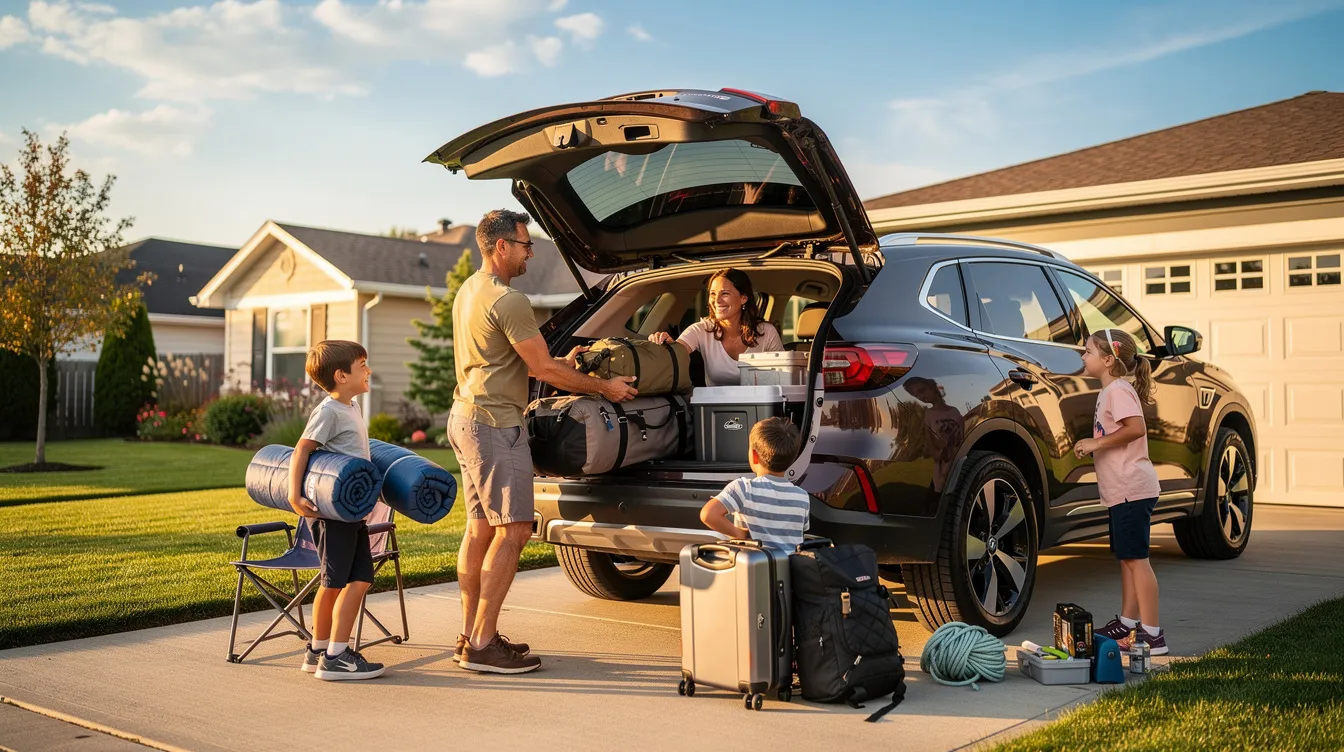
Verify that all additional drivers – your spouse, teen drivers home from college, household members – are listed correctly. Unlisted regular drivers can cause claim denials. If anything about your summer plans is unusual (cross-country move, borrowed vehicle, trailer), contact your insurance agent or carrier before you leave.
Confirm Your Liability and Other Coverage Limits
Liability coverage is required in most states, but minimum liability limits may vary by state requirements – and those minimums are often dangerously low. A common floor like 25/50/25 won’t cover a multi-vehicle accident on a busy summer highway. Increased travel raises accident costs during summer road trips.
Review liability limits to meet state requirements during travel, and check that your liability limits are at least $100,000 per person and $300,000 per accident for bodily injury. Verify your collision and liability limits before a trip. Consult an insurance agent to review your liability limits if you’re unsure. Upgrading from 50/100 to 100/300 typically adds only about $15–$30 per month – a modest cost that can save tens of thousands after a serious accident.
Check whether you have collision and comprehensive coverage and ensure your collision and comprehensive coverage is adequate. Collision coverage pays for your car’s damage in accidents, while comprehensive coverage protects against theft and weather damage. Verify your deductible level to avoid surprises when filing claims – a $1,000 deductible means that much out of pocket before your insurer pays anything.
Check for Uninsured/Underinsured Motorist and Medical Coverage
Summer traffic brings more out-of-town and occasionally uninsured drivers onto the road. Nationally, about 15.4% of drivers are uninsured – reaching 28% in states like Mississippi. Ensure you have adequate coverage for uninsured motorists.
Uninsured motorist coverage pays your medical expenses and sometimes lost wages when the at-fault driver has no insurance. Underinsured motorist coverage kicks in when their liability limits aren’t enough to cover your damages. Check for medical payments or personal injury protection coverage as well – MedPay and PIP help pay medical bills for you and your loved ones regardless of fault.
Example: You’re driving through Kansas and an uninsured driver runs a red light and hits your vehicle. Without UM coverage, you pay your own medical expenses out of pocket. With it, your insurer steps in.
Aim to keep these coverages close to your liability limits for balanced protection.
2. Roadside Assistance and Emergency Prep for Summer Road Trips
Summer heat, long distances, and crowded interstates increase breakdown risk. Standard auto insurance usually does not include roadside assistance – it’s an optional add-on. Confirm if you have roadside assistance coverage for long-distance trips, and consider adding roadside assistance for road trips if you don’t. It’s an affordable add-on to most auto policies.
Understand what’s covered by your roadside assistance policy. Look for:
- Towing (check mileage limits – basic plans may cover only 5–15 miles, while premium plans reach 200+)
- Battery jump starts and jumper cables assistance
- Flat tire and tire changes
- Lockout services
- Fuel delivery
- Winching if stuck off-road
Confirm your policy covers roadside assistance services like towing adequate for rural highway or national park travel. Roadside assistance can come through your auto insurance, an auto club, your car manufacturer, or credit card benefits – verify which you actually have active.
Pack an Insurance-Friendly Emergency Kit
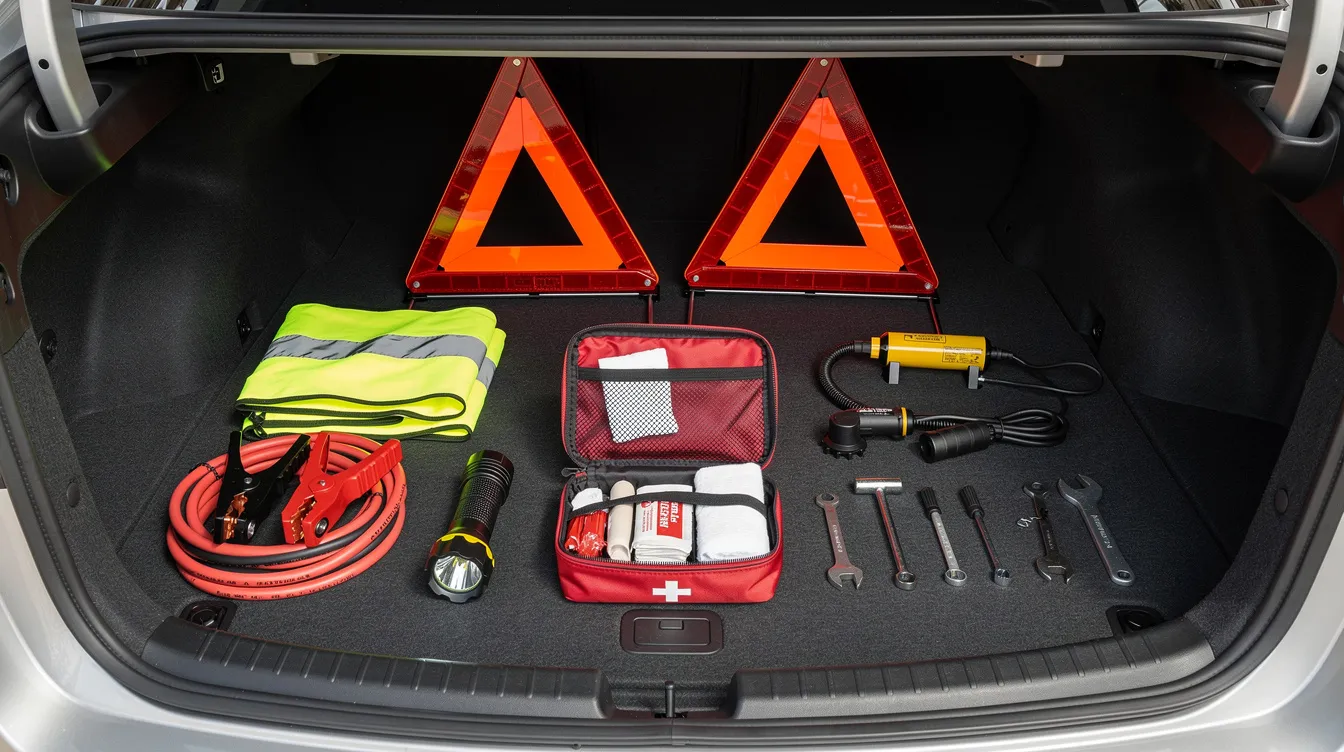
An organized emergency kit makes both roadside situations and claim handling smoother. Pack an emergency kit with essential supplies for your trip:
- Printed proof of insurance and registration (keep digital and physical copies of your insurance card available)
- Keep a digital copy of your insurance card on your phone
- Insurance company contact numbers – always keep your insurance company’s contact information accessible
- Phone charger, flashlight, reflective triangles
- First aid kit and tire pressure gauge
- Small notebook and pen for recording other drivers’ info after an accident
- Keep physical or digital copies of your policy numbers accessible
Have a mechanic inspect your vehicle before a road trip, and ensure your vehicle is road-ready before travel. Ensure your driver’s license and car registration are valid. Keep important documents organized for easy access during your trip – being organized at the scene of an accident makes the claim process faster.
3. Rental Cars and Borrowed Vehicles: Avoid Coverage Gaps
Many summer trips involve renting a car or borrowing one, and coverage gaps here catch people off guard. Check if your personal auto policy extends to rental vehicles before renting. Most auto policies extend coverage to rental cars for personal travel in the U.S. and Canada, but exceptions exist.
- Business rentals, rideshare driving, or delivery work typically aren’t covered by a personal auto insurance policy.
- Being listed as an additional driver on the rental contract is usually required for coverage to apply – add spouses or adult children who will share driving.
- Your deductible applies to rental car claims, and coverage limits mirror your current policy. Low limits at home mean low limits on the rental car.
Rental Car Company Insurance and Credit Card Benefits
Before you arrive at the counter, confirm rental car coverage details. The rental company’s insurance options typically include:
| Protection | What It Covers |
|---|---|
| CDW/LDW | Physical damage to the rental; may include loss-of-use fees |
| Liability supplement | Bodily injury/property damage to others |
| Personal accident | Medical expenses for you and passengers |
| Personal effects | Lost luggage and belongings inside the car |
Verify your policy before declining rental insurance. Loss-of-use fees are often not covered by auto policies, but a CDW from the rental company typically handles them. Credit cards may offer rental car damage coverage – many major cards provide secondary coverage when you pay with that card and decline CDW. Check your card’s 2026 benefit guide before traveling.
Quick checklist: Confirm whether your personal auto insurance, the rental company’s products, or credit card benefits will be primary for collision damage, and decide on a plan before pickup.
Driving a Borrowed Car on a Summer Trip
Insurance generally follows the car first, then the driver. If you borrow someone’s vehicle for a summer road trip, the owner’s policy is usually primary. Your own auto insurance may act as secondary if you carry compatible coverages.
Confirm with the car owner that their policy allows occasional drivers and that the vehicle is properly insured and covered for multi-state travel. For longer trips – a week-long July vacation, for instance – the owner may want to call their insurer and temporarily list the visiting driver. Keep both parties’ proof of insurance handy and discuss who will pay deductibles if involved in an at-fault crash.
4. Towing, Trailers, Boats, and Extra Gear on Summer Roads
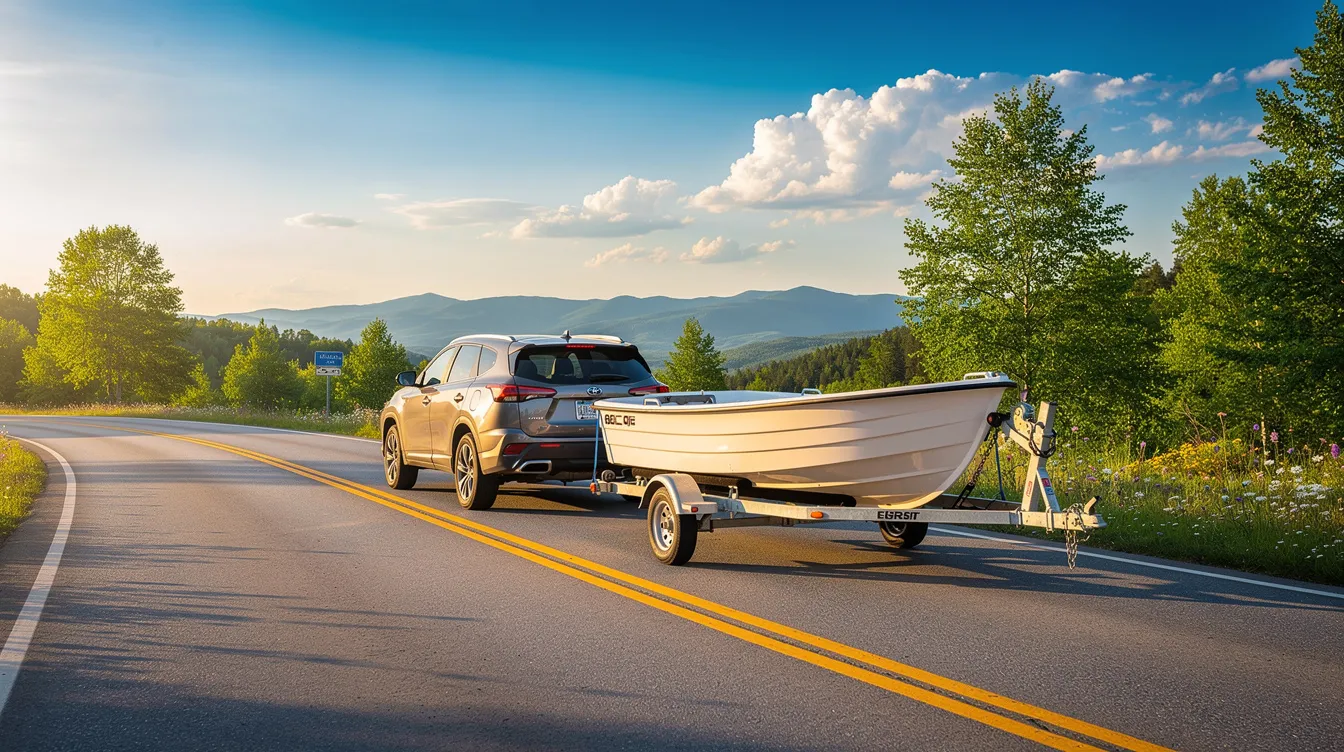
Summer road trips often include trailers, boats, and cargo carriers that aren’t fully covered by a standard auto insurance policy. Verify insurance coverage for towing if you plan to travel with a trailer. Your liability coverage from the towing vehicle usually extends to a properly attached light trailer, but physical damage to the trailer itself typically requires separate trailer coverage.
High-value boats, toy haulers, or campers need dedicated coverage listing their value and VIN or hull number. Overloaded or improperly secured cargo can lead to claim denials – adjusters will investigate weight limits after a loss. Some policies also exclude coverage when a vehicle is used for paid hauling during what the driver considers a vacation side gig.
Customizations, Roof Racks, and Personal Property
Custom equipment like expensive wheels, sound systems, or lift kits may require a custom parts endorsement to be fully covered after a theft or collision. Standard auto insurance won’t reimburse above factory value without one.
Personal property inside the car – laptops, cameras, golf clubs, camping gear – is generally better protected under homeowners or renters insurance with off-premises coverage, subject to deductibles. Take photos or a simple inventory of high-value items before departure. Keep the most valuable items hidden, locked, or brought into lodgings overnight.
5. Out-of-State and Cross-Border Travel: What Changes?
Review your policy to confirm you are covered for driving out of state. Your insurer typically applies the higher of your policy limits or that state’s minimum requirements for out of state travel, but not beyond the limits you purchased. Verify your liability limits are adequate for interstate travel across state lines.
Fault and compensation rules follow the laws of the state or province where the crash occurs, which can affect how much a claim pays. For cross-border travel, U.S. policies are often accepted in Canada but not in Mexico, where separate insurance is mandatory – even in border free zones. Trip interruption coverage or travel insurance can reimburse unexpected costs if your trip is cut short. Arrange destination-specific coverage well before departure.
Documents and Proof of Coverage to Carry
Having the right documents speeds up rest stops, border crossings, and claims. Carry:
- Valid driver’s license and current vehicle registration
- Printed or digital proof of insurance (your insurance card)
- International insurance documents if applicable
- Roadside assistance membership cards
Keep backup printed copies in case phones die. Confirm that the name and vehicle information on your documents match what law enforcement will see. Store everything in a waterproof pouch in the glovebox for quick access.
6. Your 15-Minute Summer Travel Auto Insurance Checklist
Use this as your pre-trip routine to get road trip ready:
- Pull your current policy – verify coverage for liability, collision, and comprehensive. Adjust limits if too low for summer travel.
- Confirm roadside assistance, rental car coverage, uninsured/underinsured motorist, and medical coverage. Add any that are missing.
- Check coverage for trailers, boats, custom equipment, and high-value personal property. Add separate policies where needed.
- List all drivers. Confirm college students and household members are properly disclosed.
- Store insurance documents, program claim and roadside numbers into your phone, download your insurer’s app. Schedule a quick call with your insurance agent if anything on this checklist is unclear.
Spend the time now so you can protect your loved ones – and your wallet – all summer. Review your coverage before you leave, and enjoy the peace of mind that comes with being properly covered. Leave a comment below if you have questions about your specific plan.
FAQs: Summer Travel and Auto Insurance
Does my auto insurance cover me if I rent a car for a summer road trip in another state?
Many personal auto policies extend liability and physical damage coverage to rental cars used for personal travel in the U.S. and Canada. Coverage usually mirrors the limits and deductibles on your current policy. However, business rentals or rideshare use may not be covered – check if your policy covers rental vehicles before renting, and confirm exact terms with your insurer.
How far in advance should I review my auto insurance before a summer trip?
Review your coverage 2–3 weeks before departure. This gives you time for policy changes, new insurance card delivery, and coordination with your insurance company during busy summer months. Simple changes like adding roadside assistance can often be done the same day, but earlier planning reduces stress.
Will my auto insurance pay for a rental car if my vehicle is in the shop after a road trip accident?
Rental reimbursement is an optional coverage – not automatically included. It pays a daily allowance (for example, $30–$50 per day up to a fixed maximum) toward a rental car while your vehicle is being repaired after a covered claim. If you rely on one vehicle for summer plans, ask your insurer about adding this before a long trip.
Are my kids covered if they come home from college and drive on our summer vacation?
Coverage depends on how your policy lists drivers and household members. Most insurers want regular drivers – including college students home for summer – disclosed on the policy. Contact your insurer before summer break to confirm your student’s status and whether premium adjustments or discounts apply.
Does auto insurance cover everything I pack in the car for vacation?
Standard auto insurance focuses on the vehicle itself and liability to others. Personal belongings like luggage, electronics, and sports equipment are usually better protected under homeowners or renters insurance with off-premises coverage. Check your home or renters policy for limits and deductibles on property away from home, and take extra care with especially valuable items.