Key Takeaways
- Your auto repair shop insurance must be active before you touch a single customer vehicle—even during soft openings or work on friends’ cars. Coverage effective dates should match or precede your lease possession date.
- Most start-up auto repair garages need general liability, garage keepers coverage, commercial property insurance, and commercial auto coverage from day one. Workers compensation becomes mandatory the moment you hire your first employee.
- New owners frequently underinsure by choosing liability limits below $1 million or setting garage keepers limits lower than the total value of vehicles on their lot. Business interruption coverage is another commonly forgotten essential.
- Working with an insurance agent who regularly insures repair shops—not just generic small businesses—can identify coverage gaps and often keep premiums more competitive.
Introduction: Why Insurance Matters Before You Open the Bay Doors
Picture this: a new auto repair business in 2026, signing a lease on a promising 3-bay location, ordering lifts, and planning a grand opening. The owner assumes insurance can wait until paying customers arrive. That assumption could end the business before it starts.
A single fire destroying customer vehicles overnight, a slip-and-fall in the waiting area, or a brake failure during a test drive can wipe out personal savings and create debt that follows you for years. The moment you sign a lease, finance equipment, or accept keys to a commercial space, you’ve created insurable risk.
This article walks first-time shop owners through which policies you need, when coverage must begin, typical insurance cost ranges for 2026, and the mistakes that catch new owners off guard. The focus is on independent start-up shops handling general repair, diagnostics, and light collision repair—not franchises or dealership service departments.
Day-One Coverage for New Garages: Policies You Need Before Opening
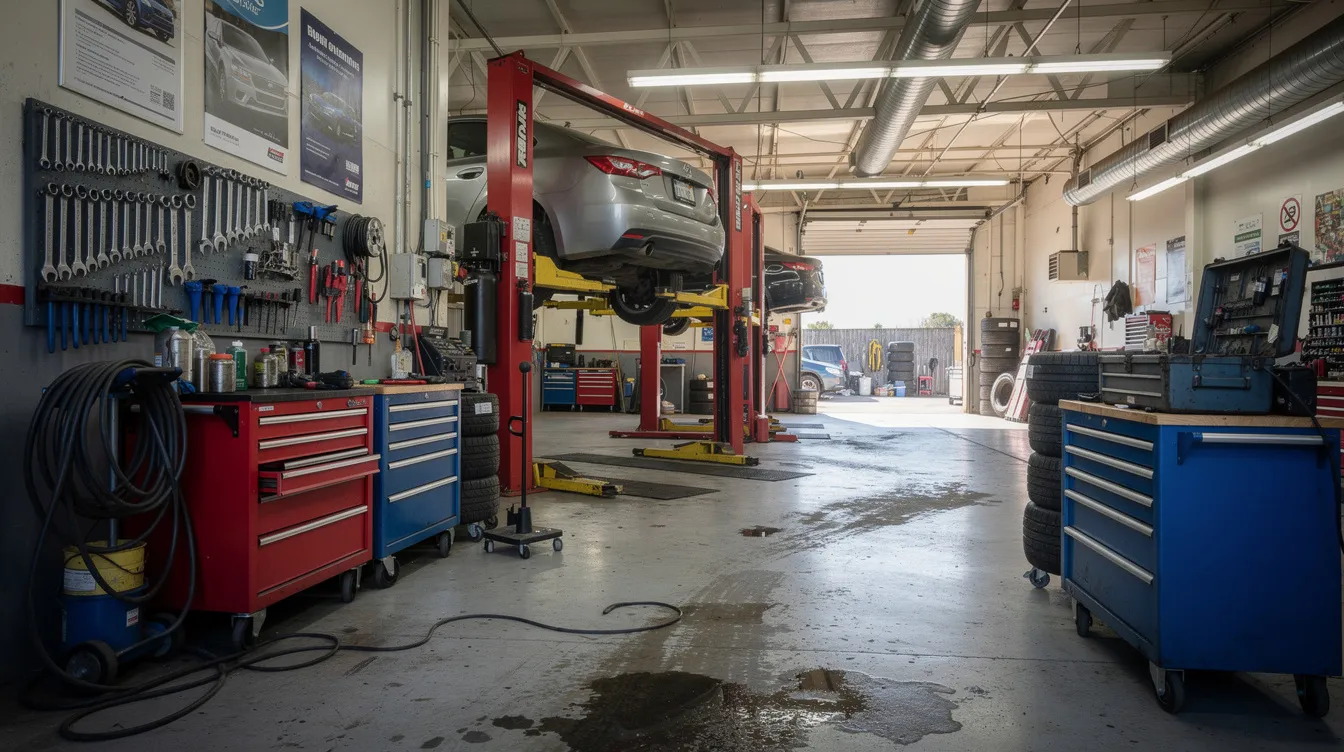
Bind your core policies at least several days before your official opening date—and absolutely before any pre-opening test work on customer vehicles. The effective date of your coverage should match or precede the date you take possession of your premises under your lease.
Your day-one policies should include:
| Coverage | What It Protects |
|---|---|
| General liability | Customer injuries on premises, property damage |
| Garage liability | Vehicle-related operations, test drives |
| Garage keepers | Customers’ cars in your care |
| Commercial property | Building, equipment, tools, contents |
Many landlords require proof of general liability and property insurance—with them listed as additional insured—before handing over keys. A 3-bay start-up shop in Texas, for example, needs coverage for customer injuries in the waiting area and damage to vehicles parked overnight before the first customer ever arrives.
Core Coverages Every Start-Up Auto Repair Garage Should Consider
Understanding each coverage type helps you build a complete insurance program. The sections below define each coverage, provide real-world claim examples, and include realistic limits and cost guidance for 2026.
General Liability and Garage Liability
General liability insurance covers bodily injury and property damage on your premises—a customer slipping on an oil spot, or damage to personal belongings in your waiting area. However, standard liability insurance typically excludes vehicle-related incidents.
Garage liability extends protection to operations involving vehicles: road testing, moving cars around the lot, or incidental towing. Consider this scenario: you complete a brake repair, and during a test drive the brakes fail, causing a collision. Garage liability responds to cover the property damage and injuries involved.
Starting limits for a typical 2-5 bay shop should be around $1 million per occurrence and $2 million aggregate. Some insurers bundle general liability and garage liability into one policy; others separate them. Ask your agent exactly how your policy is structured to avoid gaps.
Garage Keepers Coverage for Customer Vehicles
Garage keepers coverage protects customer vehicles while in your care, custody, or control—whether parked inside, outside, or on a test drive. This is separate from liability coverage; it’s first-party property coverage on the customer’s car.
Two policy forms exist: “legal liability” (pays only when you’re at fault) and “direct primary” (pays regardless of fault). Direct primary coverage means faster claim handling for customers and better reputation protection for new shops.
Set your limits based on peak exposure. If you typically have 10 vehicles on-site averaging $35,000 each, you need at least $350,000 in garage keepers coverage. Underinsuring—carrying $250,000 when $600,000 of vehicles are regularly present—is one of the biggest mistakes new auto repair shop owners make.
Commercial Property Insurance: Building, Contents, and Tools
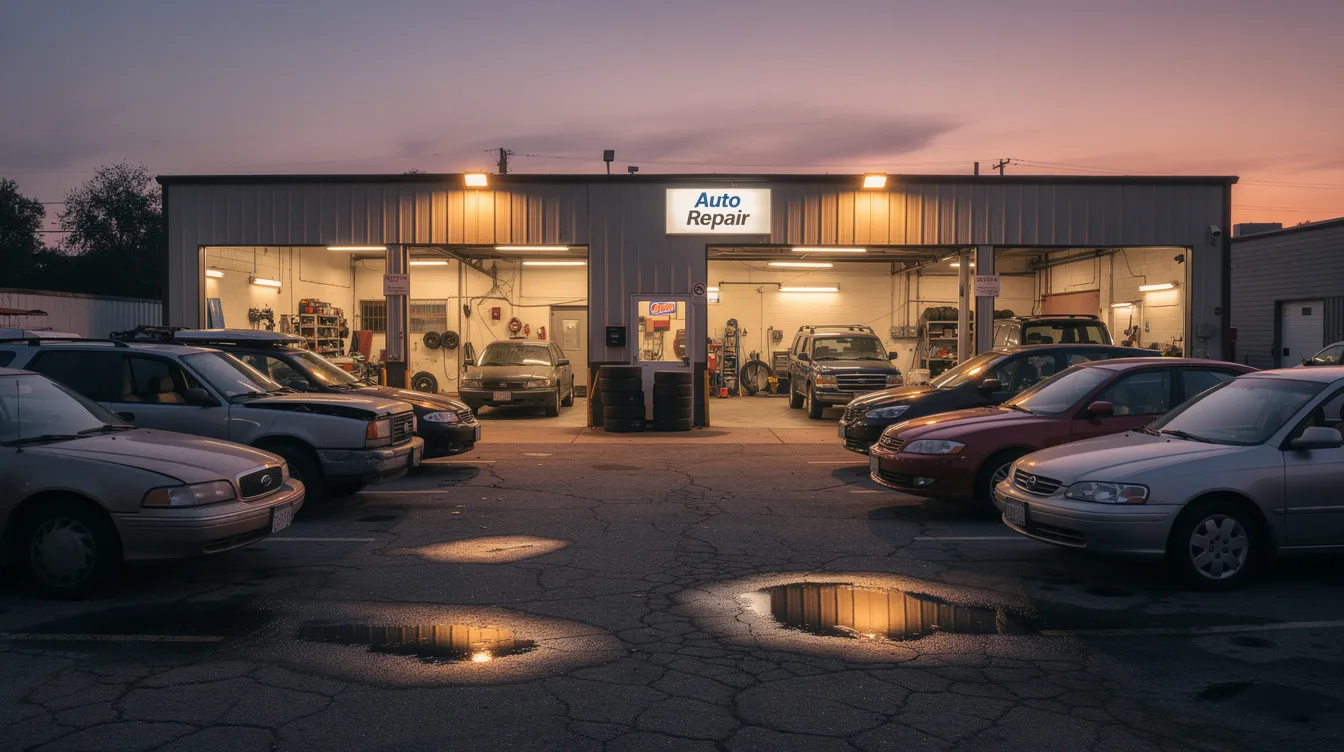
Commercial property insurance covers your physical location (if owned) plus contents: lifts, diagnostic equipment, tire machines, air compressors, and hand tools. Even if leasing, tenants need coverage for build-outs, signage, and equipment they own or finance.
Choose replacement cost coverage rather than actual cash value. A two-post lift purchased for $6,000 might depreciate to $4,000 after five years—but replacing it still costs $6,000 or more. Actual cash value policies leave you short.
Rough 2026 values to consider:
- Basic 2-post lift: $4,000–$8,000
- Quality scan tool: $3,000–$10,000
- Cumulative shop equipment: often exceeds $100,000
Add business income coverage to pay ongoing expenses—rent, payroll, loan payments—if a covered loss forces closure for several months.
Commercial Auto, Hired and Non-Owned Auto (HNOA)
Commercial auto insurance covers company vehicles titled to the business: courtesy shuttles, parts runner vans, or mobile service trucks. A $1 million combined single limit is standard for start-ups.
Hired and Non-Owned Auto coverage addresses a different exposure: when employees drive personal vehicles for business errands. Your service writer uses their personal truck to make a bank deposit and rear-ends another vehicle. Without HNOA, the shop faces full liability—and the employee’s personal auto policy will likely deny the claim due to business use.
HNOA typically costs just $300–$800 annually, making it one of the best-value coverages available. Don’t assume personal auto policies protect you during business errands.
Workers’ Compensation for Techs and Service Staff
Most states require workers compensation the moment you hire your first W-2 employee—including full-time automotive service technicians, part-timers, and service advisors. Operating without required coverage can result in state penalties, personal liability for injuries, and even criminal charges.
Workers comp covers medical expenses, a portion of lost income (typically 60-70%), and rehabilitation for work injuries: back strains from lifting heavy equipment, cuts from tools, burns from engine components.
Rates are quoted per $100 of payroll and vary by state and job classification. A start-up in Ohio with two technicians earning $55,000 each might expect annual workers comp premiums of approximately $1,400–$2,000, depending on classification codes and experience modifiers.
Employment Practices Liability Insurance (EPLI)
EPLI covers claims of wrongful termination, discrimination, harassment, or retaliation from current, former, or prospective employees. Even small shops with 3-5 employees face HR-related claims, and legal fees alone can reach tens of thousands of dollars.
A $1 million EPLI limit typically costs $1,000–$3,000 annually for a small shop. If a terminated technician alleges discrimination, EPLI helps cover attorney fees and potential settlements.
Reduce premiums through written hiring procedures, documented disciplinary processes, and anti-harassment training.
Optional but Important: Umbrella, Pollution, and Cyber Liability
An umbrella policy provides extra liability coverage above your primary policies—typically starting at $1 million and scaling to $5 million. A serious road-test accident could exhaust your primary $1 million limit; the umbrella responds to cover the excess.
Pollution liability addresses risks excluded from standard policies: improper waste oil disposal, solvent spills, or battery acid leaks. Environmental cleanup costs add up quickly.
Cyber liability protects against ransomware attacks and data breaches—relevant even for small garages storing customer names, credit card details, and vehicle histories in shop management software.
When to Add or Adjust Coverage as Your Garage Grows
Insurance for your new business shouldn’t remain static. Review and adjust coverage when you hit growth triggers:
- Hiring your first employee
- Purchasing the building
- Adding alignment racks or paint booths
- Launching mobile repair services
- Offering financing or online booking
Schedule annual policy reviews 30-60 days before renewal. Track equipment purchases throughout the year so you can provide updated values to your insurance company at renewal.
Typical Insurance Costs for Start-Up Auto Repair Garages in 2026
Exact premiums vary depending on several factors: state, city, claims history, services offered, and payroll levels. However, rough benchmarks help business owners budget realistically:
| Coverage | Typical Annual Range |
|---|---|
| General/Garage Liability | $2,000–$6,000 |
| Garage Keepers | $1,000–$3,500 |
| Commercial Property | $1,500–$5,000 |
| Workers Comp | Varies by payroll |
| Commercial Auto | $1,200–$4,000 |
| HNOA | $300–$800 |
A business owner’s policy bundling several coverages can reduce total costs by 10-25% compared to separate policies. Underinsuring to save premium is risky—raising deductibles and improving safety practices is a better long-term cost control strategy.
How to Shop for Insurance as a First-Time Garage Owner
Not all agents understand garage operations. Prioritize agents with proven experience in auto mechanic insurance who understand garage keepers, HNOA, and pollution exposures.
Before getting quotes, gather detailed information:
- Projected annual revenue
- Number of bays and services offered
- Payroll estimates by employee type
- Equipment inventory and values
Compare quotes beyond price alone. Review coverage limits, exclusions, deductibles, and sublimits. Ask about loss-control support: safety checklists, sample employee handbooks, and driver screening guidance can reduce both claims and premiums.
Common Insurance Mistakes New Auto Repair Garage Owners Make
First-time shop owners repeat the same errors, often because they rush through setup under tight budgets:
- Starting work before coverage is active: Even oil changes on friends’ cars create full liability exposure
- Choosing limits that are too low: $500,000 in liability when $1 million is industry standard
- Ignoring business income insurance: A three-month forced closure without coverage can mean $45,000+ in lost income and ongoing expenses
- Not updating property values: Adding equipment without updating the property schedule leaves you underinsured
- Relying on personal auto policies: Test drives and parts runs need proper commercial auto or HNOA coverage
- Skipping workers comp for part-time help: State penalties and personal liability far exceed premium savings
Consider this scenario: you buy a new $8,000 lift mid-year but don’t update your property insurance. A fire destroys the shop. Your insurer may dispute whether that lift was covered, leaving you thousands short of full replacement.
FAQ: Insurance for Start-Up Auto Repair Garages
Do I really need insurance before I open if I am only working on friends’ cars?
From the moment you take possession of a commercial space or start working on any vehicle for pay or barter, you expose yourself to liability. Fires, slips, and test-drive accidents don’t distinguish between friends and paying customers. Set your policies’ effective dates to start before your first scheduled repair, including soft openings.
What if I am starting out in my home garage before leasing a commercial space?
Most personal homeowners and personal auto policy options exclude or severely limit coverage for business-related auto repair work from a residence. A home-based start-up performing repairs for compensation should discuss proper business liability coverage with an agent. Zoning rules and licensing requirements may also restrict operating from home.
Can I put everything under one “garage policy,” or do I need multiple policies?
Many insurers offer package solutions combining general liability, garage liability, garage keepers, and property into one policy. Workers comp and commercial auto typically remain separate. Bundling simplifies administration but confirm exactly which coverages are included. Request a one-page summary listing each coverage, limit, and deductible.
How high should my liability limits be for a new garage?
Most start-up repair shops choose at least $1 million per occurrence and $2 million aggregate in general/garage liability. Higher limits apply if you work on own cars of high value or perform safety-critical systems work. A commercial umbrella can add $1–$5 million above base policies for modest additional premium.
Will my lender or equipment finance company require specific insurance?
Lenders financing your building or heavy equipment commonly require property insurance at full replacement cost and listing them as loss payee. They may also require minimum liability limits and business interruption coverage to ensure loan payments continue after a loss. Share lender requirements with your agent early to avoid funding delays.