
Key Takeaways
- First time homebuyers must budget for homeowners insurance from the very start of house hunting—not just at closing—since most lenders require proof of coverage before funding the mortgage.
- Standard home insurance policies do not cover floods or earthquakes; buyers in high-risk areas may need separate NFIP flood insurance or earthquake insurance, which should factor into affordability calculations.
- Insurance premiums depend heavily on the home’s location, age, construction type, roof condition, claim history, and the buyer’s credit rating and insurance history.
- This first time homebuyer checklist walks through the insurance process chronologically: before shopping, while house hunting, before making an offer, just before closing, and after move-in.
- Comparing quotes from multiple insurers using identical coverage limits and deductibles can save money and help avoid underinsurance—a trap that catches 40% of homeowners.
Introduction: Why Insurance Belongs on Your Homebuying Checklist
Most first time homebuyers spend weeks obsessing over down payment amounts, interest rates on a fixed rate mortgage, and finding a reputable real estate agent. Yet homeowners insurance often gets pushed to the back burner until closing day approaches. This is a mistake that can derail your timeline and blow up your budget.
Here’s a concrete example: a couple purchasing a $350,000 dream house in 2024 might pay anywhere from $1,500 to $3,000 per year in home insurance depending on location, coverage choices, and the physical characteristics of the property. In high-risk coastal areas or states prone to natural disasters, that number can climb even higher.
This article provides a practical, step-by-step insurance checklist designed to work alongside your traditional home buying process documents. By thinking about insurance early, you can avoid last-minute surprises at closing, identify potential deal-breakers before you fall in love with a particular house, and ultimately save money over the life of your loan.

Step 1: Before You Start House Hunting – Get Insurance-Ready
Before you even begin scrolling through listings or contacting a real estate agent, there are several insurance-related preparations that can pay off significantly. Getting your financial house in order from an insurance perspective is just as important as getting pre-approved for home loans.
Credit and documentation prep:
- Check your credit reports early. In most U.S. states, insurers use credit-based insurance scores to help determine your homeowners insurance premiums. Pull your credit reports from Equifax, Experian, and TransUnion at least 3–6 months before you start shopping. Dispute any mistakes immediately—errors can inflate both your mortgage rate and your insurance costs.
- Avoid new debt. Taking on new credit card balances or car payments before buying can hurt your debt to income ratio for mortgage approval and potentially raise insurance pricing. Keep your financial situation stable during this period.
- Maintain your renters insurance policy. If you’re currently renting, keep an active renters insurance policy in place. This protects your belongings during the transition and builds a useful insurance history that can help you secure better rates as a home buyer. Insurers view continuous coverage favorably.
- Ballpark your annual insurance costs. Use online quote tools to estimate what you might pay for home insurance coverage in your target neighborhoods. Add this figure to your monthly housing budget alongside property taxes, HOA dues, and any private mortgage insurance you might need.
- Gather personal information. Most insurers will ask for your driver’s license, prior addresses, and details about any prior insurance claims. Having this ready speeds up the quote process once you find properties you’re serious about.
Step 2: While House Hunting – Evaluate Each Property’s Insurance Risks
Not all homes are created equal when it comes to insurance costs. Some properties are naturally more expensive to insure, and savvy buyers can screen for hidden insurance costs while touring homes. Your real estate agent can help, but you should also know what to look for yourself.
Property characteristics that affect premiums:
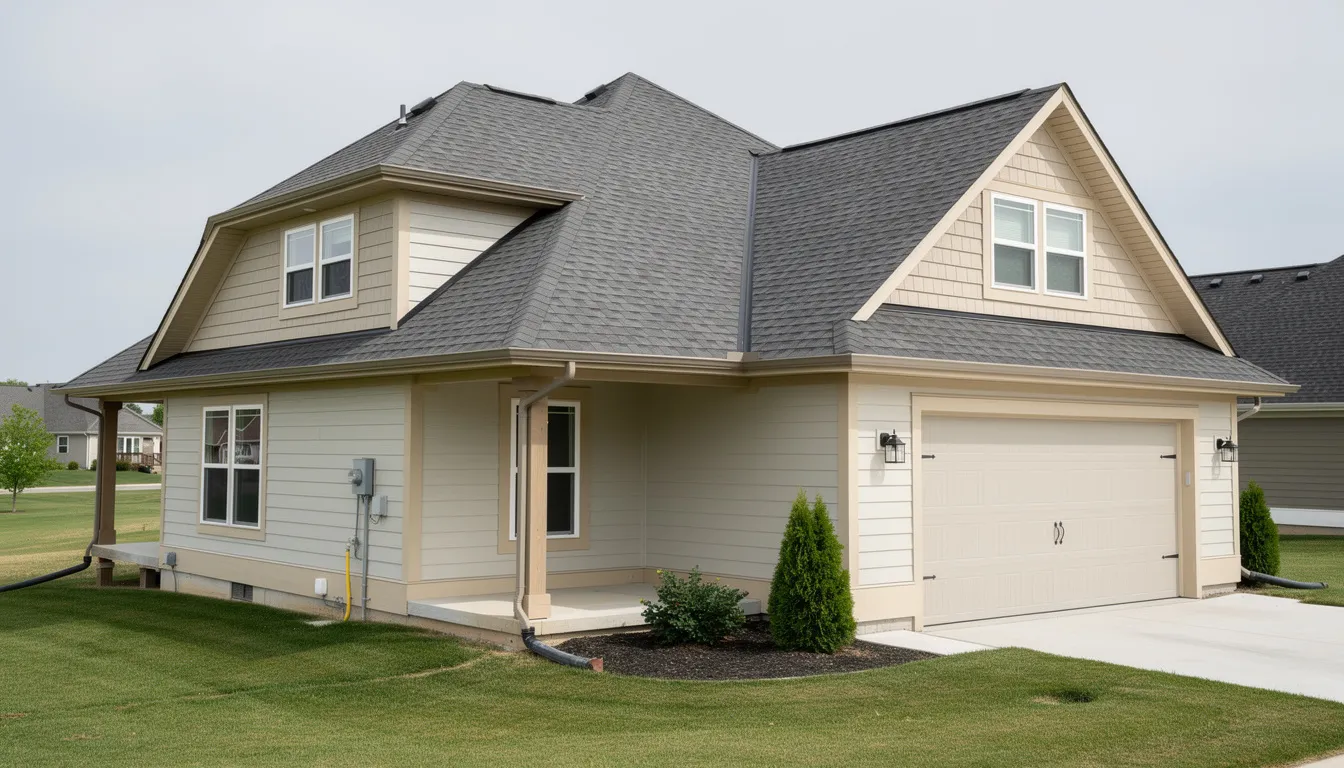
- Size, age, and construction type all influence what you’ll pay. A newer home built to current building codes with brick construction and a recently replaced roof will generally cost less to insure than an older wood-frame house with aging plumbing and electrical systems.
- Roof condition matters significantly. Roofs over 15–20 years old can spike your rates by 20–50% or even lead to non-renewal. When you get a house inspected, pay close attention to what the inspector raises questions about regarding the roof.
- Location-related risks include proximity to permanently staffed fire departments and fire department houses. Homes near high-quality fire stations and hydrants can see premiums drop by up to 20% due to faster emergency response times. Check historical wildfire, tornado, or hurricane activity in the ZIP code.
- Coastal and wind-prone areas require special attention. Coastline houses located near the Atlantic, Gulf Coast, Pacific, or Great Lakes often face separate windstorm or hurricane deductibles—sometimes 1–5% of dwelling coverage. These percentage deductibles can mean thousands out-of-pocket after a storm.
- Flood zones require separate coverage. Standard homeowners insurance does not cover flood damage. Homes in FEMA Special Flood Hazard Areas typically require separate NFIP flood insurance or coverage from private insurers. More than 20% of NFIP claims come from moderate-risk zones that buyers often assume are safe.
- Earthquake insurance is separate too. If you’re buying in California, the Pacific Northwest, or parts of the central U.S., you’ll likely need standalone earthquake insurance since standard home insurance excludes this peril entirely.
- Ask about premium-lowering upgrades. During showings, inquire about safety features like impact-resistant roofing, modern electrical system upgrades, central fire and burglar alarms, or swimming pool safety fencing. These improvements can qualify for discounts of 10–15%.
Step 3: Before You Make an Offer – Investigate Insurability and Claim History
Once you’ve found a property you love, it’s time to dig deeper into insurability before committing with an offer or earnest money deposit. The last thing you want is to discover after signing a contract that the home has a problematic insurance history or features that make coverage difficult to obtain.
Steps to investigate insurability:
- Request a loss history report. Reports like C.L.U.E. (Comprehensive Loss Underwriting Exchange) or A-PLUS show prior insurance claims on the property over the past 5–7 years. Sellers or their agents can request these documents. A pattern of repeated water damage, fire claims, or liability claims could make coverage more expensive or harder to secure.
- Schedule a thorough home inspection. Hire a credentialed inspector to check roof integrity, plumbing leaks, old wiring, foundation issues, and any underground oil storage tank on the property. All of these affect insurability and premiums. If the inspector raises questions about major systems, factor potential repair or replacement costs into your offer.
- Get preliminary insurance quotes. Contact a prospective homeowners insurer or insurance company at this stage. Provide the home’s address, square footage, construction type, and proposed closing date to get realistic pricing before you’re committed.
- Ask about special coverage needs. Your insurance professional can tell you whether the property warrants additional coverage like flood, earthquake, mine subsidence, or sewer backup endorsements. Understanding all the costs upfront prevents budget surprises.
- Remember what insurance doesn’t cover. Insurers do not cover routine wear and tear, maintenance issues, or neglect. Budget for ongoing home maintenance (typically 1% of home value annually) separately from your insurance expectations.
Step 4: Designing Your Homeowners Policy – Coverage Decisions for First-Timers
Once you’ve verified the property is insurable at a reasonable cost, it’s time to design your homeowners policy. A standard HO-3 policy (the most common form) covers your home against a broad range of perils, but understanding each coverage component helps you make informed decisions.
Main coverage components:
| Coverage Type | What It Protects | Key Considerations |
|---|---|---|
| Dwelling Coverage | The structure of your home | Set to estimated replacement cost in 2024 dollars, not market value or mortgage amount |
| Other Structures | Detached garage, fence, shed | Typically 10% of dwelling coverage; increase if you have large outbuildings |
| Personal Property | Furniture, electronics, clothing | Choose between actual cash value (depreciated) or replacement cost coverage |
| Liability | Lawsuits from injuries or damage | Consider $300,000–$500,000 minimum for liability protection |
| Loss of Use | Temporary housing if home is uninhabitable | Covers additional living expenses during repairs |
Coverage details to understand:
- Dwelling coverage should reflect what it would actually cost to rebuild your home from the ground up using current materials and labor costs—not what you paid for the house or what it might sell for. Underinsuring here is the most common and costly mistake. Use your insurer’s replacement cost estimator tools.
- Personal property coverage protects your belongings. Create a home inventory categorizing furniture, electronics, clothing, and small appliances. Actual cash value pays out the depreciated value; replacement cost pays to purchase new equivalents without factoring in wear and tear.
- High-value items need extra protection. Standard policies often cap coverage for jewelry, fine art, collectibles, and certain electronics at $1,000–$2,500 per item. Items exceeding these limits may need scheduled personal property endorsements with appraisals for full protection.
- Liability insurance protects you if someone is injured on your property or if you accidentally damage someone else’s property. Many first-time buyers should consider at least $300,000–$500,000 in liability coverage. If you have a swimming pool, trampoline, or certain dog breeds, you may want even more liability insurance.
- Loss-of-use coverage pays for hotel stays, meals, and other normal living costs if a covered loss makes your home uninhabitable. This matters especially to first time buyers with limited emergency savings who couldn’t easily absorb months of rent on top of a mortgage.
- Optional endorsements to consider include water backup/sump pump overflow coverage, equipment breakdown, service line coverage (for underground pipes and wires), and ordinance or law coverage (which pays extra to rebuild to current building codes after a loss).
Step 5: Deductibles, Discounts, and Ways to Control Premiums
First-time buyers often feel sticker shock at insurance quotes, but you have meaningful control over your annual premium through smart choices about deductibles and available discounts.
Understanding deductibles:
- Flat deductibles (such as $1,000 or $2,500 per claim) are straightforward: you pay that amount out-of-pocket before insurance kicks in. Raising your deductible from $1,000 to $2,500 typically cuts premiums by 15–20%.
- Percentage deductibles work differently and are common for wind, hurricane, or hail damage in certain states. A 2% wind deductible on a $400,000 home means $8,000 out-of-pocket after a storm. Make sure you have enough emergency savings to cover a higher deductible if you choose one.
Common discounts to pursue:
- Bundle your policies. Purchasing auto and home insurance from the same insurance company can yield 10–25% savings.
- Install safety features. Monitored security systems, smoke detectors, fire extinguishers, and deadbolt locks can qualify for discounts.
- Maintain a claim-free history. Avoiding small claims preserves your favorable insurance history and qualifies you for loyalty discounts.
- Upgrade your home. Newer roofs, impact-resistant shingles, and modernized plumbing and electrical systems can qualify for discounts in many states. Ask your insurer about improvement-related savings.
- Good credit helps. A good credit history can qualify you for a good credit discount in states where credit-based pricing is permitted.
- Compare multiple quotes. Premiums vary significantly between insurers, even for identical coverage. Get quotes from at least three companies—including private insurers, a few specialty insurers, and possibly a state run insurance program if your property is in a high-risk area.

Step 6: Just Before Closing – Finalize Your Policy and Satisfy Lender Requirements
Once your closing date is set—often 30–45 days after offer acceptance—you need to finalize your insurance policy to avoid delaying the transaction. Your mortgage lender will not fund the loan without proof of coverage.
Finalizing your policy:
- Timing is critical. Your homeowners policy must be effective on the closing date. Most lenders require being listed as the mortgagee on the declarations page.
- Share your purchase contract. Provide your final signed purchase contract to your insurance professional so the correct address, closing date, and loan information appear on your policy.
- Clarify escrow arrangements. Confirm with your lender whether homeowners insurance will be escrowed (paid monthly with your mortgage) or paid separately. Lenders typically collect 2–3 months of premiums upfront at closing as part of your closing costs.
- Bring proof of insurance to closing. Along with your ID and certified funds, bring your insurance binder or declarations page. This is non-negotiable for funding.
- Review your policy carefully. Before closing, verify coverage limits, deductibles, named insureds, and any required special coverages like flood insurance for high-risk properties. As mentioned earlier, getting this wrong can leave you exposed or delay closing.
After Move-In: Review, Update, and Avoid Common First-Timer Mistakes
Your insurance needs don’t freeze the moment you get the keys. Coverage requirements evolve, and first-time owners often underreport changes that affect their policies.
Post-move-in best practices:
- Update your insurer after renovations. Kitchen remodels, additions, finished basements, or other significant upgrades increase your home’s value and replacement cost. Let your insurance professional know so your dwelling coverage stays aligned.
- Report big-ticket purchases. New furniture sets, electronics, jewelry (especially engagement rings), and other high-value items may require raised personal property limits or scheduling to be properly insured.
- Never let coverage lapse. Even a brief gap in coverage can lead to higher premiums in the future, difficulty securing coverage from private homeowners insurance coverage providers, and potential issues with your lender. If coverage lapses, lenders may purchase insurance on your behalf at 10–15 times standard rates.
- Avoid common mistakes:
- Underinsuring the dwelling to save money on premiums
- Skipping flood insurance in moderate-risk zones
- Choosing the highest deductible without adequate emergency savings
- Failing to conduct a home appraisal-style review of coverage needs annually
- Set an annual review reminder. Each spring, review your coverages, discounts, and home inventory with your insurer. Your financial situation, risk tolerance, and the property itself may have changed. This is also a good time to check if you’re looking at more than one house as an investment or vacation property in the future.

Frequently Asked Questions
Do I really need homeowners insurance if I pay cash for my first home?
If you purchase insurance with cash and have no mortgage lender involved, you’re not legally required to carry homeowners insurance in most states. However, going without coverage exposes you to potentially catastrophic losses from fire, storms, theft, or liability lawsuits from injuries on your property. A single major incident could wipe out years of savings.
Even cash buyers should carry at least a basic homeowners policy plus liability protection. Think of it as protecting your largest financial asset—the asset that likely took years of disciplined saving to acquire.
When should I start getting homeowners insurance quotes during the buying process?
Start informal quote shopping as soon as you narrow down target neighborhoods and school district preferences. Once you identify a specific property you’re serious about, request detailed quotes before submitting an offer.
This timing gives you a realistic estimate of total monthly housing costs—including debt payments, property taxes, insurance, and any private mortgage insurance—and ensures there’s no last-minute scramble to secure coverage before closing. It also provides financial assistance in decision-making if insurance costs vary dramatically between properties.
Can I switch homeowners insurance companies after I buy my first home?
Yes, first-time homeowners can usually change insurers at any time, even during the first policy year, as long as you maintain continuous coverage and notify your lender of the change. Specialty insurers or other providers may offer better rates after you’ve established yourself as a homeowner.
Coordinate your cancellation and new policy start dates carefully so there’s no gap. Confirm with your mortgage servicer that escrow billing is updated correctly to avoid confusion about premium payments.
How much liability coverage should a first-time homebuyer carry?
Many first-time buyers should consider at least $300,000 in personal liability coverage, with $500,000 being appropriate for those with higher future earning potential, significant assets, or frequent guests.
If you have features that increase liability risk—such as a swimming pool, trampoline, or certain dog breeds with bite history—you may want to discuss a personal umbrella policy with your insurance professional. Umbrella policies provide additional coverage beyond your standard homeowners policy limits, typically in $1 million increments.
Is private mortgage insurance (PMI) the same as homeowners insurance?
No, these are completely different types of coverage with different purposes. Private mortgage insurance protects the lender if you default on the loan, and it’s typically required when your down payment is less than 20% of the purchase price. PMI adds roughly 0.5–1% of the loan amount annually until you reach 20% equity.
Homeowners insurance, by contrast, protects you—the homeowner—against covered losses to your structure, belongings, and liability. PMI does not replace private homeowners insurance coverage in any way. Many first time homebuyers need both simultaneously, and each cost should be factored into your total housing budget.