
Key Takeaways
- A certificate of insurance is a single page proof document summarizing active policies—it does not amend or guarantee coverage under the actual insurance policy.
- Always verify the legal business name, policy effective date, expiration date, and coverage types including garage liability, garagekeepers, auto liability, and workers compensation.
- The COI must match your contract requirements for limits, additional insured status, and waiver of subrogation before any mechanic, tow operator, or vendor starts work.
- Never accept incomplete, expired, or suspicious certificates “temporarily”—challenge them immediately with the contractor’s insurance agent.
Introduction: Why Garage Owners Must Read COIs Carefully
Whether you run an independent repair shop, dealership service department, or collision center, you rely on third-party vendors daily. Before any tow company, sublet shop, or mobile technician touches a customer vehicle, you need proof they carry adequate insurance coverage.
- Garages use certificates of insurance to confirm vendors, sublet partners, and mobile techs are properly insured before they access your premises or handle customer autos.
- Since 2020, claim costs for fire, theft, and customer injury in auto service operations have risen 25-30%, making proper verification in 2024-2026 more critical than ever.
- This guide focuses on the standard ACORD 25 Certificate of Liability Insurance form as it applies to U.S. garage operations.
- You will learn how to read a certificate section by section and compare it against your specific garage insurance requirements.
What Is a Certificate of Insurance for Your Garage?
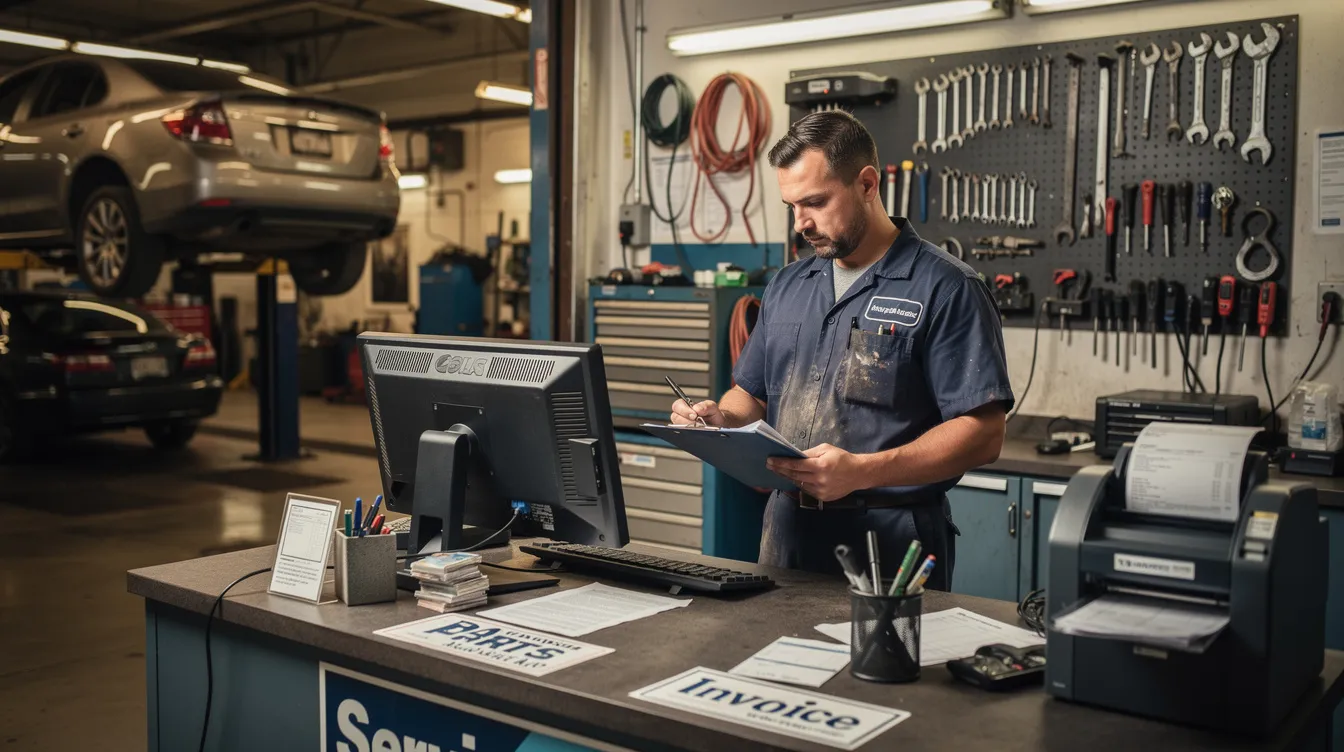
A certificate of insurance is a one-page summary document confirming that a contractor or vendor carries active liability insurance. For auto repair shops, body shops, and dealerships, this form is your first line of defense against uncovered losses.
- The standard form is the ACORD certificate (ACORD 25), issued by an insurance broker or insurance agent on behalf of the insured vendor.
- It lists who is insured, which policies are in force (commercial general liability, automobile liability, umbrella coverage, workers compensation), policy limits, and key dates.
- The certificate does not change coverage or replace the policy—it is only evidence that certain policies existed on the date issued.
Practical examples:
- Requiring a COI from a tow company before they bring vehicles onto your lot
- Requiring a sublet paint shop to provide a COI with garagekeepers coverage before sending customer vehicles there
Certificate vs. Actual Policy: What Garage Owners Can and Cannot Rely On
The COI is a snapshot created by an insurance broker based on active policies. It is not a contract and cannot extend coverage beyond the underlying insurance policy.
- Only the policy and its endorsements—not the COI—determine whether a loss is covered (e.g., customer car damaged in a sublet shop fire).
- Treat the certificate as a screening tool and checklist. If limits, coverage types, or dates do not meet your requirements, request changes or decline to proceed.
- For large or long-term relationships (collision centers, fleet maintenance contracts), occasionally request copies of actual additional insured endorsements and waiver of subrogation documents.
Key Information You’ll See on a Garage COI (Top and Middle Sections)
The ACORD 25 form follows a standard layout. Understanding each block helps you verify compliance quickly.
| Section | What It Shows | What to Check |
|---|---|---|
| Producer | Issuing agent/broker | Insist COIs come directly from this agent, not as an edited PDF from the contractor |
| Insured | Legal name, address | Must align with your vendor agreement or sublet contract |
| Insurer(s) Affording Coverage | Insurance carrier names, NAIC numbers | Recognized carriers with NAIC numbers are preferable for critical risks |
| Coverages Grid | Policy types, policy number, effective date, expiration date, limits | Cross-check against your minimum requirements |
Many garage-focused policies appear under commercial general liability or a specific Garage Liability line depending on the insurer. Look carefully at labels in the description section.
How to Confirm the Insured’s Business Name Matches Your Garage Contract
The named insured in the “Insured” box must match the legal entity on your service agreement, purchase order, or W-9—not simply a trade name on the truck.
- Watch for discrepancies like “ABC Auto Repair LLC” vs. “ABC Auto Repair & Towing Inc.”
- Accept “Doing Business As” (DBA) names only if the DBA matches your contract and ties to the same legal entity
- If the contractor operates multiple locations or brands, your contract should specify which entity must carry the insurance
How to Check Policy Dates Against Your Garage’s Work Timeline
Locate the policy effective date and policy expiration date for each line of coverage in the grid.
- Confirm the policy period includes the full time the contractor will handle your customers’ vehicles, including test drives and overnight storage
- For ongoing relationships (daily tow company, glass vendor), request an updated COI at least 30 days before the listed expiration date
- Accepting a COI with coverage expiring in days—or already expired—exposes your garage to uncovered losses
Coverage Types Garage Owners Should Look For on a COI
Don’t just check “is there insurance?” Verify that the right lines of coverage and limits appear on the form.
Core coverage lines garages typically require:
| Coverage Type | Minimum Limits (Example) |
|---|---|
| Commercial General Liability / Garage Liability | $1M per occurrence / $2M aggregate |
| Garagekeepers Legal Liability | $75K-$100K per vehicle / $500K per occurrence |
| Commercial Auto Liability | $1M combined single limit |
| Umbrella/Excess Liability | $1M-$5M |
| Workers Compensation/Employers Liability | Per statute / $500K EL |
Involve your own insurance advisor in setting minimum requirements for different third parties.
General or Garage Liability: Protecting Your Premises and Operations
The general liability line (or dedicated Garage Liability) covers third party bodily injury and property damage claims from the contractor’s operations on your premises.
- Look for at least $1,000,000 Each Occurrence and $2,000,000 General Aggregate
- Check whether the policy is “Occurrence” or “Claims-Made”—occurrence-based is typically preferred
- This is separate from coverage on customers’ vehicles, which falls under Garagekeepers
Garagekeepers Coverage: Protecting Customer Vehicles in the Contractor’s Care
Garagekeepers Legal Liability covers damage to customers’ autos while in the contractor’s care, custody, or control.
- Look for limits per vehicle and per occurrence (e.g., $75,000 per auto / $500,000 per occurrence)
- If you send high-value vehicles off-site (late-model EVs, luxury SUVs), ensure the per-vehicle limit matches your average vehicle values
- Require written confirmation of Garagekeepers coverage for any vendor storing, test-driving, or transporting customer vehicles
A 2023 California body shop fire destroyed $2M in sublet vehicles when the shop lacked adequate garagekeepers proof—costs shifted to the primary garage’s policy.
Automobile Liability: When Vendors Drive to or From Your Garage
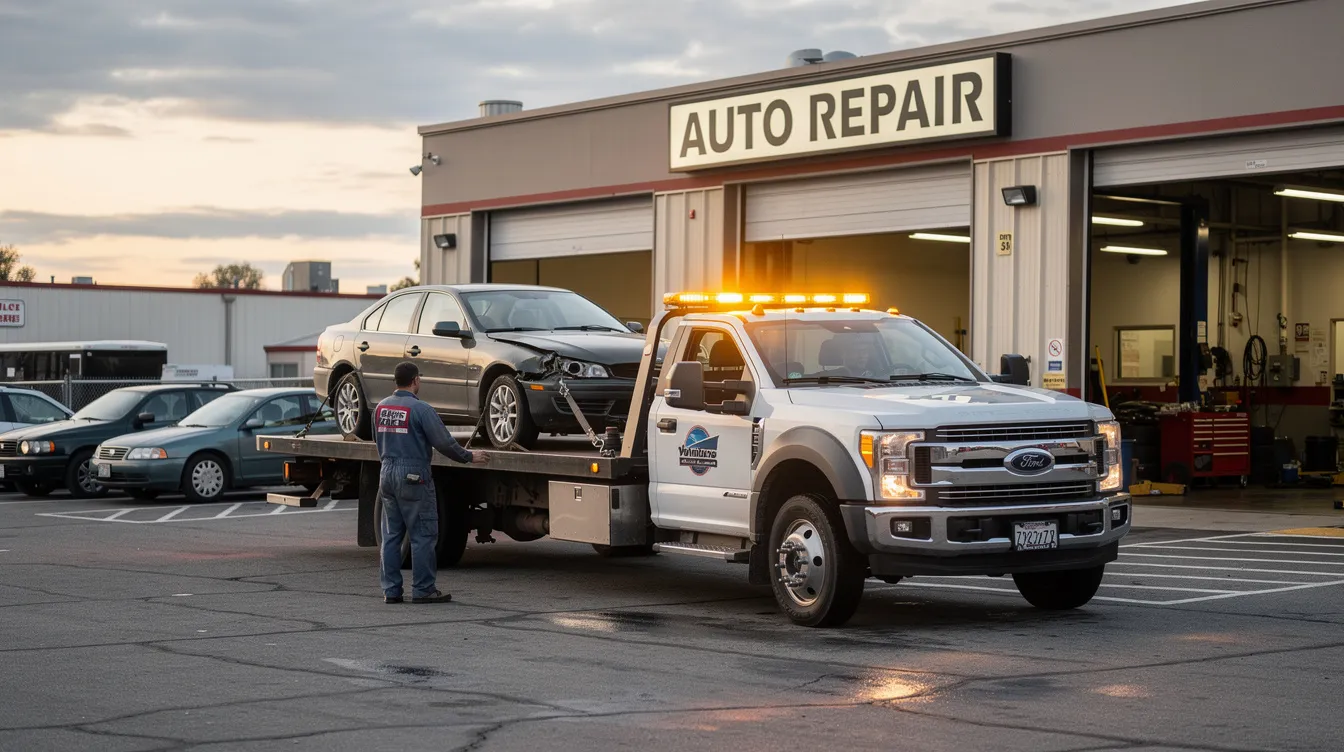
Auto liability covers bodily injury and property damage caused by the vendor’s vehicles—tow trucks, service vans, or employee-owned autos used for parts runs.
- Check for “Any Auto” or a combination of Owned, Hired, and Non-Owned with a Combined Single Limit of $1,000,000
- Split limits like 100/300/100 may not meet contracts requiring a $1M CSL
- Require auto liability from any vendor driving on your lot, moving customer cars, or towing vehicles
Umbrella / Excess Liability: Extra Protection Above Base Policies
Umbrella coverage sits above general liability, auto liability, and employers liability, increasing total limits for large claims.
- Request $1M-$5M umbrella limits for high-risk contractors (large tow fleets, collision centers)
- The COI should identify which underlying policies the umbrella covers
- Treat umbrella limits as a supplement, not a substitute, for adequate primary limits
Workers’ Compensation: Protecting Workers on Your Lot
Workers compensation covers medical expenses and lost wages for the contractor’s employees injured while working at your garage.
- Verify coverage shows “Per Statute” for states where work actually occurs
- Check employers liability limits (often $500K/$500K/$500K)
- If a vendor lacks required workers compensation, your garage may face unexpected vicarious liability
Step-by-Step: How to Read and Verify a COI for Your Garage
Use this checklist whenever a new vendor or sublet partner comes on board. Designate one person responsible for COI collection so nothing slips through during busy seasons.
Step 1: Confirm You Have the Latest COI Directly from the Agent
- Request COIs directly from the insurance agent or broker listed under “Producer”—via email on the agency’s domain
- A COI forwarded only by the contractor in an editable format may be altered or outdated
- Check the issue date at the very top right of the ACORD 25
- Save all certificates in a dated folder tied to each vendor name
Step 2: Match the Insured Name, Address, and DBA to Your Contract
- Compare the “Insured” section to the legal name on your contract or W-9, including LLC/Inc. suffixes
- For multi-location vendors, ensure the insured entity is the one performing your work
- Document any differences you accept with a written explanation from the agent
Step 3: Compare Coverage Types and Limits to Your Garage Requirements
- Double check each line of coverage against your internal minimum standards
- Missing coverage (no Workers’ Compensation, no Garagekeepers) should halt work until corrected
- Consider higher limits for high-value vehicles, fleets, or EVs
- Send vendors a one-page requirement sheet before the COI is issued
Step 4: Verify Dates, Additional Insured Language, and Special Clauses
- Ensure each coverage type remains in force for the entire project or relationship
- Look for additional insured, Primary and Noncontributory wording, and Waiver of Subrogation in the Description of Operations or via endorsement numbers
- Being named as certificate holder alone does not make your garage an additional insured—you need specific endorsements
- For larger vendors, request copies of actual additional insured endorsements
Step 5: Check for Authorized Signature and Form Version
- Ensure the COI has an authorized signature from the insurance company representative
- Reject unsigned forms as incomplete
- Verify you have a current ACORD 25 version (2016/03 or later)
Establish your policy: No signed, current COI, no work on your premises.
Common Red Flags on COIs for Garages (and What to Do Next)
Garages frequently encounter incomplete or non-compliant COIs. Respond consistently to protect your business.
Typical issues to watch for:
- Expired policies or expiration date falling during your project
- Missing coverage types (no Garagekeepers, no auto liability)
- Inadequate coverage limits for high-value cars
- Mismatched names between COI and contract
- Vague or missing additional insured endorsements
- No policy number listed
- Personal insurance instead of commercial coverage
Any red flag should result in a written request for correction—not a verbal assurance. Postpone scheduling work until a corrected certificate is received.
Examples of COI Problems Specific to Auto Garages
Scenario 1: A tow company’s COI shows only personal auto coverage, not commercial auto liability. If their tow truck damages a customer vehicle on your lot, your garage may pay the claim.
Corrective step: Request updated COI showing commercial auto with $1M CSL.
Scenario 2: A sublet body shop’s COI lists general liability but omits Garagekeepers. If the shop burns down with customer vehicles inside, those vehicles are underinsured.
Corrective step: Require Garagekeepers proof with adequate per-vehicle limits before sending vehicles.
Scenario 3: A vendor’s policy expires mid-project (restoration running December 2025 through March 2026) with no follow-up certificate.
Corrective step: Set calendar reminders 30 days before expiration; require renewal proof before continuing work.
FAQ
These questions address concerns garage owners often have beyond the main verification process.
How often should my garage request updated certificates of insurance from regular vendors?
Request a new COI at least annually, timed to policy renewals. Set calendar reminders 30 days before known expiration dates. Also request updates before expanding scope of work—for example, if a vendor starts storing vehicles overnight when they previously only made daytime service calls.
Where and how should my garage store COIs for audits and claims?
Maintain a central digital folder for each vendor, labeled by legal name and year (e.g., “TowCo LLC — 2025,” “TowCo LLC — 2026”). Save certificates as non-editable PDFs with standard business backups. Organized records help when an insurer or attorney requests proof of vendor verification.
What if a trusted vendor refuses to provide a certificate of insurance?
A vendor’s refusal or prolonged delay is a serious warning sign of inadequate insurance coverage. Establish a firm policy: no vendor works on your premises without a current COI meeting your standards. Offer to share your written requirements so they can consult their insurance broker and return with compliant documentation.
Do I need to be listed as an additional insured when I send vehicles to a sublet shop?
Yes. Additional insured status on a sublet shop’s liability policy helps ensure their insurance defends and indemnifies your garage if you’re named in a claim arising from their work. Being listed as certificate holder is not enough—request additional insured endorsements and keep copies with the COI.
What special considerations apply if my vendors work across state lines?
If you use regional tow networks or mobile vendors crossing state borders, confirm workers compensation applies in every state where vehicles may be picked up or delivered. Verify auto liability coverage applies in all relevant jurisdictions. Consult your insurance advisor if you routinely send vehicles to out-of-state body shops or auction facilities to ensure compliance with multi-state risk requirements.