
Key Takeaways
- Thorough photos, detailed notes, and organised records prevent claim denials by establishing a clear version of events that insurers cannot easily dispute.
- Pre-loss documentation from day one (purchase photos, condition records) is as critical as documenting an accident when it happens—it counters pre-existing damage arguments.
- Record exact dates, times, mileage, locations, and weather conditions whenever damage or incidents occur to create timestamped evidence.
- Keep a single, well-organised digital and paper file for each vehicle containing photos, invoices, policy documents, emails, and adjuster communications.
- Follow insurer reporting deadlines and maintain all communication in writing to build an unassailable record if disputes arise.
Introduction: Why Vehicle Documentation Makes or Breaks Claims
Many insurance claims between 2020 and 2025 have been delayed or underpaid not because of coverage gaps, but because of poor documentation. When physical evidence is weak or incomplete, insurance companies fill those gaps in ways that favour their interests rather than yours.
Proper documentation means pre-loss condition records, incident evidence, repair history, and full communication logs with insurers and repairers. Common dispute scenarios include insurers arguing that vehicle damage is pre-existing, attributable to wear-and-tear, or unrelated to the reported incident. Strong documented evidence counters these arguments by creating what professionals call “a clear version of events.”
This article walks you through step-by-step documentation: from everyday record-keeping to what to do on the day of a car accident or loss.
Establish a Clear Baseline: Document Your Vehicle Before Anything Happens
Pre-loss documentation serves as a legal shield against post-incident disputes. When you acquire a vehicle through purchase or lease, capturing comprehensive documentation within the first week provides dated evidence of condition at that specific moment.
- Take a complete photo set when acquired covering all exterior panels from multiple angles, interior shots showing dashboard and seats, clear images of the odometer, and the VIN plate.
- Keep digital copies of the purchase invoice, finance or lease agreement, window sticker, and any pre-delivery inspection reports in a labelled folder (e.g., “VW Golf – Purchased 03 March 2024”).
- Repeat baseline photos annually and after major service or bodywork to prove condition just before any claim arises.
- Store everything in one location where you can access it quickly when needed.
These pre-incident records are especially powerful in disputes over hail damage, corrosion, minor dents, and high-mileage mechanical failures. The insurer cannot claim damage was pre-existing if your baseline photos clearly show its absence.
Secure the Scene and Prioritise Safety Before You Start Documenting
Safety must precede documentation. After an accident occurred, focus on immediate safety before gathering evidence.
- Move the vehicle out of traffic when possible—onto the shoulder or a safe area.
- Switch hazard lights on and place a warning triangle if safe to do so.
- Check all occupants for visible injuries and call emergency services (999 or 911) before taking any photos.
- Follow police and paramedic instructions in serious crashes, then document once the accident scene is stabilised.
- Exchange details and document only after immediate safety and medical care needs are addressed.
This sequencing protects both safety and the legal integrity of evidence by ensuring documentation is made from a controlled state rather than in chaos.
Capture Strong Visual Evidence of Vehicle Condition and Damage
Clear, time-stamped photos and videos taken on the same day as the incident are the foundation of any dispute-proof accident claim. Visual evidence establishes what happened before memories fade and before vehicles are repaired.
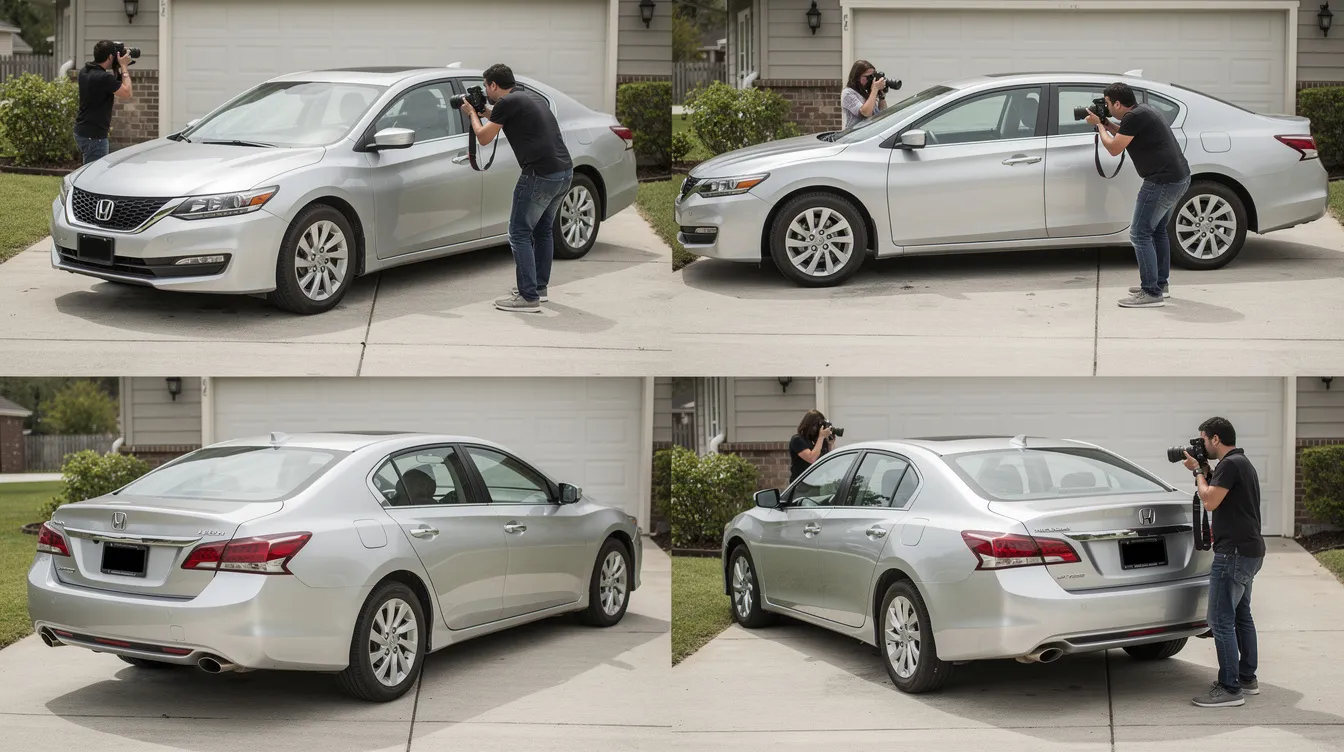
Follow a systematic walk-around approach:
- Start with wide shots showing the vehicle’s overall position and damage distribution.
- Move to side-by-side comparisons of all four sides.
- Take close-ups of every scratch, dent, broken light, deployed airbag, and fluid leak.
- Capture context shots showing road layout, junctions, traffic signs, weather conditions, and parked positions.
- Ensure your phone settings record date and time automatically, and avoid filters or edits that could make photos appear manipulated.
Short, steady video evidence walking around the vehicle and panning the wider scene is particularly useful for multi-vehicle collisions or large-area damage like hail or flood events.
What Exactly to Photograph and Film
| Category | Items to Capture |
|---|---|
| Exterior | Front bumper, grille, bonnet, windscreen, both front wings, both doors, rear quarter panels, boot/tailgate, all lights, mirrors, roof, wheels and tyres |
| Interior | Dashboard with warning lights illuminated, steering wheel, pedals, seats, airbags, centre console, boot interior, any loose items damaged inside |
| Scene Elements | Skid marks, debris, broken glass, road signage, traffic signs, lane markings, oil or fluid spills, obstructions (fallen branches, signposts) |
| Third-Party | Other vehicles involved (damage and number plates), visible CCTV cameras, shop fronts, property damage relevant to the claim |
This photographic evidence creates a comprehensive record that supports your claimant’s account of events.
Write Down Every Detail While It’s Fresh
Written notes made on the day of the incident carry far more weight than later recollections if there are disputes months afterward. A detailed account created immediately preserves critical evidence before memories shift.
- Document exact time, date, and location as soon as possible (e.g., “14 April 2026, 08:37, southbound A1 near Junction 14”).
- Note environmental factors including weather and visibility (rain, fog, low sun, ice, standing water), road surface conditions, and traffic density.
- Record a factual sequence of events avoiding blame or speculation. Write “Vehicle ahead braked suddenly” rather than “driver cut me off on purpose”—this prevents any appearance of admitting fault.
- Maintain a running log of symptoms after any personal injury, and note any new noises, warning lights, or handling changes in the vehicle over the following days.
These detailed notes form the written record that supports your car insurance claim.
Core Data Points to Record for Every Incident
| Information Type | What to Capture |
|---|---|
| Vehicles Involved | Registration numbers, makes, models, colours, approximate year, direction of travel, lane position at impact |
| Involved Parties | Full names, phone numbers, email addresses, postal addresses of all drivers, passengers, and independent witnesses |
| Official Details | Police incident or accident report number, attending officer names/badge numbers, ambulance reference numbers, recovery company details |
| Immediate Damage | Description of damage (e.g., “front right wheel bent, coolant leaking under front bumper”), whether vehicle was drivable or immobilised |
Exchange and Collect Essential Information Thoroughly
Missing or inaccurate counterpart information is a common reason for delayed or disputed claims, especially in third-party and hit-and-run scenarios. Gathering evidence systematically at the scene prevents problems later.
- Exchange details calmly without admitting fault or arguing about what happened.
- Collect from the other driver: full name, address, phone, insurer name, policy number, vehicle registration, and driving licence number where lawfully permitted.
- Confirm details by photographing the other party’s insurance card and driver’s licence if they agree.
- Capture commercial vehicle information: fleet numbers and business names help insurers track the correct policy.
This thorough collection of insurance details supports effective fault determination.
When Police or Witnesses Are Involved
Witness statements and police reports often decide fault and liability in contested claims.
- Ask police how and when to obtain the full collision or incident report and note the station handling it.
- Get witness testimony in written or recorded form where possible, or at minimum, witness contact details and a brief note of what each person observed.
- In car parks or private sites, identify security staff, gate logs, and CCTV control rooms that may hold surveillance footage or other relevant evidence.
This third-party information often provides the additional evidence needed to establish liability.
Tailor Your Documentation to the Type of Loss
Insurance companies assess collisions, vandalism, theft, and weather damage differently. Relevant documentation must reflect the specific type of incident to be effective.
Clearly linking damage patterns to the alleged cause makes it harder for insurers to argue alternative explanations. The following sections provide incident-specific checklists.
Collisions and Road Traffic Accidents
Motor vehicle accidents require specific documentation approaches:
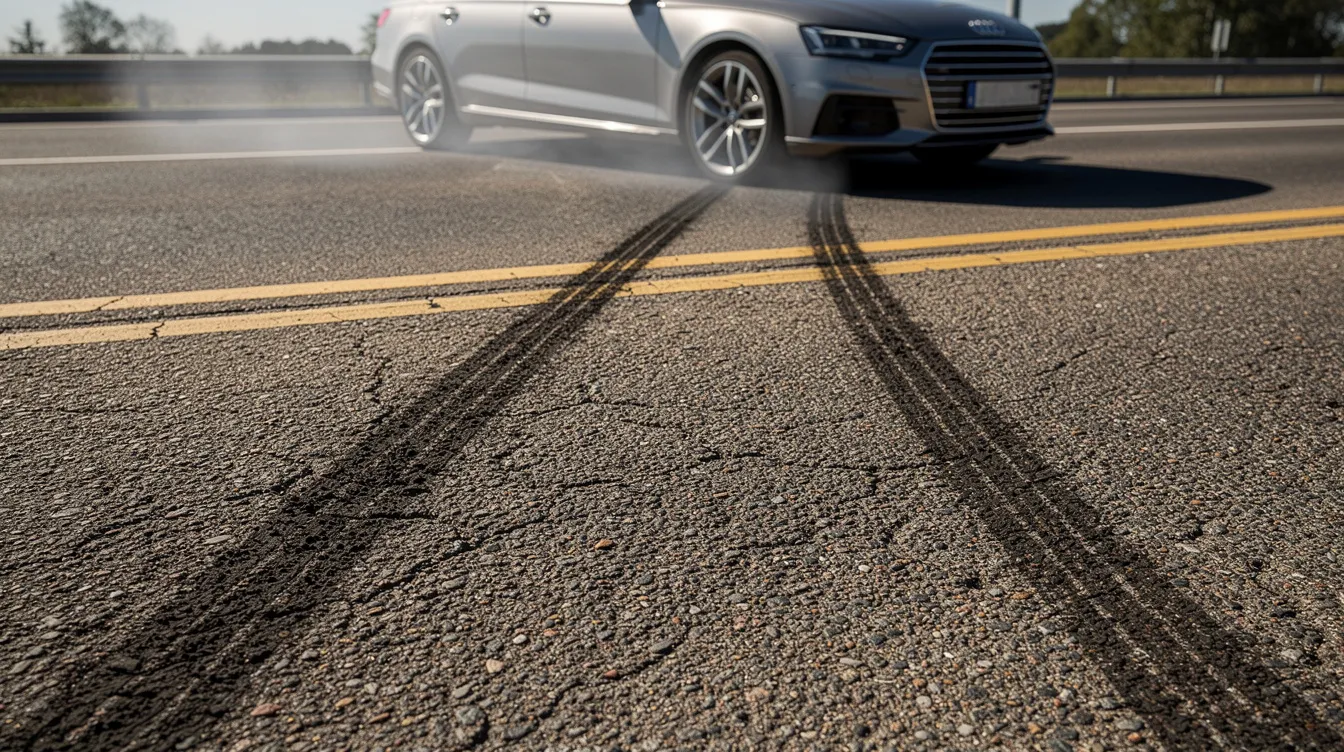
- Photograph vehicle positions before moving them, showing lanes, junctions, and traffic signals clearly.
- Capture skid marks, debris fields, fluid trails, and any road defects (potholes, missing signs, obscured markings) that may affect liability.
- Take independent measurements using a tape measure or phone measuring app to record stopping distances or damage height on bumpers.
- Keep any broken parts (detached bumper sections, broken brackets) until the claim is fully settled—these can support reconstruction if liability is disputed.
Vandalism, Theft, and Parking-Lot Damage
When documenting deliberate or unexplained damage where no other driver is present:
- Photograph signs of forced entry: broken windows, damaged locks, screwdriver marks, drilled barrels, cut wiring, missing catalytic converters.
- List all missing items with approximate value and purchase dates, attaching receipts or bank statements as supporting evidence.
- Seek and document potential video sources: shopping centre CCTV, residential doorbells, workplace cameras.
- Obtain and keep the police or crime reference number—insurers almost always require this for property damage claims.
Weather, Hail, and Flood Damage
Weather events require documentation that counters arguments about preventability or maintenance:
- Photograph hail impact patterns on horizontal surfaces (roof, bonnet, boot lid) and compare dents on different panels to show consistency.
- Document water intrusion: water lines on doors and seats, standing water in footwells, corrosion on connectors, mud and silt inside the cabin and engine bay.
- Note meteorological details: storm name if applicable, approximate time, and local weather alerts.
- Prompt documentation on the same date prevents insurers arguing that water or corrosion came from later neglect rather than the insured event.
Create and Maintain a Complete Claim File
A centralised, well-organised claim file is one of the strongest protections against disputes over “who said what, and when.” This comprehensive documentation approach makes the insurance claim process significantly smoother.
- Set up a dedicated digital folder (e.g., “Claim – Mazda CX-5 – Rear Impact – 12 Jan 2026”) plus a physical folder for printed items.
- Store all relevant documentation: policy documents, photos, videos, written notes, police reports, medical records, garage estimates, and all correspondence.
- Use consistent filenames (e.g., “2026-01-12_scene_front_left.jpg”) and back everything up to at least one cloud service or external drive.
- Keep this file intact for several years after the claim is settled—this protects against future premium disputes, supplementary claims, or related personal injury claim issues.
Logging Every Conversation and Decision
The most common documentation mistake is overlooking texts and phone calls in the claim file. A simple communication log provides valuable evidence.
- Keep a dated record for every call, email, or message with insurers, adjusters, and repairers, including names, roles, and direct phone numbers.
- Write down any promises, approvals, or deadlines (e.g., “14 Feb 2026 – Adjuster Smith confirmed courtesy car authorised until vehicle repairs complete”).
- Follow up key phone calls with a short confirmation email summarising what was agreed, attaching this to the claim file.
This log proves crucial if the insurance provider later disputes what was authorised or when information was supplied.
Work Effectively With Insurers, Adjusters, and Repairers
Understanding the role of the insurance adjuster and repairer in verifying documentation helps you cooperate effectively. Good records speed up decisions and improve your chances of a favorable outcome.
- Send a clear, chronological packet to the insurer: incident summary, photos, notes, police report, and repair estimates.
- Be available for inspections and answer fact-based questions while avoiding speculation about fault or legal responsibility.
- Compare the adjuster’s written assessment with your own evidence and the repairer’s report, challenging omissions or inaccuracies calmly and in writing.
- Get at least one independent written estimate from a reputable bodyshop if you feel the insurer’s assessment undervalues the damage or repair costs.
This approach supports fair compensation while maintaining a professional relationship throughout the review process.
Handling Disputes and Supplemental Claims
When extra damage is found mid-repair or the insurer initially rejects part of your claim, solid documentation becomes critical evidence.
- Document hidden damage when repairers discover structural or mechanical issues once panels are removed—photograph these and send promptly as a supplemental claim.
- Respond to partial denials by referencing your evidence (photos, notes, garage diagnosis) and asking for a written explanation tied to specific policy clauses.
- Escalate complaints within the insurer’s internal dispute process and, where available, to an external ombudsman or regulator if documentation supports your claim.
Clear, organised documentation almost always improves the outcome of these challenges compared with vague recollections, reducing unnecessary delays and claim denials.
Prevent Future Documentation Problems
Proactive steps now ensure any future claim starts from a strong documentary position, improving your chances of financial recovery and a successful claim.
- Keep an incident kit in the glovebox: printed checklist, pen, notepad, disposable or backup camera, and emergency contact numbers.
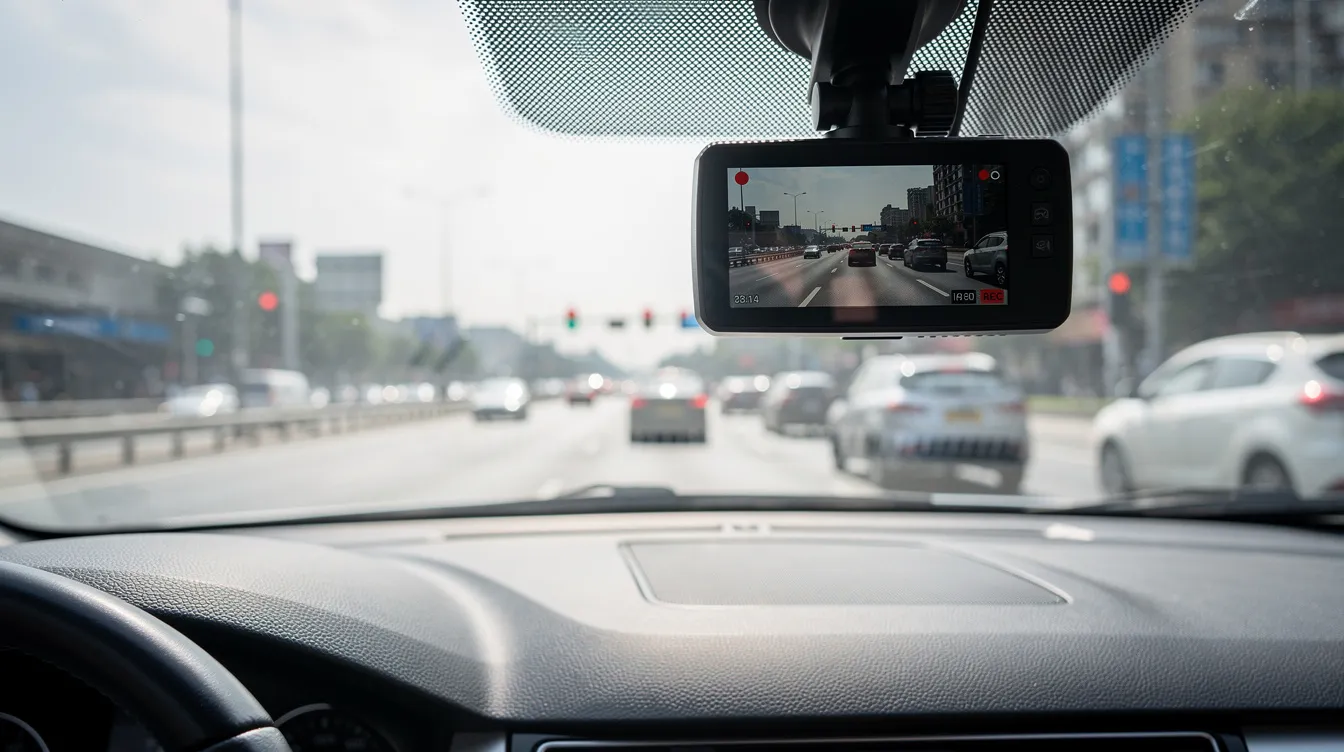
- Install and maintain a dashcam with accurate date and time, downloading footage immediately after any incident—this digital evidence can be decisive.
- Save service invoices, tyre purchases, MOT certificates, and previous repair paperwork in the vehicle’s permanent history file.
- Review insurance coverage annually, checking excess amounts and optional extras (legal expenses, hire car cover), making notes of any changes so detailed records match what the policy promises.
This preparation means you can collect evidence effectively whenever an incident occurs, supporting the claims process from the very beginning.
Frequently Asked Questions
Do I still have a chance if I forgot to take photos at the scene?
While on-scene photos are ideal, claims can still be supported with later vehicle photos, police reports, repairer inspections, witness testimony, and dashcam or CCTV footage. Take detailed photos as soon as possible after the incident and ask the garage to record their own diagnostic images and notes. This other evidence helps fill the gap, though the immediate aftermath documentation remains most valuable.
How long should I keep my vehicle documentation after a claim is settled?
Keep all claim-related records for at least 3–5 years after settlement, especially in cases where injuries sustained may develop later symptoms or there are disputes over fault. Stored documentation can help with future premium disputes, supplementary claims, or if late-appearing injuries or defects are linked back to the original incident. For medical bills and medical records, longer retention may be advisable.
Is it acceptable to store all my evidence only on my smartphone?
Phones are excellent for capturing evidence at the scene, but all important photos, videos, and notes should be backed up to at least one cloud service and, ideally, a computer or external drive. Phone loss, theft, or damage could eliminate your only copies of critical evidence. Export files into labelled folders as soon as practical after any incident to preserve evidence properly.
Do I need professional help to organise my documentation?
Most drivers can manage their own documentation using a simple folder and checklist. However, complex or high-value claims—particularly those involving personal injury or disputed liability—may benefit from support from a solicitor, claims handler, or experienced repairer. Professional assistance is particularly useful once the insurer questions whether the damage matches the incident described or when court proceedings become likely. Consider a free consultation if your claim becomes contested.
Should I document minor scrapes and stone chips even if I’m not claiming now?
Quick photos and brief notes of minor damage (with date and mileage) are helpful to identify patterns of progressive wear versus sudden impact if a larger claim arises later. This simple habit reduces arguments over what damage is new versus old when insurers evaluate claims for a future accident or weather-related event. Even small documentation efforts can prevent significant disputes.