
Every year, thousands of homeowners across the country learn a painful lesson: the flood water that just destroyed their home isn’t covered by their standard insurance policy. Flooding is the most frequent natural disaster in the U.S., yet only 12% of U.S. homeowners have flood insurance. If you’re among the other 88%, this guide walks you through everything you need to know about flood coverage, from how it works and what it costs to exactly when and how to purchase it, so you can protect your family and your property before the next storm hits.
Key Takeaways
- Most homeowners insurance policies do not cover flood damage caused by rising water from outside the building. A separate flood insurance policy is required to cover flood damage from storms, hurricanes, heavy rains, snowmelt, and overflowing waterways.
- You don’t have to live in a high risk flood zone to experience flooding. Over 20% of flood insurance claims come from areas outside FEMA’s mapped high risk flood areas, and a significant percentage of flood claims come from low-to-moderate risk areas overall.
- NFIP policies have a mandatory 30 day waiting period after payment before coverage takes effect. If a hurricane is already forming, buying a policy that day won’t help you. Coverage does not start until 30 days after payment.
- The national flood insurance program provides up to $250,000 for home structure coverage and up to $100,000 for personal possessions. By contrast, federal disaster grants often average only a few thousand dollars per household, making flood insurance the far stronger path to recovery.
- You can buy flood insurance through NFIP-participating insurers or private insurers, and acting before storm season or spring thaws is crucial since the 30 day waiting period can leave you exposed if you delay.
Why Flood Insurance Matters Now, Not After the Storm
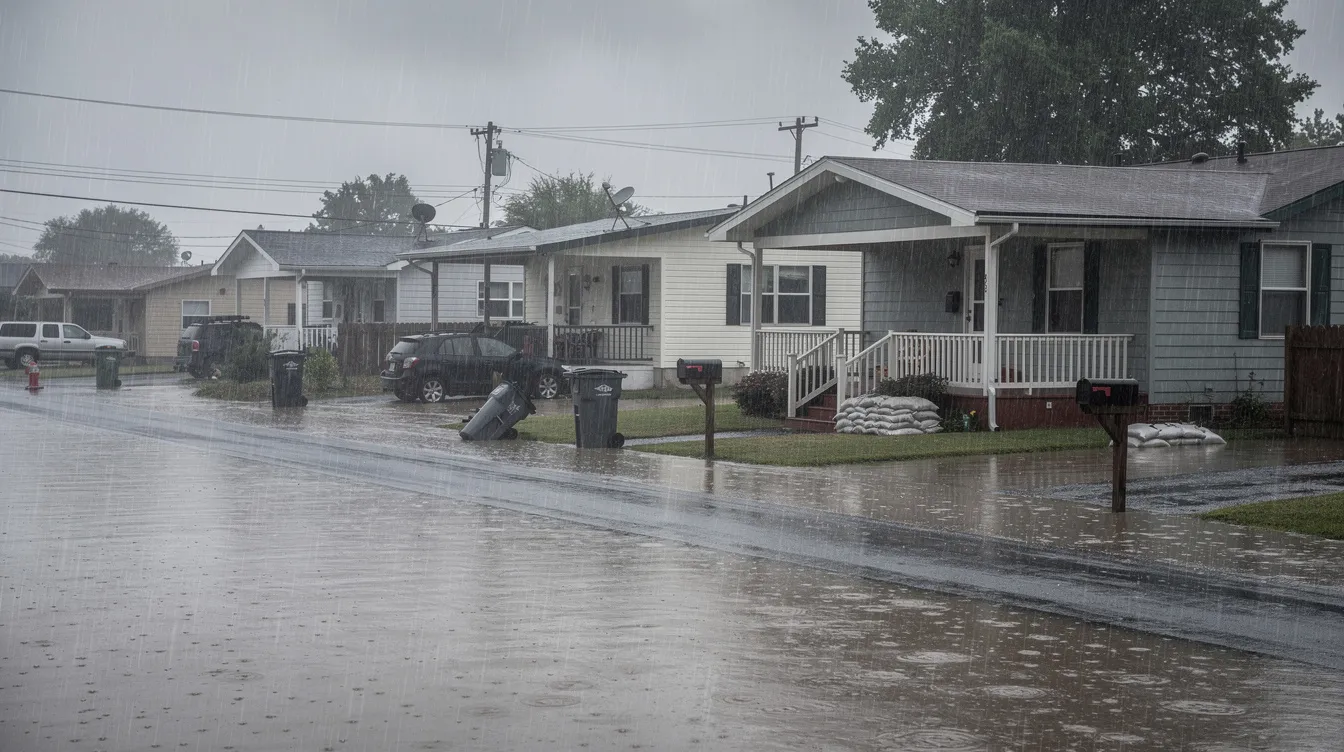
In early 2024, back-to-back atmospheric river events slammed into California, turning streets into rivers and forcing evacuations across dozens of communities. Homes that had never seen so much as a puddle in the front yard were suddenly submerged. In 2025, Gulf Coast hurricanes compounded the damage, reminding the country that flood risk doesn’t respect zip codes, elevation, or expectations. What many of those affected homeowners had in common was a devastating realization: their homeowners insurance would not cover a single dollar of the damage.
Here’s why the stakes are so high:
- Flooding is the most frequent natural disaster in the U.S., with total NFIP payouts exceeding $88.3 billion across more than 2.7 million flood insurance claims since 1978.
- Just one inch of flood water inside a home can cause over $25,000 in damages to floors, walls, electrical systems, and belongings.
- The national average NFIP claim payout in major flood years, like 2024, reached over $85,000 per claim.
- 20% of flood claims come from low-risk flood zones, proving that flood risk extends well beyond the areas most people think of as dangerous.
Standard homeowners insurance typically excludes flood damage. It covers fire, theft, wind, and certain internal water events like burst pipes, but it does not cover damage from water that enters through surface flooding, storm surge, or overflowing rivers. Flood insurance is not typically included in homeowners policies, and many property owners only discover this gap after a flood event has already destroyed their home.
Here’s the trap that catches people every single year: the 30 day waiting period. NFIP flood insurance policies have a mandatory 30-day waiting period between the day you pay your premium and the day your policy actually takes effect. If you see a hurricane forming in the Gulf and rush to purchase flood insurance, any damage from that storm will not be covered if it happens within those 30 days.
Waiting until a storm is named or rivers are already rising is simply too late. The time to act is weeks before your local rainy season or hurricane season begins.
What Flood Insurance Actually Is (and How It Differs From Homeowners Insurance)
Flood insurance is a separate insurance policy designed specifically to cover direct physical loss caused by “flood” as defined by the federal emergency management agency. This includes overflow of inland or tidal waters, unusual and rapid accumulation or runoff of surface water, mudflow, and collapse or subsidence of land caused by flooding. It is entirely separate coverage from what your homeowners insurance provides.
Here’s how they compare:
| Homeowners Insurance | Flood Insurance | |
|---|---|---|
| Fire, theft, vandalism | Covered | Not covered |
| Wind damage | Covered | Not covered |
| Burst pipes, internal leaks | Covered | Not covered |
| Rising flood water from outside | Not covered | Covered |
| Storm surge | Not covered | Covered |
| Surface water accumulation | Not covered | Covered |
| Mudflow | Not covered | Covered |
Standard homeowners insurance excludes flood damage coverage. If water first touches the ground outside your home before entering, your homeowners insurance does not cover it. That distinction matters enormously when heavy rains overwhelm drainage systems or when a nearby creek overflows its banks.
The National Flood Insurance Program (NFIP)
The NFIP was established on August 1, 1968, under the National Flood Insurance Act and is managed by FEMA. It remains the primary source of federally backed flood insurance for U.S. homeowners. Today, there are 4.7 million NFIP policyholders nationwide, and the flood insurance program NFIP offers nearly $1.3 trillion in flood coverage across participating communities.
NFIP coverage basics include:
- Building coverage: Up to $250,000 for residential structures, covering the building itself, its foundation, electrical and plumbing systems, HVAC equipment, and permanently installed features like carpet and cabinets.
- Contents coverage: Up to $100,000 for personal possessions, including furniture, clothing, electronics, and appliances. Flood insurance policies usually cover building structures and personal contents separately, with separate deductibles for each.
- Exclusions to know: Flood insurance does not cover temporary housing or additional living expenses. Flood insurance coverage may not include personal belongings in basements. Vehicles, landscaping, and pools are also excluded.
- Community requirement: NFIP policies are only available in communities that participate in the program by adopting floodplain management standards. Over 22,600 communities currently participate.
Private Flood Insurance
More than 47 private companies sell NFIP policies through the “Write Your Own” program. Beyond that, private insurers also offer their own flood insurance policies that may include higher limits, coverage for temporary living expenses, mold remediation, and debris removal that standard NFIP policies don’t provide. Insurance companies in the private market may also have different underwriting criteria and, in some cases, shorter waiting periods.
Who Really Needs Flood Insurance? (Hint: Almost Everyone)
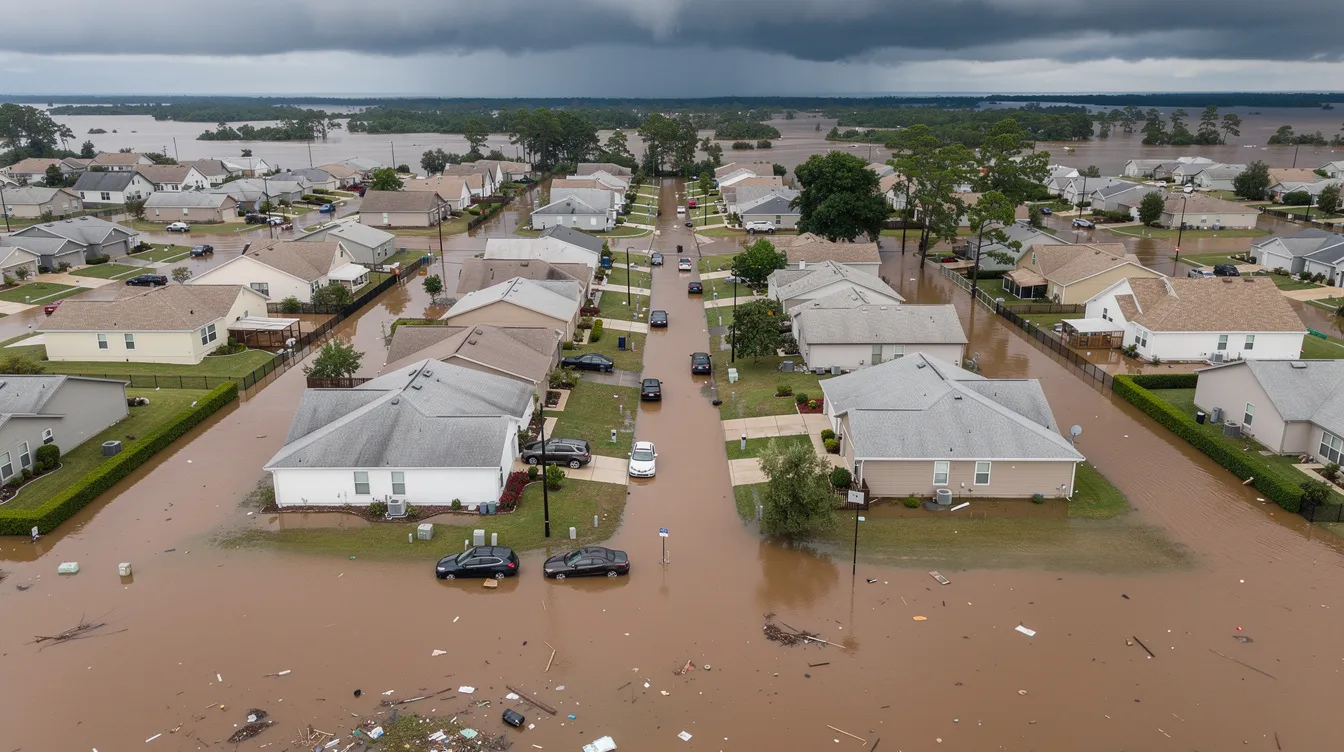
FEMA’s flood zone system divides areas into Special Flood Hazard Areas (high risk flood zones, also called the 100-year floodplain) and moderate-to-low risk zones. Your property’s designation on FEMA’s flood maps determines whether your lender will require you to carry flood insurance. But here’s where the conventional thinking breaks down: those maps don’t capture the full picture of who actually floods.
The legal requirement is clear. If your home is in a high-risk area and financed through a federally regulated lender, flood insurance is mandatory. Federal law requires it for any property in a Special Flood Hazard Area with a mortgage backed by Fannie Mae, Freddie Mac, FHA, or VA. The coverage must equal at least the outstanding mortgage balance or the cost to rebuild, whichever is less.
The practical reality is broader. Even outside mapped high risk areas, lenders may choose to require flood insurance based on their own risk assessments or local flooding history. And whether or not it’s required, the numbers make a compelling case:
- A property in the 100-year floodplain faces roughly a 25% chance of flooding during a standard 30-year mortgage.
- A significant percentage of flood claims come from low-to-moderate risk areas. Roughly 40% of NFIP claims are filed from outside high-risk zones.
- Over 20% of flood claims are from low-risk areas, meaning that even properties in zones labeled “minimal risk” still experience flooding with alarming regularity.
Risks Most People Overlook
The flood risk that catches property owners off guard often has nothing to do with a major river or the ocean. Consider these scenarios:
- Urban flash flooding: Heavy rains overwhelm storm drains in developed neighborhoods, sending water into homes that sit nowhere near a mapped floodplain.
- Small creeks and streams: Many smaller waterways aren’t fully represented on FEMA maps. A creek that seems harmless in summer can become a torrent during spring snowmelt or a sustained rain event.
- Post-wildfire runoff: Properties downhill from recent wildfires sit on scorched soil that can’t absorb water, dramatically increasing flash flood risk even in arid regions.
- New development: Construction upstream that adds impervious surfaces like parking lots and rooftops changes drainage patterns, funneling more water toward homes that never flooded before.
How to Check Your Risk Now
Don’t guess. Use FEMA’s Flood Map Service Center to look up your property’s official flood zone designation. Local government GIS tools often provide additional flood history or risk layers. You can also contact an insurance agent to determine your zone and get a personalized quote. If you have an elevation certificate for your property, it may help reduce your premium under current pricing models.
Costs, Coverage Limits, and the Critical 30-Day Waiting Period
Flood insurance pricing underwent a major overhaul with FEMA’s Risk Rating 2.0, which was fully implemented by April 2023. Under this system, premiums are no longer driven primarily by whether you’re in a high risk flood zone. Instead, they reflect property-specific factors: your home’s replacement cost, foundation type, first-floor elevation, distance to the nearest water source, flood frequency, and the type of flooding your area faces (coastal surge, riverine, pluvial).
How Premiums Are Set
- In lower-risk areas, NFIP annual premiums can be as low as a few hundred dollars.
- In high risk coastal zones, premiums can climb to several thousand dollars per year.
- For existing policyholders, statutory caps limit most rate increases to 18% per year for primary residences, easing the transition to full risk-based pricing.
- FEMA estimates the nationwide average increase under Risk Rating 2.0 at about $8 per month. Roughly 23% of policyholders actually saw premiums decrease under the new system.
You can get a flood insurance quote using the NFIP Quote Tool or by contacting your insurance provider directly.
Coverage Limits and Deductibles
The NFIP provides up to $250,000 for home structure coverage and up to $100,000 for contents coverage for residential properties. You can choose lower coverage amounts and higher deductibles to manage your annual cost. Deductibles are set separately for building and contents, giving owners some flexibility.
For non-residential or commercial properties, limits are higher: up to $500,000 each for building and contents coverage.
Keep in mind that flood insurance covers up to $250,000 for home structure and up to $100,000 for personal possessions. If your home’s rebuild cost exceeds $250,000, you may need supplemental coverage from private insurers.
Flood Insurance vs. Federal Disaster Aid
Many homeowners assume the federal government will bail them out after a disaster. The reality is starkly different:
| NFIP Flood Insurance | Federal Disaster Grants | |
|---|---|---|
| Average payout (severe events) | $80,000–$100,000+ | A few thousand dollars |
| Maximum for structure | $250,000 | Varies; often far less |
| Availability | Automatic with policy in force | Only after presidential disaster declaration |
| Application process | File claim with insurer | Apply through FEMA Individuals and Households Program |
Federal disaster grants through the households program after major storms often average only a few thousand dollars per household, enough for temporary aid but nowhere near enough to rebuild. Flood insurance helps you recover faster and with far greater financial security.
The Waiting Period Trap
This is where timing becomes everything. A 30 day waiting period applies to NFIP flood insurance policies. Here’s exactly how it works:
- The clock starts when your premium payment is received and the policy is processed by the insurance provider.
- Any flood event that occurs during those 30 days is not covered. Period.
- The waiting period prevents adverse selection in flood insurance, meaning it stops people from buying coverage only when a storm is already on the way and then canceling afterward.
Limited exceptions exist:
- Policies purchased with a home do not have a waiting period. If flood insurance is required as part of a new or modified mortgage closing, the waiting period is typically waived.
- Certain flood map changes that move a property into a high risk area may also trigger a waiver window.
- Selling a property with an existing NFIP policy in force can transfer coverage to the buyer without restarting the waiting period.
Private flood insurance may have different waiting periods. Some private insurers offer shorter waiting periods, while others mirror the NFIP’s 30-day rule. If you plan to buy flood insurance close to storm season, confirm the exact timing with your insurance provider before you purchase.

How and When to Purchase Flood Insurance
Buying flood insurance is more straightforward than most people expect. You typically purchase flood insurance through the same insurance agent who handles your homeowners insurance, or through another licensed agent who sells NFIP or private flood policies. Here’s a step-by-step process to move from “I should get coverage” to “my flood insurance policy is in force.”
Step-by-Step Checklist
- Confirm your community participates in the NFIP. Over 22,600 communities do. If your community participates, NFIP policies are available. You can verify this through FEMA’s Community Status Book or by asking your agent.
- Get a quote for both building and contents coverage. Decide how much coverage you need for the structure and for your belongings. Remember: flood insurance covers these separately, so you’ll want to evaluate both.
- Review exclusions carefully. Standard NFIP policies do not cover flooding damage to basements beyond certain items, landscaping, pools, currency, vehicles, or temporary housing costs. Insurance does not cover these items, so understand what’s excluded before you sign.
- Choose your deductibles. Higher deductibles lower your premium but increase your out-of-pocket cost if you file a claim. Balance affordability with your ability to pay the deductible after a flood event.
- Set your policy start date. Factor in the 30 day waiting period. If you want coverage by June 1, you need to purchase and pay by early May at the latest.
- Compare NFIP and private flood insurance. Private insurers may offer higher limits, separate coverage for loss of use or temporary housing, and sometimes shorter waiting periods. However, confirm that your lender accepts private policies if your mortgage requires flood coverage.
When to Buy
Timing your purchase is critical. For coastal and Gulf states, aim to purchase flood insurance at least one month before June 1, the official start of Atlantic hurricane season. In inland regions, consider buying before spring snowmelt or your area’s rainy season. Storms and hurricanes don’t wait for you to get insured.
Documents and Information You’ll Need
- Property address and year built
- Occupancy type (primary residence, secondary home, rental property)
- Foundation type (slab, crawlspace, basement, elevated)
- Elevation certificate (optional under Risk Rating 2.0 but can reduce premiums)
- Prior flood claims history
- Estimated replacement cost of the structure
Whether you go with an NFIP policy or a private policy, your agent can walk you through the details. The goal is simple: get your flood insurance policy in force before the next big storm, not after.
FAQ: Flood Insurance Questions Homeowners Still Ask
Even after understanding the basics, homeowners and renters tend to have lingering questions about how flood insurance works in specific situations. Below are answers to the most common ones.
Does renters insurance cover flooding, or do renters need a separate flood policy?
Standard renters insurance, like homeowners insurance policies, does not usually cover flooding caused by rising water, storm surge, or surface water accumulation. Renters insurance typically protects your belongings from events like theft, fire, or internal water damage from burst pipes, but it stops short of covering flood damage from external sources.
If you’re a renter and want to protect your belongings from flood damage, you need to purchase a contents-only flood insurance policy. Renters can buy this through the national flood insurance program if the building is in a community that participates, or through private insurers. Your landlord may insure the building’s structure, but tenants must insure their own belongings with a separate policy. Without it, everything you own inside that apartment or rental home is at risk during a flood event.
Can I get my money back if I cancel my flood insurance after a few years without a claim?
Flood insurance, like most property insurance, is not a savings account. Premiums you’ve already paid are the cost of having been protected during that period. If you cancel mid-term, you may receive a refund for the unearned portion of your premium (calculated on a pro-rata basis), but there’s no reward for going claim-free.
In certain situations, the NFIP allows refunds or cancellations without penalty. For example, if updated flood maps remove your property from a high risk flood zone or your mortgage changes eliminate the requirement, you may qualify. However, strict documentation and timelines apply, so consult your agent before canceling to avoid unexpected gaps in coverage.
Treat flood insurance as ongoing financial security rather than an investment. The year you drop it could be the year you need it most.
What happens after a flood – how do I file a flood insurance claim?
When it’s safe to return to your property after a flood, contact your flood insurer or insurance agent immediately. Provide your policy number and request a claim number and adjuster assignment. Here’s what to do in the meantime:
- Document everything. Take photos and videos of all damage before cleaning up or discarding anything.
- Keep samples. Save pieces of damaged materials like flooring, drywall, or carpet so the adjuster can assess them.
- Save receipts. Keep records of any emergency repairs, cleanup costs, and temporary purchases.
- Create an inventory. List all damaged personal items with estimated values.
NFIP policies generally require a formal proof of loss within 60 days of the date of loss. Working closely with the assigned adjuster and submitting documentation promptly can speed up resolution and payment. If you disagree with the adjuster’s assessment, you have the right to appeal.
Is flood insurance available for condos, secondary homes, and rental properties?
Yes. The NFIP provides flood insurance for a range of property types beyond single-family primary residences:
- Condos: Condo associations can purchase a Residential Condominium Building Association Policy (RCBAP) to cover the building. Individual unit owners should consider a separate unit-owner policy for interior finishes, improvements, and personal property. Check whether your association already has a master flood policy.
- Secondary or vacation homes: These are eligible for NFIP coverage, though premiums and surcharges may be higher than for primary residences.
- Rental and investment properties: Owners of two or more properties can insure each one. Owners must insure the structure; renters handle their own contents coverage separately. Properties with two or more acres of land are assessed based on the structure and improvements, not the total acreage.
Coverage rules and rate structures differ for non-primary residences and investment properties, so work with your agent to understand what applies.
If my home has never flooded and isn’t in a high-risk zone, is flood insurance still worth it?
Past performance is not a guarantee of future safety. Changing weather patterns driven by climate shifts, new upstream development that alters drainage, and outdated FEMA flood maps that may be a decade or more behind reality all mean that a home with no flood history can still face serious flood risk.
The data backs this up: a significant percentage of flood claims come from low-to-moderate risk areas. Homes in moderate and low-risk flood zones often qualify for lower-cost NFIP policies, sometimes just a few hundred dollars a year. Weigh that annual premium against the cost of repairing even a few inches of water damage, which can easily exceed $25,000, and the math becomes clear.
For many businesses and homeowners in “safe” zones, affordable flood coverage is the difference between a manageable setback and a financial catastrophe. The future is uncertain; your coverage shouldn’t be.

Final Thoughts
Flood insurance isn’t one of those things you can deal with later. The 30 day waiting period, the exclusions in your homeowners insurance, the reality that flood damage happens in places nobody expected, all of it points to one conclusion: the time to act is now, not when the water is rising.
Whether you’re in a high risk flood zone with a federally backed mortgage or in a neighborhood that’s never seen a drop of flood water, a separate flood insurance policy is one of the most practical forms of financial security you can buy. The cost of coverage is almost always a fraction of the cost of recovery.
Contact your insurance agent today, check your flood zone on FEMA’s Flood Map Service Center, and get a personalized quote before the next hurricane season, spring thaw, or unexpected downpour makes the decision for you. Protect your home, your belongings, and your family’s future before it’s too late.
Frequently Asked Questions
What types of flooding does an NFIP policy actually cover?
An NFIP policy covers direct physical loss from flood as defined by FEMA, including overflow of rivers and streams, storm surge, surface water runoff, mudflow, and collapse caused by erosion from flood water. It does not cover moisture damage, mildew, or seepage that isn’t directly connected to a covered flood event. If you live in an area prone to a specific type of flooding like coastal surge versus inland riverine flooding, discuss your exposure with your agent to make sure you understand what your policy will and won’t pay for.
Can I transfer my flood insurance policy if I sell my home?
Yes. NFIP policies are assignable, meaning that when you sell your property, the existing policy can transfer to the new owners. This is beneficial for buyers because it avoids triggering a new 30 day waiting period. The buyer simply takes over the remaining policy term. Work with your insurance agent and the buyer’s closing team to handle the assignment paperwork before the sale is finalized.
Does flood insurance cover my detached garage or shed?
Under NFIP building coverage, detached garages can be covered if they are at the same address as the insured dwelling and used in connection with it. However, coverage may be limited and is subject to the overall $250,000 building limit. Separate structures like sheds, fences, or detached workshops may have more limited or no coverage depending on the policy terms. Private insurers may offer broader options for outbuildings, so compare your choices.
How does my home’s elevation affect my flood insurance premium?
Under Risk Rating 2.0, your home’s first-floor elevation relative to nearby flood sources is one of several key factors in determining your premium. Homes elevated above the base flood elevation generally pay lower premiums, while those at or below it pay more. An elevation certificate, which a surveyor can provide, documents your home’s height and can sometimes help reduce your cost. While elevation certificates are no longer required to obtain an NFIP policy, providing one may result in a more accurate and potentially lower rate.