
Fall storms bring a volatile mix of high winds, hail, heavy rain, and sometimes early snow. If you own a home, understanding what your insurance policy covers before September hits can mean the difference between a smooth claim and a costly surprise. Here’s a practical breakdown of how homeowners insurance responds to fall storm damage-and where the gaps are.
Key Takeaways
- Homeowners insurance typically covers wind, hail, lightning strikes, and fallen trees from fall storms, but excludes surface flooding and gradual wear-and-tear.
- Insurance cover storm damage in fall usually applies to the dwelling, other structures like a detached garage, and personal property, each with separate coverage limits and deductibles.
- Water entering from wind driven rain through storm-damaged openings may be covered, while flooding caused by overflowing bodies of water or storm surge requires separate flood insurance.
- Hail damage, power surges from a lightning strike, and downed power line fires may be covered by a homeowners policy, depending on endorsements and coverage options.
- Review your current insurance policy before the September–November fall storm season and adjust your home insurance coverage if needed.
How Homeowners Insurance Handles Fall Storm Damage
Fall storms from September through November can deliver high winds, heavy rain, early snow, and hail-sometimes all in a single event. A standard homeowners insurance policy is designed to respond to sudden, accidental damage from these perils, not gradual deterioration.
When damage is covered by homeowners insurance, it means the cause of loss matches a peril listed (or not excluded) in your policy. There are eight standard types of homeowners insurance policies. Among them, HO-3 and HO-5 are the most common homeowners insurance policies, with the HO-3 providing “open perils” coverage for the dwelling-meaning everything is covered unless specifically excluded.
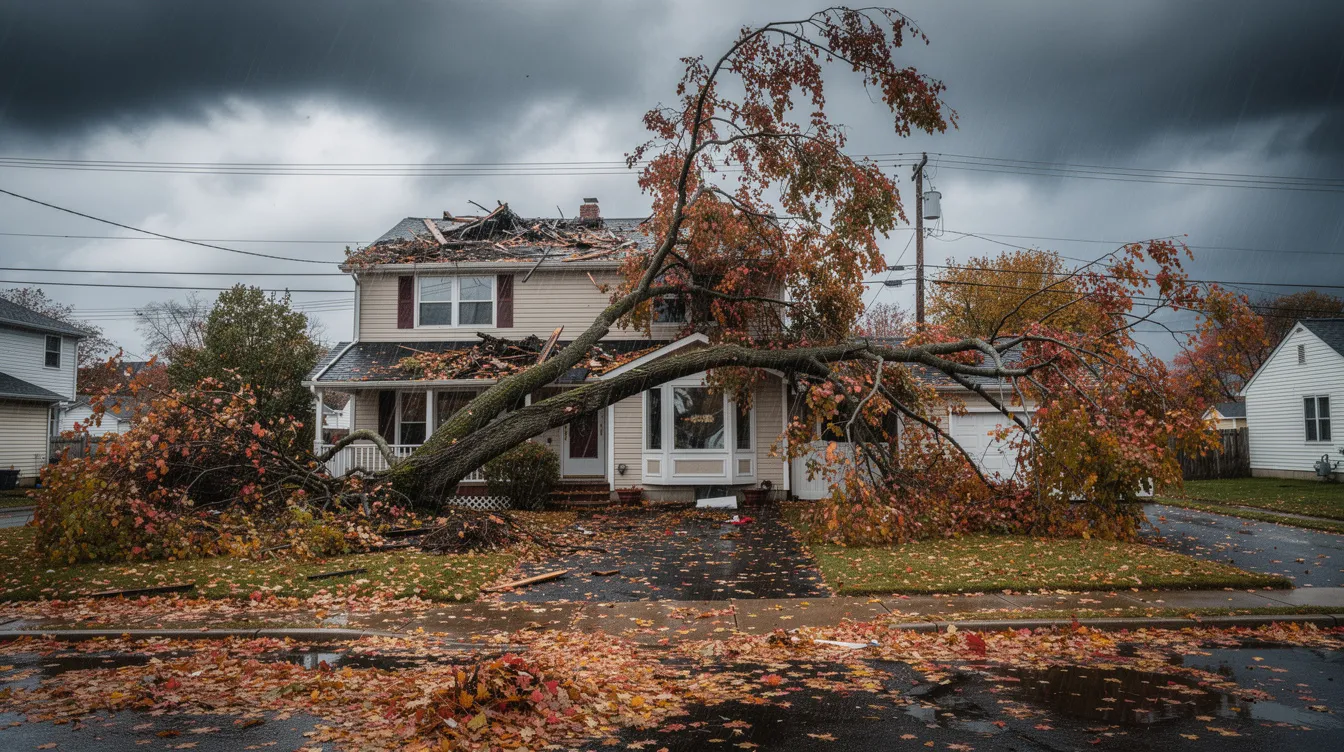
Consider a typical scenario: an October windstorm rips shingles from your roof, and rain pours through the opening, soaking your ceiling and walls. The roof repair and resulting water damage are generally covered because the damage chain started with a covered peril-wind. Each claim is subject to your homeowners policy’s deductible and coverage limits, which directly affect what you pay out of pocket.
Homeowners insurance typically covers sudden, accidental storm damage. It does not pay for long-term maintenance issues, such as a neglected roof that was already leaking before the storm arrived.
What Fall Storm Damage Is Usually Covered by Homeowners Insurance?
A standard homeowners insurance policy often covers a wide range of fall weather perils. Here’s what’s typically covered when a fall storm hits:
- Wind-damaged roofs and siding – shingles, flashing, and exterior walls damaged by sudden gusts.
- Hail damage to shingles, skylights, and gutters.
- Lightning strikes that start fires or cause structural charring.
- Fallen trees hitting covered structures like your house, shed, or fence.
Homeowners insurance typically includes structural and personal property coverage. Each applies to different parts of your property:
| Coverage Type | What It Protects | Typical Limit |
|---|---|---|
| Dwelling coverage | The physical structure of your home (roof, walls, built-ins) | Policy’s Coverage A limit |
| Other structures coverage | Buildings like sheds, fences, and detached garages | ~10% of dwelling limit |
| Personal property coverage | Furniture, electronics, clothing inside your home | ~50–70% of dwelling limit |
| Loss of use | Temporary housing and extra living expenses | Varies by policy |
Dwelling coverage protects the physical structure of your home. Other structures coverage applies to buildings like sheds and fences. Liability coverage protects against accidents on your property, though it’s less relevant to storm claims.
Quick examples:
- An October hail storm cracks your skylights → hail damage is generally covered under dwelling coverage.
- A November windstorm topples a tree onto your detached garage → typically covered under other structures coverage.
If a fall storm makes your home uninhabitable, most policies also help cover loss of use-temporary housing, meals, and lodging-within your policy’s coverage limits.
Wind, Hail, and Fallen Trees in Fall Storms
Wind, hail damage, and fallen trees rank among the most common causes of fall storm insurance claims. Here’s how your homeowners insurance typically responds to each.
Wind damage can affect roofs, windows, and siding. Your insurer evaluates whether the damage was sudden and accidental. Broken window panes, torn-off shingles, and collapsed fences are all examples of wind damage that is typically covered. Home insurance may have separate deductibles for wind and hail damage, especially in coastal or high winds regions. For a home insured at $300,000 with a 2% wind/hail deductible, the homeowner would pay $6,000 out of pocket before coverage kicks in.
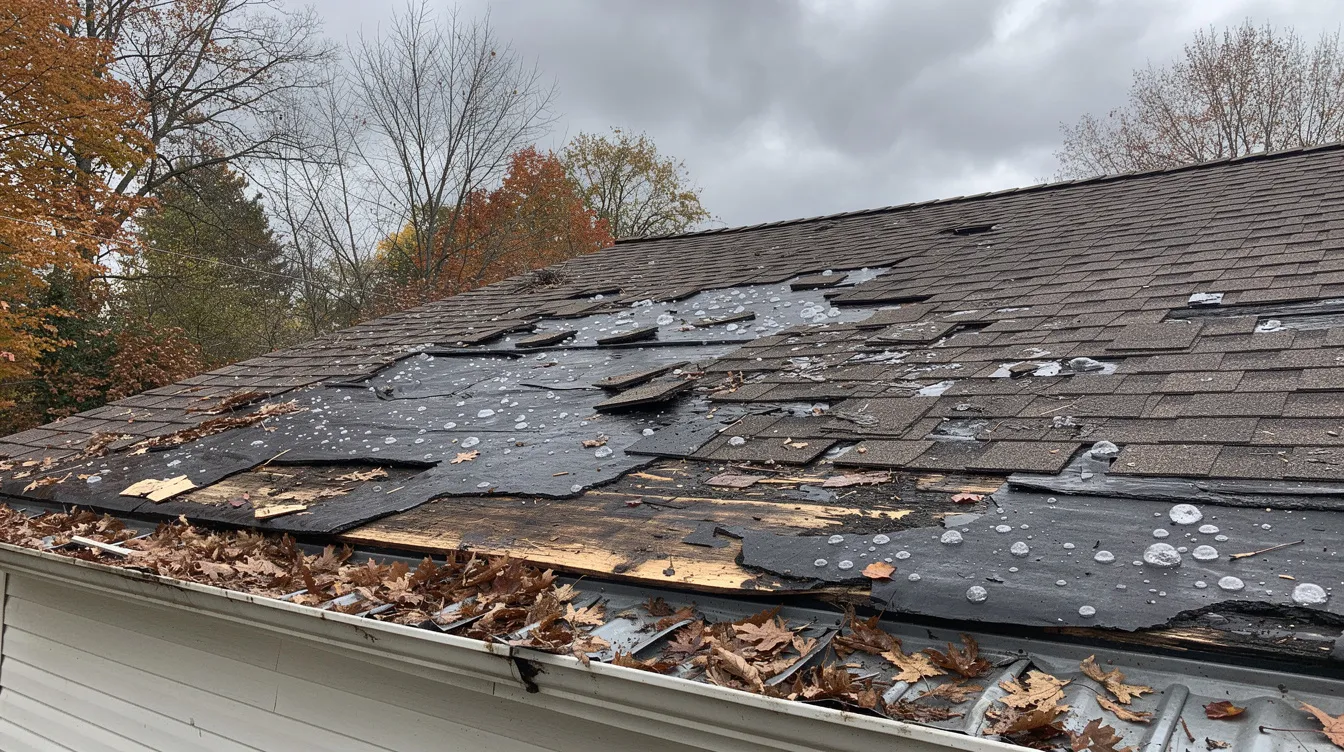
Hail damage is generally covered by homeowners insurance policies. This includes damage to roofs, gutters, skylights, and exterior surfaces. In hail-prone states, a separate wind/hail deductible may apply, and older roofs may only receive an actual cash value payout rather than full replacement cost.
Homeowners insurance covers damage from fallen trees during storms. Tree damage from wind storms is typically covered if it hits a structure-your house, garage, shed, or fence. If a tree only falls in your yard without hitting a covered structure, coverage is usually limited or nonexistent. Debris removal for fallen trees is often capped at $500–$1,000 per tree, depending on your insurance policy.
Water, Ice, and Early Snow: What’s Covered and What’s Not
Fall storms often combine heavy rain with early freezes, creating complex water and ice damage scenarios that test the boundaries of home insurance coverage.
Water damage from wind driven rain is generally covered by homeowners insurance. If wind breaks a window or tears off roofing and rain enters through that opening, the resulting water damage is treated as part of the covered peril chain. However, if rain enters through pre-existing damage or a poorly maintained seal, your insurer will likely deny the claim under maintenance exclusions.
Flood damage is not covered by standard homeowners insurance policies. Water from swollen rivers, saturated ground, storm surge, or overflowing bodies of water is excluded. Standard homeowners insurance does not cover flooding or rising water damage. Water damage from flooding requires a separate flood insurance policy, typically purchased through the NFIP or a private flood market.
Frozen pipes during late-fall freezes are usually covered if the home was reasonably heated and maintained. If the home was vacant and unheated, your insurer may deny the claim. Ice dams-caused by snow melting and refreezing at roof edges-may be covered when they cause sudden interior water damage, but not the underlying roof deterioration or poor insulation that contributed to the problem.
Lightning Strikes, Power Surges, and Electronics
Fall thunderstorms can produce lightning strikes well into October and November. Lightning damage to home structures is covered by homeowners insurance. This includes fire damage, smoke damage, chimney damage, and structural charring caused by a direct lightning strike-all falling under dwelling coverage.
Personal property coverage may also help repair or replace items like electronics and appliances damaged by power surges caused by lightning on the property, subject to your policy’s limits and deductible. However, power surges from off-property grid failures may not be covered without added endorsements or higher personal property limits. Check your individual insurance policy for details on how your policy covers surge-related losses.
Installing a whole-home surge protector can reduce the risk of future claims and demonstrate due diligence if a lightning strike does occur.
Storm Damage Homeowners Insurance Usually Doesn’t Cover
Even comprehensive homeowners insurance typically excludes some fall storm losses, and these gaps can catch homeowners off guard.
Common exclusions include:
- Flood damage – flood damage is not covered by standard homeowners insurance. Flooding caused by heavy rain, overflowing creeks, or storm surge requires separate flood insurance.
- Earth movement – earthquake damage is excluded from homeowners insurance policies, and mudslides triggered by saturated soil are also typically excluded. You would need earthquake insurance or a separate policy.
- Foundation seepage – standard homeowners insurance does not cover water seepage through foundations.
- Maintenance failures – repairs for deferred maintenance are typically not covered by standard homeowners insurance. Damage from poor maintenance is not covered by homeowners insurance, even if it’s first discovered after a fall storm event.
- Sewer backups – sewer backups are typically excluded unless you purchase additional coverage, such as a water backup endorsement.
- Sump pump failure – overflow from a failed sump pump usually requires an add-on endorsement.
Some regions carry special named storm or hurricane deductibles that trigger when an official weather advisory is issued. These percentage-based deductibles can significantly raise your out-of-pocket costs during late-summer and early-fall tropical systems.
How to Read Your Policy Before Fall Storm Season
Reviewing your homeowners policy in late summer helps you avoid surprises when fall storms hit. Here’s what to look for:
- Perils insured against – confirm wind, hail, lightning, and fallen tree perils are included and that no windstorm exclusion applies.
- Exclusions – identify what your standard policy does not cover (flood damage, earth movement, sewer backup).
- Dwelling, other structures, and personal property limits – know the dollar caps for each category.
- Loss of use coverage – understand time or dollar limits for temporary housing.
Check whether your policy pays replacement cost or actual cash value. Actual cash value versus replacement cost affects payout amounts for claims-ACV deducts depreciation, which can dramatically reduce payouts for older roofs or personal belongings. If your roof is aging, this distinction matters.
Identify any special wind or hail deductible, or percentage-based hurricane deductible, and understand how coverage depends on your region. For example, North Carolina coastal policies often carry a 1–2% named storm deductible-on a $200,000 dwelling, that’s $2,000–$4,000 out of pocket.
Finally, create or update a home inventory of major belongings-electronics, furniture, appliances-before storm season. This can streamline any future claim for hail damage, wind damage, or a lightning strike, and help you replace items faster.
Preparing Your Home for Fall Storms
Simple maintenance steps in late August and September can reduce significant damage and help protect your home insurance coverage from denial.
Exterior tasks:
- Inspect and repair roofing and flashing; replace worn or missing shingles.
- Clean gutters and downspouts to prevent water backup.
- Secure loose siding and caulk gaps around windows and doors.
- Trim overhanging branches that could become fallen trees in a storm.
Water and freeze prevention:
- Test your sump pump and check grading around the foundation.
- Insulate exposed pipes to prevent frozen pipes during early cold snaps.
- Ensure attic insulation and ventilation are adequate to reduce ice dam risk.
Protect personal property:
- Move valuables off basement floors.
- Surge-protect important electronics.
- Store outdoor furniture before high winds forecasts.
Keep photo documentation of your property condition before major storms. These photos serve as evidence if a home insurance storm damage claim is later filed, proving the damage caused by the storm was new and not pre-existing.

When and How to File a Fall Storm Damage Claim
Acting quickly after a storm helps preserve coverage and speeds up the claims process under your home insurance policy.
Step-by-step:
- Ensure safety first – avoid downed power lines, unstable structures, and standing water.
- Prevent further damage – tarp a damaged roof, board a broken window, shut off water if pipes burst. Keep all receipts for temporary repairs.
- Document everything – take photos and video of all storm damage immediately, including structural damage, damaged personal belongings, and debris.
- Contact your insurer or agent – report the claim promptly and ask about deadlines, deductible application, and sublimits.
Your insurer will compare documented storm damage to your policy language to determine what is covered and what falls under exclusions or maintenance. If multiple types of damage overlap (hail plus water intrusion, for example), ask your adjuster whether they’ll be handled under one claim and how coverage limits apply.
Receipts for emergency lodging may be reimbursed under loss of use coverage. Temporary repair costs may fall under dwelling coverage. Understanding which bucket each expense fits into helps you get the right coverage for every dollar spent.
FAQ: Fall Storms and Homeowners Insurance
Does homeowners insurance cover storm damage to my roof in the fall?
Homeowners insurance typically covers sudden storm damage to your roof from wind, hail, or fallen trees during September through November. However, most policies exclude pre-existing wear and tear or neglect. Some insurers apply age-based rules or pay older roofs at actual cash value rather than replacement cost, so confirm the details in your specific homeowners policy before storm season.
Are downed power lines and spoiled food covered after a fall storm?
Structural damage caused by downed lines-such as fire damage to your home’s structure-can be covered as a storm-related peril, but utility-owned equipment in the street is not your insurer’s responsibility. Some standard homeowners policies include limited coverage for refrigerated food spoilage after a storm-related power outage, often capped at a few hundred dollars. Check your policy language to confirm.
Does home insurance cover damage from a neighbor’s tree that falls on my house?
In many cases, your own homeowners insurance responds when a neighbor’s tree falls on your insured structure during a fall storm, regardless of who owns the tree. If the tree was clearly diseased or neglected, your insurer may pursue subrogation against the neighbor, but claim handling typically starts with your policy. Coverage depends on the peril that caused the tree to fall and the condition of the tree itself.
Is storm damage to my car in the driveway covered by homeowners insurance?
Cars are not covered by homeowners insurance, even if damaged by hail, wind, or fallen trees during a fall storm. Vehicle storm damage is typically handled by comprehensive auto coverage under a separate policy. However, personal property inside the vehicle-like a laptop-may be covered under your home insurance personal property coverage, subject to limits and your deductible.
Should I change my coverage before peak fall storm months?
Review and, if needed, increase your dwelling and personal property limits, adjust deductibles, and consider whether you need to purchase additional coverage like a flood policy or sewer backup endorsement before fall storm season begins. Schedule a conversation with an insurance professional in late summer to make sure your homeowners insurance coverage aligns with local fall storm risks and current rebuilding costs. A 30-minute policy review today can save you thousands after the first October storm.