Introduction: Body Shop vs Mechanical Shop Insurance Basics
Understanding the difference between auto body repair shops and mechanical repair shops is crucial for both shop owners and customers. Auto body repair shops specialize in collision repair, frame straightening, painting, and refinishing damaged vehicles, while mechanical repair shops focus on engines, transmissions, brakes, electrical systems, and diagnostics. Each type of shop requires unique expertise and faces distinct risks, which impacts the insurance coverage needed to restore vehicles to their pre-accident condition.
Car insurance and auto insurance policies play a significant role in the repair process, as they often determine which shop a customer may use and what repairs are covered. Policyholders have the right to choose their repair shop, regardless of recommendations from their insurance provider. Both auto body and mechanical shops work to restore vehicles after damage, but the process and expertise involved differ. The insurance claim process typically includes damage assessment, repair approval, and restoration, and having the right insurance protects both the business and its customers from potential liabilities.
You don’t necessarily need a completely separate policy form for each type of shop. However, you do need coverage tailored to the work your shop performs. In 2024–2026, carriers use different class codes and underwriting questions for collision and body work versus general auto repair. A policy written for one type may leave dangerous gaps if your operation does both, and choosing the wrong shop or insurance classification can result in inadequate protection.
This article covers how coverage needs diverge between shop types, how to properly insure a combined shop, and practical steps to review your policies before renewal.
Core Insurance Coverages Both Types of Shops Need
At a high level, both body and mechanical shops share a common “garage” insurance backbone. Here are the core coverages almost every shop should carry:
- General liability – Covers slip-and-falls, property damage to third parties, and basic operational risks. Most policies include a deductible, which is the amount the shop or customer must pay out of pocket before insurance coverage applies.
- Garagekeepers liability – Protects customers’ vehicles while in your care, custody, or control, often subject to a deductible that determines what you or your customer pay before insurance kicks in.
- Commercial property – Covers your building, equipment, tools, and materials. Essential tools and equipment not only support repairs but also facilitate access to different vehicle parts and systems.
- Business income – Replaces lost revenue during covered shutdowns.
- Workers’ compensation – Required in most states for employees who get injured on the job.
- Commercial auto – Covers test drives and vehicles you own.
- Umbrella liability – Provides additional limits above primary policies.
While coverage titles may look identical on paper, the underwriting focus, limits, and exclusions are calibrated differently depending on whether your operation is mainly collision and paint or predominantly mechanical repair. Reviewing your policies regularly can help shop owners save money, as insurance companies are always looking to manage their money and expenses.
How Insurance Needs Differ for Body Shops
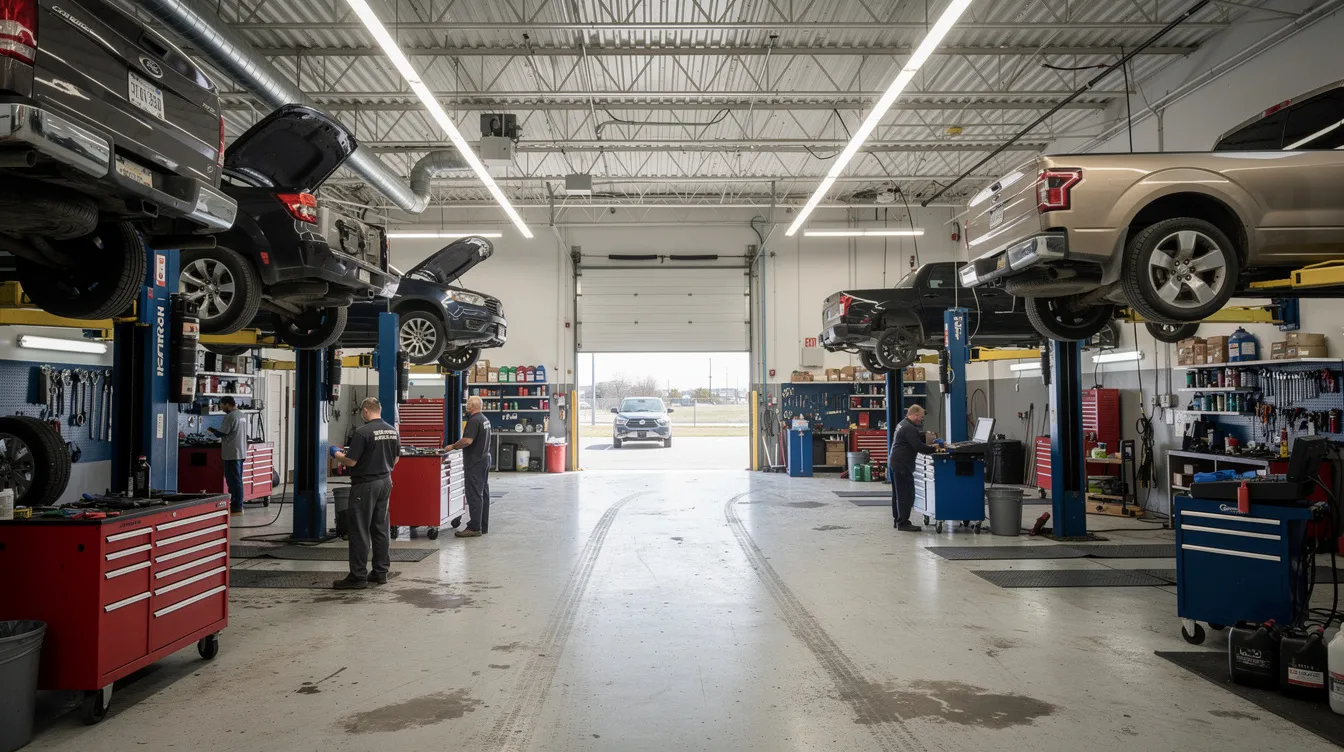
Auto body repair shops are collision and refinish specialists that face unique risks, including higher fire, property, and completed operations exposures compared to basic repair garages. These shops must address industry-specific hazards related to their operations, such as property damage, environmental risks, and equipment breakdowns.
Property and equipment considerations: Auto body repair shops typically insure $1–3 million in specialized equipment—frame straightening racks, downdraft paint booths, mixing rooms, and welding stations. These assets require higher property limits and detailed equipment schedules to protect the shop’s assets and business continuity.
Fire and explosion risk: Flammable paints, thinners, and solvents create serious fire loads. A single spark from grinding can ignite vapors. Insurers often require NFPA 33-compliant suppression systems, proper ventilation, and FM-approved storage cabinets before offering coverage—and reject 30% of applicants without them.
Liability differences: Body work creates unique exposures: overspray damaging nearby properties, disputes over OEM versus aftermarket parts, diminished value claims alleging 20–30% resale drops after repair, and structural errors causing crashes later. Repairs often involve fixing collision damage to bumpers, doors, and other exterior parts after a crash, requiring specialized expertise to restore vehicles to their pre-accident condition.
Garagekeepers limits: Collision vehicles—including six-figure EVs—can sit on your lot for 2–4 weeks. Limits often start at $500,000 per vehicle with $2 million aggregate to cover high-value jobs.
Pollution and environmental exposure: Paint, solvents, contaminated rags, and sanding dust create pollution risks. Body shops often need specific pollution liability endorsements not prioritized for mechanical operations.
The repair process in auto body repair shops involves detailed damage assessment, insurance claim approval, and step-by-step restoration of vehicles. Shops use techniques like paintless dent repair, plastic welding, and adhesive bonding to fix minor damage. Workers’ compensation insurance is also crucial, as it can cover medical costs and lost wages for employees injured on the job. The expertise required in auto body repair shops is significant, as technicians must be skilled in collision-specific techniques and manufacturer standards to properly restore vehicles.
How Insurance Needs Differ for Mechanical Repair Shops
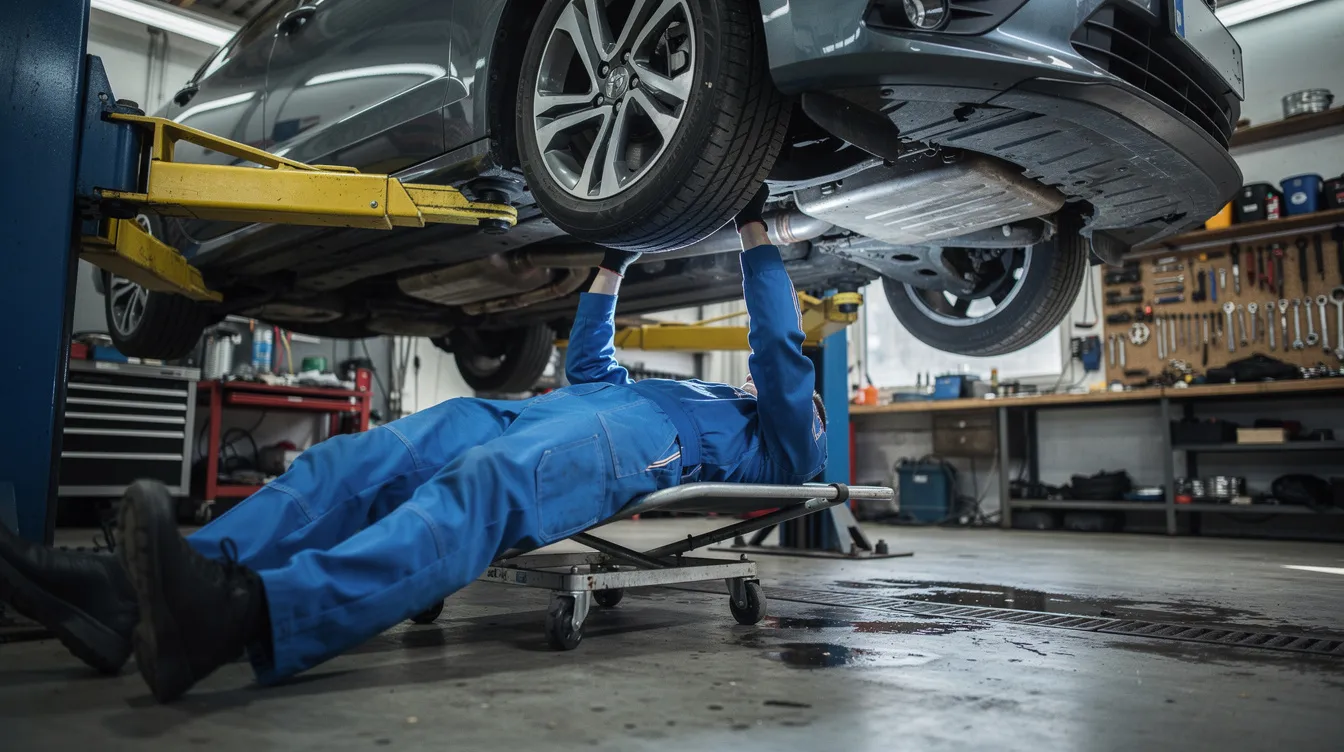
A mechanical repair shop focuses on drivability and maintenance: engines, transmissions, brakes, diagnostics, alignments, and routine services like oil changes. The primary goal is to fix and restore vehicle systems to their proper function, ensuring safety and reliability.
Property risks: The emphasis shifts to lifts, scan tools, tire machines, diagnostic computers, and parts inventory—equipment that facilitates access to various vehicle systems for repairs and maintenance—rather than paint booths and frame equipment. Equipment values typically run $500,000–$1 million.
Liability exposures: Brake failures after repair, steering work leading to loss-of-control accidents, and misdiagnosis causing engine damage on the highway are primary concerns. These completed operations claims can reach $200,000 or more.
Test-drive exposure: Technicians with specialized expertise regularly drive vehicles to diagnose noises and intermittent faults. Data shows mechanical shops log 60% more test-drive miles than body shops—averaging 1,200 miles per vehicle versus 200 for visual checks. This significantly increases road-test liability.
Garagekeepers considerations: Per-vehicle limits may be lower, but higher turnover means more vehicles cycling through daily, influencing aggregate exposures.
Equipment breakdown: A lift failure can shut down multiple bays and cut revenue immediately. Equipment breakdown coverage for lifts, compressors, and diagnostic systems is particularly important to protect the shop’s business operations.
Warranty coverage: Some mechanical repairs may be covered under a manufacturer’s warranty or extended warranty, which can offset repair costs for customers and affect insurance claim frequency.
Emerging 2024–2026 risks: ADAS recalibrations, battery-electric vehicle service, and high-voltage systems create new liability concerns. Errors in recalibrating forward-collision systems have triggered $200,000+ lawsuits for phantom braking failures, highlighting the need for expertise and a careful repair process.
Body Shop vs Mechanical Shop: Underwriting and Classification Differences
Understanding the difference between auto body shops and mechanical repair shops is crucial, as carriers use different rating classes for collision and body operations versus auto service and repair—typically ISO class 15150 versus 15371. This distinction affects premiums, loss expectations, and inspection requirements.
Body shop underwriting: Insurance providers view collision centers as heavier property and fire risks. Expect on-site inspections, photos of paint and mixing rooms, and written safety procedures before binding. Fire wall separation between paint operations and other bays is often required.
Mechanical shop underwriting: Evaluation by the provider focuses on test-drive protocols, lift safety programs, brake repair documentation, and technician certifications like ASE credentials.
Misclassification risks: Declaring a body shop as “general repair” is the wrong classification and can result in inadequate limits or claim denials—especially after fires, pollution incidents, or serious post-repair crashes. A 2024 case saw a $1.2 million frame fire claim denied when collision operations were undisclosed.
Ensure your operations descriptions on applications, websites, and business filings accurately reflect your true mix of body work versus mechanical services.
Insuring a Combined Body and Mechanical Shop
Many modern facilities perform both collision and mechanical work under one roof—55% of U.S. facilities are hybrid operations according to 2025 industry data.
Insurers typically want a percentage breakdown of revenue (e.g., 60% collision, 40% mechanical) and will rate based on that mix. The process insurers use involves assessing your business operations, revenue streams, and risk exposures to determine appropriate coverage and premiums. This can change as your business grows.
Key risks for combined shops: Carrying a policy written only as “auto repair” when you also do frame straightening or spray painting creates serious coverage disputes after losses. Adding a paint booth can increase premiums 35%.
Proper insurance coverage is essential to protect your business, assets, and continuity from the unique risks and liabilities faced by hybrid shops.
Recommendations:
- Review coverage at least annually to update revenue mix and equipment purchases
- Notify your carrier before adding collision or paint services
- Consider higher umbrella limits due to cumulative exposures
- Some carriers require separated fire divisions between paint and mechanical bays
Key Specialized Coverages to Compare Between Shop Types
Beyond shared core coverages, certain specialty coverages become more or less important depending on your operation and the expertise required:
Pollution liability:
- Body shops: High priority for overspray, solvent handling, waste paint, contaminated runoff
- Mechanical shops: Moderate priority for oil, coolant, battery disposal
Equipment breakdown:
- Body shops: Critical for downdraft paint booths and frame racks
- Mechanical shops: Critical for lifts, compressors, diagnostic servers
Professional/errors and omissions liability:
- Body shops: Incorrect structural measurements causing post-repair crashes, highlighting the need for expertise in collision restoration
- Mechanical shops: Flawed diagnostics leading to engine or transmission failure
Warranty and guarantee:
- Mechanical shops: Some repairs may be covered by a warranty or mechanical breakdown insurance, which differs from standard auto insurance.
- Body shops: Insurer-recommended shops often provide a lifetime guarantee on their work, offering peace of mind and assurance of quality.
Cyber/data breach:
- Equally important if you store customer payment data or use cloud-based estimating systems
When dealing with your insurance provider, request side-by-side quotes that spell out which coverages are included, excluded, or available only by endorsement for your specific shop type. The goal of both body and mechanical repairs is to restore your customer’s vehicle to its original condition, ensuring safety, function, and appearance.
Practical Steps to Make Sure Your Shop Is Properly Insured in 2024–2026
If you already have coverage but aren’t sure it reflects your current operations, follow this process:
- Inventory your services – List all work performed: collision, refinishing, mechanical, ADAS calibrations, EV battery service
- Document equipment and property values – Include recent purchases like frame benches, paint booths, or diagnostic tools
- Review current declarations pages – Confirm your class code matches your actual operations
- List new services added in the last 12–24 months – Any expansion changes your risk profile
- Schedule a dedicated review with a garage-specialized agent – Have them walk through coverage line by line
- Confirm garagekeepers limits – Match real-world values of customers’ vehicles on busy days
- Update safety programs – Document paint storage, welding procedures, lift inspections, and test-drive checklists for underwriters
Treat insurance reviews like scheduled maintenance—annual, documented, and tied to real changes in your business. Regular reviews can help save money by ensuring you’re not overpaying for unnecessary coverage or missing out on discounts. Understanding your insurance costs is important because insurance companies are always looking for ways to save money, which can affect your premiums and the quality of coverage. When you file a claim, clarify how the insurer will pay—whether they pay the shop directly, reimburse you, or require you to pay out of pocket first. This helps you avoid surprises and manage your money effectively.
FAQ
Do I legally need different insurance policies if I add body work to an existing mechanical shop?
Laws typically don’t mandate a second separate policy. However, insurers require updating your class code and coverages when you begin collision or paint work. Failing to notify your carrier when you add welding, frame pulls, or spray booths can create serious coverage disputes after a fire or liability claim. Contact your agent before offering any new collision or paint services so they can adjust limits and endorsements.
Is insurance more expensive for a body shop than for a mechanical repair shop?
Generally, yes. Collision and body operations are rated higher because of larger fire loads, higher property values, and more severe completed-operations risks. Final premiums depend on location, construction type, claims history, square footage, and safety controls like sprinkler systems. Obtain quotes for both operational profiles to see how your service mix affects cost.
Can I run a mobile mechanical or cosmetic repair business with the same insurance as a fixed shop?
Mobile operations—like on-site dent repair or mobile mechanical service—bring different risks including driving to customers, working in parking lot incidents, and tools in transit. Using a fixed-location policy for mobile work leaves gaps around auto liability and property coverage. Discuss mobile services with your agent to ensure proper inland marine and commercial auto coverage.
Does a standard business owner’s policy (BOP) cover a body or mechanical shop adequately?
Many insurers don’t place full-service auto body or mechanical shops on a basic BOP. Specialized garage policies contemplate test drives, customers’ vehicles in your care, and industry-specific exposures. A simple BOP may exclude garagekeepers, test-drive liability, or pollution—leaving significant gaps. Confirm whether your current policy is a true garage policy before assuming you’re properly covered.
How often should a body or mechanical shop review and update its insurance coverage?
Schedule a formal annual review, plus mid-term check-ins whenever you add services, buy major equipment, expand square footage, or shift your business model. Rapid changes in vehicle technology between 2024 and 2026 make it unwise to “set and forget” a garage policy. Treat insurance reviews like any maintenance task—scheduled, documented, and tied to real changes in the business.