
There’s nothing quite like the warmth of a crackling fire on a cold evening. But before you strike that first match of the season, a handful of overlooked steps can mean the difference between a cozy night and a devastating loss. This guide walks you through everything you need to check, clean, and confirm so your fireplace stays safe and your insurance stays intact.
Key Takeaways
Fireplaces, chimneys, and related heating equipment cause thousands of home fires annually. Most of these fires are preventable with basic preparation. Before you light the fireplace this season, make sure you’ve handled these priorities:
- Remove flammable liquids and clutter from the hearth area. Move furniture, decorations, and paper at least three feet from the fireplace opening.
- Check every smoke detector and carbon monoxide alarm in your home. Test them, replace dead batteries, and confirm devices aren’t past their expiration date.
- Keep a fire extinguisher within easy reach in the same room as the fireplace, and make sure everyone in the household knows how to use it.
- Never leave a fire unattended, especially overnight or when leaving the house. Unattended fires are a leading cause of preventable home fires and can complicate insurance claims.
- Confirm your homeowners insurance covers fireplace-related fire damage before the colder months begin. Call your agent if you’ve made any changes to the fireplace, fuel type, or surrounding structure.
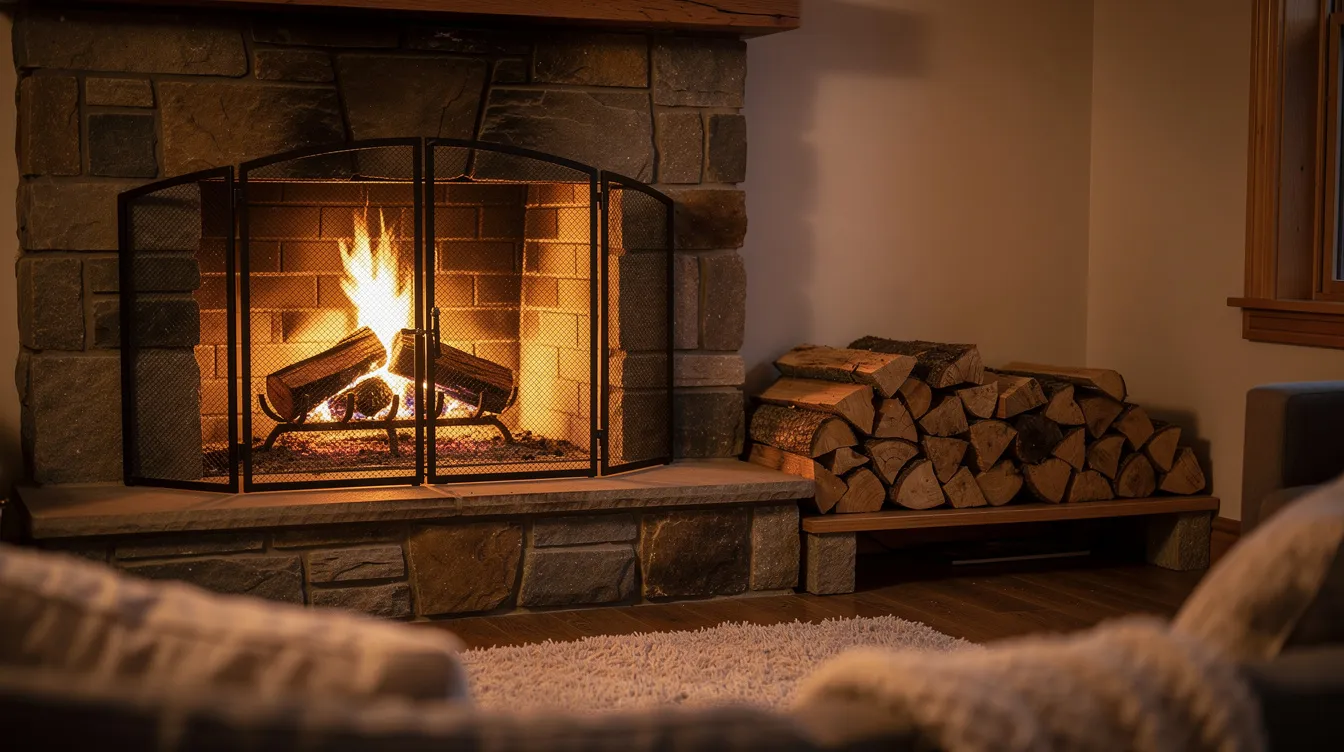
Before You Light the Fireplace: Quick Safety and Insurance Check
Picture this: the first crisp evening of fall, a stack of seasoned firewood by the door, and the whole family ready for that first fire of the season. Before you open the damper and reach for a match, take thirty minutes to run through a quick safety and insurance check. It’s a small investment that can prevent enormous headaches later.
Most home fires related to fireplaces and heating equipment happen between November and February, with January being the peak month. According to the U.S. Fire Administration, residential heating fires cause an average of 165 deaths, 600 injuries, and $367 million in property loss each year. That’s why this checklist should be completed at least once every fall before regular use begins.
Verify your insurance coverage
A standard homeowners insurance policy covers accidental fire damage, but that doesn’t mean every fireplace scenario is automatically protected. Fireplaces introduce major risk factors that insurance companies scrutinize, and standard homeowners’ insurance may not cover fireplaces without the right disclosures and endorsements in place.
Always disclose your fireplace to your insurance provider. Failing to disclose a fireplace can complicate insurance claims, and in some cases, an insurer may deny a claim entirely if they discover a fireplace or wood stove that was never reported. Disclosing the fireplace can affect the underwriting and premiums of insurance, but that transparency is what keeps your coverage valid when you need it most.
Some insurers require specific riders for wood-burning appliances. Discuss fireplace insurance options with your insurance agent, especially if you’ve recently installed a new fireplace, converted your fuel type (say, from wood to gas), or completed a major remodel near the hearth. Proper coverage protects against damages or accidents involving fireplaces, and you want that protection locked in before the season starts.
While you’re reviewing your policy, verify that the dwelling is insured for at least 80% of its full replacement cost. Fire damage can escalate quickly, and the average fire-related homeowners insurance claim now exceeds $173,000 in severity.
Your “do now” list
- Confirm your policy coverage explicitly mentions fire and fireplace-related perils.
- Schedule a chimney inspection if one hasn’t been done in the last 12 months.
- Review household fireplace safety rules with every member of the family.
- Contact your insurance agent if anything about your fireplace has changed since your last policy renewal.
Fireplace Safety Basics: Cleaning, Setup, and What to Keep Away
A clean, properly set up fireplace dramatically reduces fire and smoke risks. It’s also something insurance carriers frequently expect. Insurance policies may have exclusions for improperly maintained fireplaces, which means skipping routine upkeep could jeopardize a claim if something goes wrong.
Annual chimney inspection and cleaning
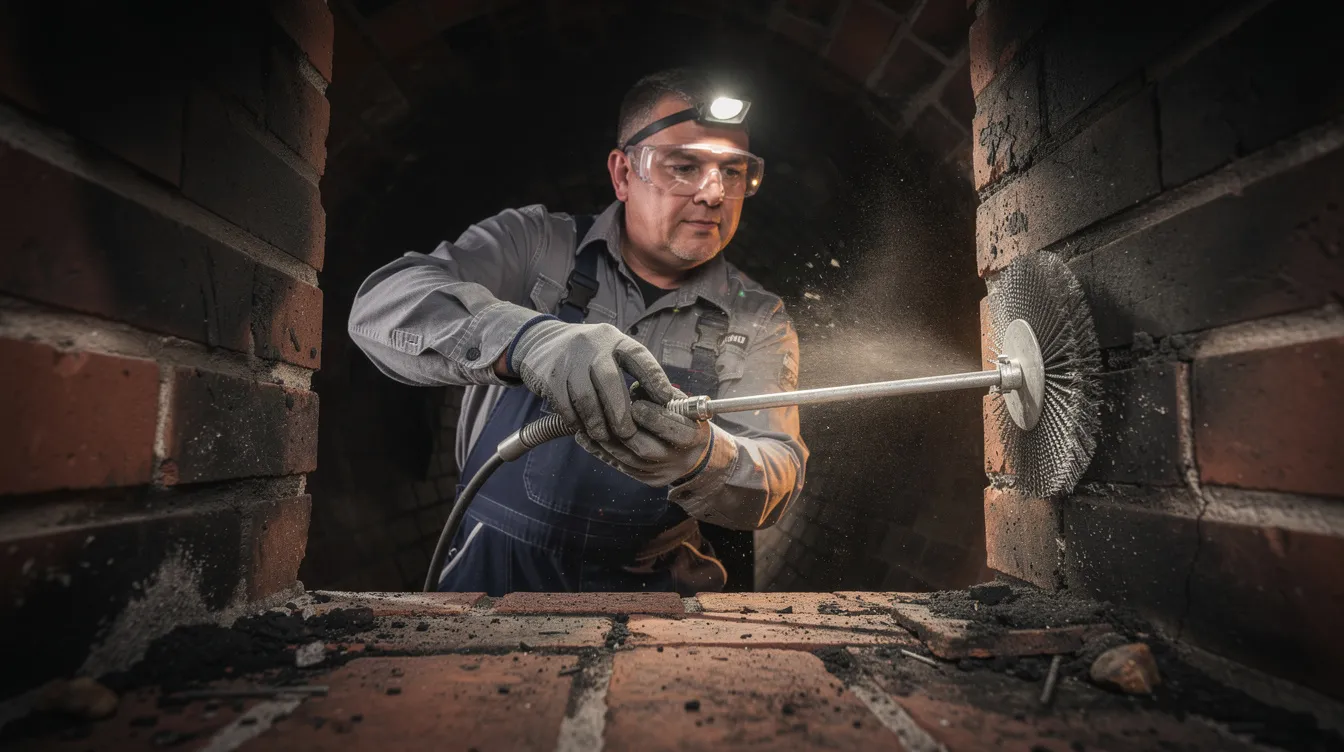
Chimneys should be professionally inspected and cleaned annually. The Chimney Safety Institute of America recommends a Level 1 inspection every year for active wood-burning fireplaces, and NFPA 211 standards require sweeping when creosote buildup reaches just 1/8 of an inch.
Yet according to a SafeHome.org survey, 60% of fireplace owners admit to skipping recommended maintenance, and 21% say they never have their chimney cleaned or inspected at all. Only 23% follow the annual inspection recommendation.
Keep your chimney and fireplace clean regularly. Beyond the annual professional sweep, homeowners should handle a few basics themselves:
- Remove ashes from previous fires once they cool completely. Excess ash restricts airflow and can harbor hidden hot embers.
- Check the damper to make sure it opens and closes freely. A stuck damper can trap smoke and carbon monoxide inside your home.
- Inspect the firebox for cracks, loose bricks, spalling mortar, or any visible damage. Water infiltration through a damaged chimney crown worsens these problems over time.
Keep documentation of chimney inspections and repairs for insurance purposes. Maintain receipts and logs of chimney inspections to verify maintenance if a claim ever arises.
What to burn and what not to burn
Use seasoned firewood that has dried for 6-12 months. Dry wood burns more efficiently, produces less smoke, and helps reduce creosote buildup inside your flue. Green or wet wood creates excess moisture and tar deposits that are both dangerous and harder to clean.
Never use gasoline or lighter fluid to start a fire. These flammable liquids can cause explosive flash fires and should be stored far from the hearth in a cool, ventilated area with no contact to any open flame.
Equally important: never burn trash, cardboard, or wrapping paper. These materials create dangerous flare-ups, send floating embers toward your ceiling, and produce toxic fumes. Stick to seasoned firewood and manufacturer-approved fire starters.
The three-foot clear zone
Before lighting any fire, clear the area around the fireplace opening of anything combustible. At minimum, keep these items at least three feet away:
| Item | Why It’s Dangerous |
|---|---|
| Curtains and drapes | Can ignite from sparks or radiant heat |
| Upholstered furniture | Absorbs heat and catches fire quickly |
| Area rugs | Sparks can smolder unnoticed in fibers |
| Holiday decorations | Paper, ribbon, and fabric ignite instantly |
| Stacks of newspapers | Highly flammable, burn fast and create embers |
| Cardboard boxes or packaging | Produce floating debris when ignited |
Taking photos of a clean, well-maintained fireplace and chimney creates useful documentation if a future fire-related insurance claim is ever needed. A few snapshots on your phone can go a long way.
Protecting People and Property: Screens, Extinguishers, and Supervision
Simple physical barriers and tools form the core of fireplace safety once a fire is burning. A screen, a fire extinguisher, and an attentive adult are your three most important layers of protection.
Fireplace screens and glass doors
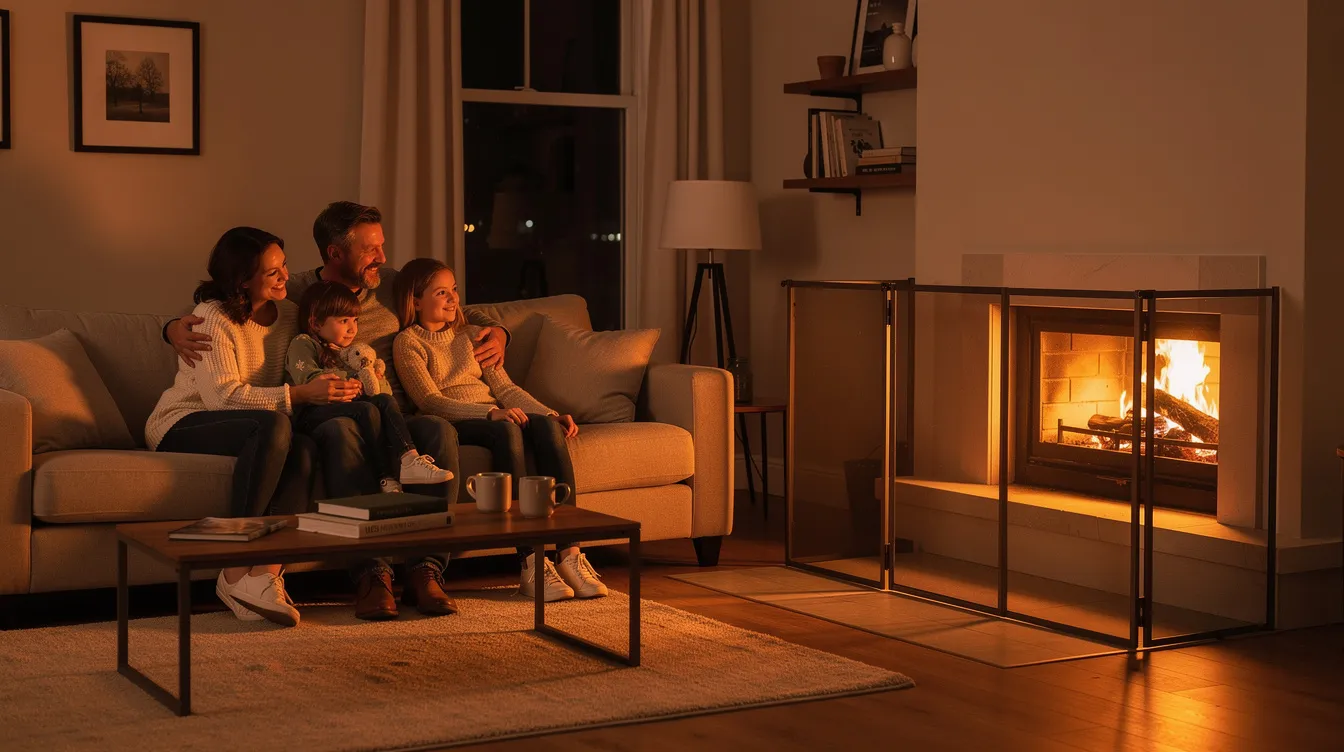
Always use a sturdy screen or glass door while a fire is burning. A quality fireplace screen stops sparks and embers from escaping onto carpets, hardwood floors, and nearby belongings. It also helps keep small children and pets at a safe distance from the flames and the intense heat radiating from the firebox.
For homes with raised hearths, install a safety gate or infant bumper around the stone or brick edge. Toddlers can fall onto sharp corners or burn themselves on surfaces that stay hot long after the fire dies down. Maintain a three-foot kid-free zone around open fires at all times.
Fire extinguisher placement and readiness
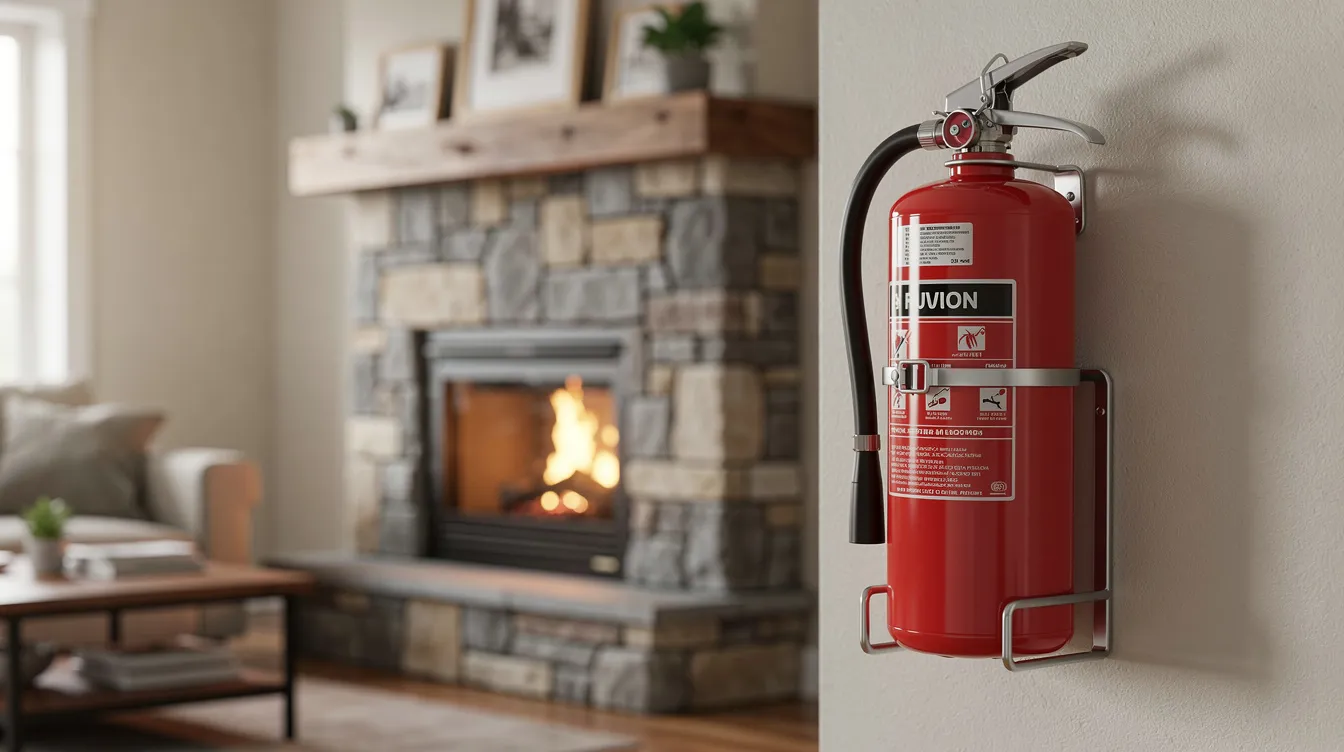
Keep a fire extinguisher nearby for emergencies. A multipurpose Class A-B-C extinguisher should be mounted in an easy-to-reach location in the same room as the fireplace, but positioned a few steps away so you can grab it safely if the fire spreads. Homeowners should learn how to operate the extinguisher before an emergency happens, not during one. Check the gauge at least twice a year to ensure it’s charged and ready.
Supervision is non-negotiable
Never leave an active fireplace unattended. An adult should always be present while flames or hot embers are still active, including during short trips to another room. This applies even when the fire has burned down to glowing coals; those embers can reignite or throw sparks without warning.
Before going to bed or leaving the house, fully extinguish the fire. Spread out remaining embers, close the damper once everything is cold, and confirm no smoke is entering the room. Leaving a fire unattended overnight isn’t just a risk to your house and family. It can void coverage or seriously complicate a fire insurance claim if your insurer determines the fire wasn’t supervised.
Smoke and CO detection
Test smoke and carbon monoxide detectors monthly. Many policies require functional smoke alarms and carbon monoxide detectors as a condition of coverage. USFA data shows that only about 56% of non-confined heating fires occur in homes where smoke alarms are present. That gap is alarming.
On the same day you first light the fireplace each season:
- Press the test button on every smoke detector and CO alarm in the home.
- Replace batteries if they’re older than 12 months (unless the device has a sealed 10-year battery).
- Replace smoke detectors older than 10 years and CO detectors older than 5–7 years, depending on the model.
Teaching Your Household and Aligning With Your Insurance
Every person in your home needs to understand the basics of fireplace safety. Safe habits don’t just prevent injuries. They also support smooth insurance protection if you ever need to file a claim.
The family fireplace talk
Sit everyone down before the first fire of the season. Explain that the glass doors, metal screen, and surrounding stone or brick can stay hot for hours after the flames disappear. Use a piece of tape or a small rug edge to mark a clear “no-go” zone on the floor so children know the boundary without having to guess.
Teach kids never to throw toys, paper, or any objects into the fire. Make sure they know to tell an adult immediately if they see sparks or smoke where it doesn’t belong, whether that’s in another room, near the ceiling, or escaping from cracks around the chimney.
Home fire escape plan
Create and practice a basic fire escape plan with your family. Identify two exits from each main room and pick a meeting spot outside the house where everyone gathers. Run through the plan at least once per season so it becomes second nature, especially for children and elderly family members.
How insurance expects you to behave
Policy compliance may require periodic inspections and maintenance of fireplaces. Homeowners insurance generally expects “reasonable care,” which means routine chimney maintenance, functioning detectors, and not leaving a fire unattended. If an insurer can demonstrate that a fire resulted from long-term neglect (like ignoring years of creosote buildup or a cracked flue liner), a claim may be reduced or denied under a maintenance or neglect exclusion.
Encourage yourself to document every safety step:
- Inspection receipts from your chimney sweep, including dates and findings.
- Alarm test dates logged on your phone’s calendar.
- Extinguisher check records with gauge readings.
- Photos of your clean fireplace and chimney cap at the start of each season.
Keep this information alongside your home insurance records. If you ever need to file a claim, this documentation proves you did your part and took reasonable steps to prevent a loss.
FAQ: Before-You-Light Fireplace Questions
Here are answers to the most common questions homeowners have about fireplace safety and insurance that weren’t fully covered above.
How often should a fireplace and chimney be inspected if the home is used only seasonally or on weekends?
Even if you light the fireplace only a few times a year, an annual inspection is still recommended. Creosote buildup, animal nests, debris, and structural deterioration can develop regardless of how frequently you use the fireplace. Pests don’t check your usage schedule. A Level 1 inspection typically costs $100–$200 and takes less than an hour. If you’ve purchased the home recently or made any changes to the fuel type or appliance, a Level 2 inspection (with a video scan of the flue interior) is required under NFPA 211 standards and usually runs $200–$400.
Do manufactured logs or gas logs change any fireplace safety rules or insurance considerations?
Yes. Manufactured logs and gas logs have their own safety requirements. Always follow the manufacturer’s instructions for any log product, especially gas logs, which require proper venting and a functioning CO detector nearby. Gas fireplaces are generally considered lower risk by insurers compared to wood-burning fireplaces, which may mean lower premium surcharges. However, switching fuel types (from wood to gas or vice versa) triggers a Level 2 inspection and should be reported to your insurance agent.
What should I do if smoke backs up into the room the first time I use the fireplace each season?
Stop immediately. Do not keep the fire going while smoke fills the room. Open windows to ventilate, then check three things: Is the damper fully open? Is the chimney cap free of debris or animal nests? Is the air pressure in the house creating a negative draft (common in tightly sealed homes)?
If the damper is open and the chimney cap looks clear from ground level, the flue may be obstructed internally. Call a certified chimney professional before attempting another fire. Smoke backing into the room often signals a blockage that poses carbon monoxide risk and should never be ignored.
What information should I have ready when calling my insurance agent about fireplace coverage?
Come prepared with:
- Your policy number
- The type of fireplace (wood-burning, gas, pellet stove)
- The fuel type you use
- The date of your last chimney inspection and cleaning
- The condition of your chimney liner, crown, and chimney cap
- Any history of chimney fires or structural repairs
- Details on safety devices in place (screen, detectors, fire extinguisher)
Ask specifically about premium discounts for safety upgrades, whether your policy requires a specific rider for wood-burning appliances, and whether proof of annual inspection is needed for policy compliance. This is also a good time to learn about any exclusions related to fireplace maintenance or fuel types.
How should I safely dispose of fireplace ashes, and why does improper disposal matter?
Ashes should be cooled for at least 3 days before disposal. Even ashes that look completely dead can retain enough heat to ignite combustible materials for several days after the fire goes out. Once cool completely, transfer them to a metal container with a tight-fitting lid and place the container outside on a non-combustible surface, well away from the house, deck, garage, or any structures.
Never dump ashes directly into a plastic trash can or onto dry leaves. Accidental fires from improper ash disposal happen regularly and can spread to the house, a fence, or outbuildings. Insurers may classify these fires as negligence, which could affect your claim. Peace of mind comes from patience. Wait the full three days, use the metal container, and keep it clear of anything that can burn.
A safe fireplace starts with preparation, not luck. Walk through every item on this checklist before your next fire, share it with everyone in your household, and keep your documentation current. A few hours of effort each fall protects your family, your home, and the insurance coverage you’re counting on when it matters most.