
January 2026 offers a perfect reset point for reviewing your home, auto, and life insurance before the year picks up speed. After the holidays wind down and before the April 15, 2026 tax deadlines demand your attention, you have a natural window to examine whether your policies still match your actual needs.
Small policy gaps discovered now can prevent devastating out-of-pocket surprises later. That storm in March, the fender-bender in June, or the liability lawsuit that lands in your mailbox—these events don’t wait until you’ve sorted out your coverage. The difference between adequate protection and inadequate protection often comes down to whether you spent 30 minutes reviewing your insurance policy before something went wrong.
This article walks through 5 specific insurance mistakes to avoid and shows you how to fix them during a single annual review session. These aren’t abstract concepts—they’re the common insurance mistakes that cost real people real money every year. Understanding what to look for makes all the difference when it comes to keeping your financial protection intact throughout 2026.

Mistake #1: Chasing the cheapest policy instead of real coverage
Every January, millions of people start shopping for the lowest premium they can find. The logic seems sound—why pay more when you can pay less? But this approach regularly leaves homeowners and drivers underinsured when they actually need to file a claim.
Consider what happened to a 2025 homeowner who picked a cut-rate policy to save money on monthly premiums. When a January 2025 storm sent a tree limb through the roof, the claim was partially denied. The policy had wind damage exclusions buried in the fine print and dwelling limits that fell $40,000 short of actual repair costs. What seemed like a smart financial decision became a $40,000+ mistake.
The difference between “cheap” and “good value” comes down to what you’re actually buying. A policy with adequate dwelling limits, replacement cost coverage, and responsive claims service protects your assets when disaster strikes. A bare minimum policy with weak coverage options might save you $15 a month—until you need to file a claim and discover the insurance company won’t cover your actual losses.
Consider two hypothetical auto insurance policy options: Policy A costs $80/month but carries minimum liability limits, a $2,000 deductible, and no rental car coverage. Policy B costs $95/month but includes higher liability protection, a $500 deductible, and rental reimbursement. The $180 annual difference disappears fast when you’re paying out-of-pocket after an accident.
Here’s how to avoid cutting costs in ways that hurt you. Compare coverage line by line, not just premium to premium. Check your liability limits against your actual assets—if you own a home and have savings, you need more than state minimums. Verify whether your policy uses replacement cost or actual cash value (the latter pays you less). Read the exclusions section to understand what’s specifically not covered. These steps take maybe 20 minutes but can protect you from denied claims that cost thousands.
Mistake #2: Insuring your home for market value instead of rebuild cost
One of the most expensive mistakes homeowners make is confusing their home’s Zillow estimate with what it would actually cost to rebuild after a fire, tornado, or other disaster. These are completely different numbers, and insuring for the wrong one leaves you dangerously exposed.
Here’s a specific example that illustrates the risk. A home purchased in 2020 for $350,000 might now show a 2026 market value of $425,000. But the true rebuild cost—factoring in current lumber prices, labor shortages, and construction costs—could easily reach $500,000 or more. If your homeowners insurance policy only covers the market value, you’re potentially $75,000 short when you need to rebuild.
The critical distinction is that insurance should focus on replacement cost, which means the materials plus labor required to reconstruct your home. Market value includes land (which doesn’t burn down) and reflects what buyers will pay based on location, school districts, and neighborhood trends. None of those factors matter when a contractor is calculating what it takes to rebuild your structure from the foundation up.
Construction inflation has made this mistake even more costly. Since 2021, building costs have increased 15-20% in many areas. If you haven’t reviewed your Coverage A (dwelling coverage) since your last renewal, you may be insuring a 2021 cost estimate while facing 2026 construction costs. That gap can leave you tens of thousands of dollars short of the right coverage you actually need.
What to do this year: Ask your agent to run a rebuild cost estimator—most insurance companies have tools that calculate current construction costs for your specific home. Verify whether your policy includes inflation guard coverage that automatically increases limits. Avoid the temptation to cut Coverage A to save a few dollars on premiums. Review whether you have extended replacement cost or guaranteed replacement options, which provide an additional layer of protection if rebuild costs exceed your policy limits.
Mistake #3: Ignoring add-on protections like flood, earthquake, and umbrella coverage
Standard home and auto policies have limits that catch many people by surprise. Floods, earthquakes, and large liability claims are often either not covered at all or capped at amounts far below actual losses. Assuming your current coverage handles everything is one of the most dangerous insurance mistakes.
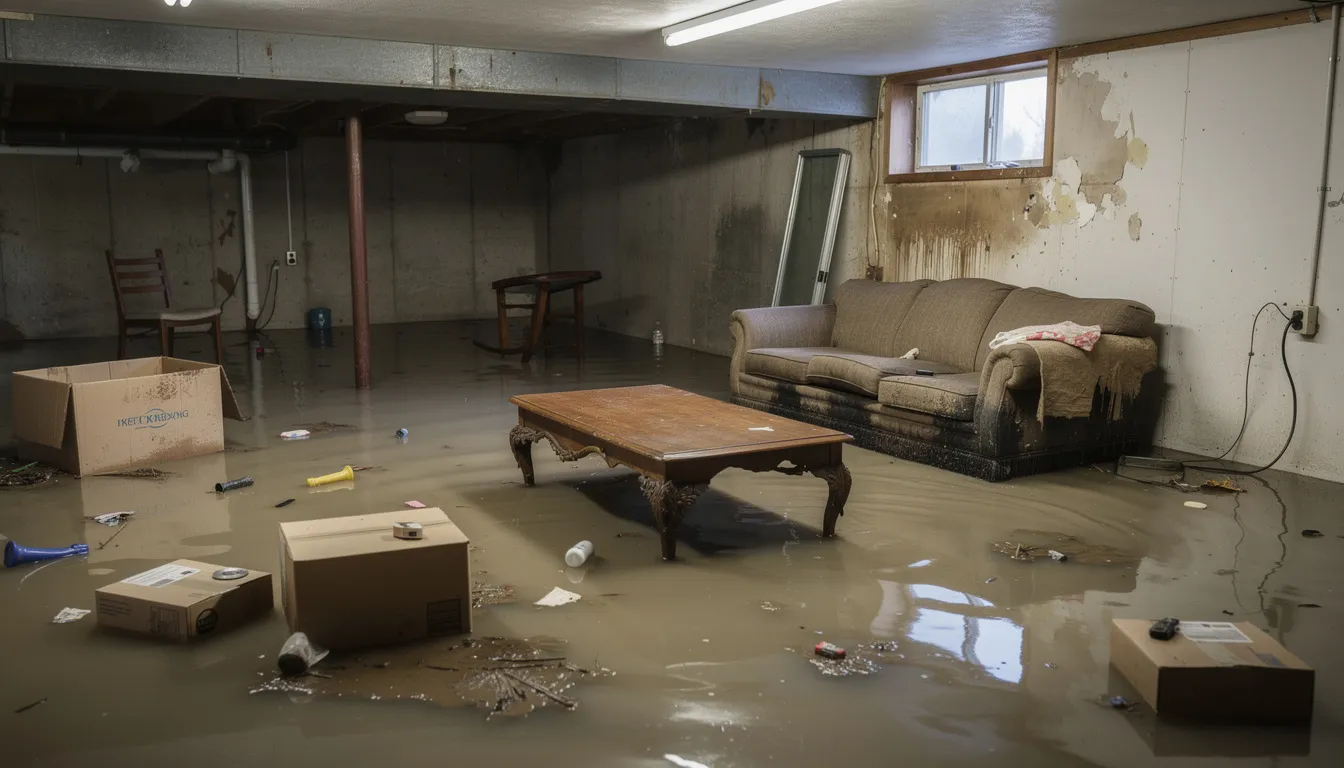
A concrete example shows why this matters. During a 2024 winter thaw, melting snow and heavy rain caused basement flooding for a homeowner who had never purchased separate flood insurance. The cleanup and repairs totaled $12,000. The homeowners insurance policy covered nothing—flood damage requires a separate policy, and standard coverage excludes it entirely. That $12,000 came straight out of emergency savings.
Flood coverage: Most people don’t realize that standard homeowners insurance excludes flood damage completely. You need a separate policy through the National Flood Insurance Program (NFIP) or a private insurer. Even if you don’t live in a designated flood zone, 25% of flood insurance claims come from “low-risk” areas. The 2024-2025 severe weather patterns—heavy rains, rapid snowmelt, overwhelmed storm drains—have shown that flooding can happen almost anywhere.
Earthquake coverage: If you live anywhere near a fault line, your standard policy likely excludes earthquake damage. This requires a separate endorsement or policy. The cost varies dramatically by location, but going without means you’re fully responsible for structural damage, foundation repairs, and personal property losses after a quake.
Umbrella liability: An umbrella policy adds $1-2 million in extra protection above your auto policy and homeowners insurance liability limits. This matters when someone is seriously injured in an accident you caused or on your property. A lawsuit for $500,000 will blow through most standard policy limits, putting your assets at risk. Umbrella coverage typically costs $200-400 per year—a small price for significant extra coverage.
Ask yourself two essential questions this year: “What natural disasters are common in my ZIP code, and am I covered for them?” and “What happens if I’m sued for more than my auto or home liability limit covers?” The answers may reveal gaps that need immediate attention before you’re forced to file a claim.
Mistake #4: Forgetting to update policies after life changes
Life changes in 2025-2026—marriage, divorce, a new baby, a new job, moving to a different state, major renovations—often outpace policy updates. Your insurance is a snapshot of your life at the moment you enrolled. When your life moves forward but your policies don’t, you create gaps that can lead to denied claims or inadequate protection exactly when you need coverage most.
Specific scenarios illustrate the risk. You added a finished basement in late 2025, but never told your insurer—now your dwelling coverage doesn’t reflect the $50,000 in improvements. You bought a second car for a teen driver in August 2025 without listing them on your auto policy—any accident they cause may not be fully covered. You started a home-based side business in early 2025 with equipment and inventory stored in your garage—your standard homeowners policy likely excludes business property entirely. Health insurance beneficiaries may need updating after marriage or divorce. Term insurance policies purchased years ago may list an ex-spouse as beneficiary.
The risks extend across every type of policy. Underinsured structures mean you won’t receive enough money to repair or rebuild. Unlisted drivers can result in denied claims after an accident. Business equipment at home isn’t covered under personal policies. Outdated beneficiaries on life insurance mean your coverage goes to the wrong person. Each of these represents a failure to update that only becomes visible when something goes wrong.
Tie your updates to recurring calendar events. During tax prep season (February through April), review any property changes, new income sources, or family status changes. During open enrollment at work each fall, reconsider your health insurance and whether your employer-provided life coverage still meets your needs. When auto and home policy renewal notices arrive, treat them as prompts to notify your agent about anything that’s changed.
What to tell your agent this year: any changes in address, renovations costing more than $5,000-$10,000, new drivers in the household (especially teens), new valuables like jewelry or art exceeding $1,000-2,000, any new income sources including side businesses, and any changes in household composition through marriage, divorce, or new dependents. Your insurer can’t adjust your coverage if they don’t know your circumstances have changed—the responsibility falls on you to communicate updates.
Mistake #5: Treating insurance as “set it and forget it” instead of doing an annual review
Many people renew their policies automatically year after year without ever rechecking limits, deductibles, or available discounts. This passive approach means you’re potentially overpaying for coverage you don’t need while simultaneously leaving gaps in protection you do need. It’s one of the most common mistakes to avoid because it’s so easy to prevent.
Your premiums, discounts, and personal risk profile all change over time. Maybe you installed a new roof in 2023 that qualifies for lower rates. Perhaps you added a security system or smart home devices in 2024 that your company offers discounts for. A clean driving record since a 2022 accident may now qualify you for safe driver pricing. Payoff of your mortgage in 2026 changes your coverage needs. If you never ask about these changes, you never receive the savings.
How to do a 30-minute annual review: Schedule a specific “insurance hour” every January—put it on your calendar as a recurring event. Use this time to compare coverage options across at least two carriers, ask about every possible discount (bundling, claim-free, anti theft devices, new car safety features, homeowner loyalty), and adjust deductibles to match your current emergency savings level. If you’ve built up more savings, a higher deductible can reduce your premiums while keeping you protected.
This review is also the ideal time to eliminate unnecessary coverage while closing real gaps. An old vehicle that’s worth less than your annual collision premium probably doesn’t need collision coverage anymore. Duplicate roadside assistance through your auto policy and a membership service wastes money. But too-low liability limits or outdated personal property coverage represent genuine risk you should address.
Your annual review should cover these specific items: confirm your contact information and beneficiaries are current, verify all coverage limits and deductibles still match your needs, create a list of every major lifestyle or property change since last year, and ask your agent to quote alternatives from at least two carriers even if you’re happy with your current insurer. Compare the best deal available against what you’re currently paying. Research consistently shows that customers who shop their coverage save money without sacrificing protection.

Bringing it all together for 2026
Avoiding these five insurance mistakes—over-focusing on price, misinsuring your home for market value instead of rebuild cost, skipping essential add-on protections, ignoring life changes that affect coverage, and never doing an annual review—can protect your finances in 2026 and beyond. Each mistake is avoidable with a modest time investment, and fixing them now prevents the painful discovery of gaps when you actually need to file a claim.
Block off a specific date before January 31, 2026 to review your policies or contact your insurance agent. Treat this like any other financial responsibility—it deserves dedicated time rather than a rushed glance at renewal notices. If you have clients, customers, or family members who handle insurance casually, encourage them to take the same approach.
Consider keeping a simple one-page insurance summary listing your policy numbers, coverage limits, deductibles, and renewal dates. Store it digitally and in print so future new year reviews take minutes instead of hours. This document becomes your quick reference when life changes happen and you need to know exactly what coverage you have.
Your insurance exists to protect everything you’ve built—your home, your car, your family’s financial security. Treat it as a proactive part of your financial plan rather than just a bill that renews in the background. Thirty minutes of attention now can make all the difference when the event you never expected actually happens.